Best Battery-Powered Inverter Solutions for Portable Power Needs
Choosing the right battery-powered inverter helps ensure you have reliable AC power wherever you go. The following five devices are optimized for compatibility with common power tool batteries and offer a mix of wattage, charging ports, and safety features. Below is a quick summary of each option to guide your decision.
| Product | Battery Compatibility | Power (W) | Ports |
|---|---|---|---|
| Azocek 220W Power Inverter (DeWalt 20V) | DeWalt 18V/20V | 220 | 1 AC, 2 USB QC, 1 Type-C PD |
| TWING Car 1000W Inverter | 12V Vehicle Battery | 1000 | 2 AC, 2 USB (QC3.0, PD3.0) |
| Azocek 220W Power Inverter (Milwaukee 18V) | Milwaukee 18V | 220 | 1 AC, 2 USB QC, 1 Type-C PD |
| LIVOWALNY Real 200W Inverter (Dewalt 20V) | Dewalt 20V | 200 | 1 AC, 2 USB, 1 Type-C |
| PlantPalGear 220W Inverter (Dewalt 20V) | Dewalt 18V/20V | 220 | 1 AC, 2 USB QC, 1 Type-C PD |
Azocek 220W Inverter With DeWalt Battery

Designed to run directly off DeWalt 18V/20V battery packs, this inverter converts 20V DC to 110V-120V AC for small electronics and mobile devices. It includes a standard AC outlet, two USB ports with quick-charge capability, and a PD Type-C port for fast charging. A compact LED work light adds visibility in outdoor or emergency contexts. The unit emphasizes portability, making it a practical option for job sites or camping trips where a DeWalt battery is already in use. Note that the battery is not included.
TWING Car 1000W Inverter

This high-capacity portable inverter is engineered for vehicles, converting 12V DC from a car battery to 110V AC. It provides dual 110V outlets, suitable for powering laptops, tablets, and larger devices while on the road. USB ports include Quick Charge and PD3.0 for fast charging. A built-in cooling system and smart display help monitor voltage and load, while over-voltage, overcurrent, and short-circuit protections promote safe operation during trips, camping, or emergency use.
Azocek 220W Inverter For Milwaukee 18V
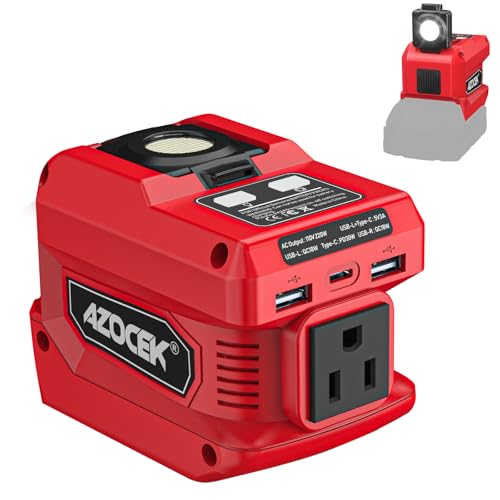
This model targets Milwaukee 18V batteries, offering 220W of DC-to-AC power with a single AC outlet and two USB QC ports plus a PD Type-C port. It is designed for portability and quick charging on outdoor worksites or during outages. Battery compatibility is a core selling point, enabling immediate use with Milwaukee tools or DEP-compatible packs, though the battery must be purchased separately.
LIVOWALNY Real 200W Inverter (Dewalt 20V)

Compatible with a range of Dewalt 20V batteries (including DCB206 and DCB205 series), this inverter delivers 200W continuous power with up to 250W peak power. It includes two USB ports and a Type-C charging option in addition to the AC outlet, making it suitable for fieldwork where small electronics require a reliable power source. Battery not included, emphasizing the need to pair with your existing Dewalt pack.
PlantPalGear 220W Inverter For Dewalt 20V

Specially designed for Dewalt 18V/20V batteries, this inverter provides 220W of DC-to-AC power and includes a single AC outlet. It also features two USB ports with Quick Charge and a PD Type-C port to rapidly charge multiple devices. An essential accessory for outdoor enthusiasts who already rely on a Dewalt battery system, with the caveat that the battery is not included.
Buying Guide: Key Purchase Considerations
- Power needs: Choose wattage based on your devices. For laptops and larger tools, 500–1000W units are ideal; for phones and tablets, 200–250W may suffice.
- Battery compatibility: Look for models designed to work with your existing battery ecosystem (DeWalt, Milwaukee, Ryobi, etc.). Confirm that the battery is compatible with your voltage (18V or 20V) and connectable without adapters.
- Output quality: Pure sine wave inverters provide cleaner power for sensitive electronics, while modified sine wave units are often cheaper but can cause issues with some devices.
- Port selection: Ensure the inverter offers the necessary outlets (AC, USB Type-C PD, USB QC) and consider the number of USB ports if you plan to charge multiple devices at once.
- Safety features: Prioritize overvoltage, overcurrent, short-circuit, and thermal protection. A built-in cooling fan helps prevent overheating during extended use.
- Portability and weight: Lighter models are easier to carry, but higher-wattage units will be heavier. Balance weight with your typical use case (camping, job sites, or emergency readiness).
- Battery availability: If you rely on a specific brand battery, ensure you can source extra packs or have access to spare cells for extended usage without recharging.
- Durability and build: Look for rugged enclosures and secure cable management, especially for outdoor or mobile scenarios where equipment may be moved or bumped.
- Ease of use: Quick setup, clear indicators, and straightforward charging options help minimize setup time in urgent situations or on busy job sites.
- Compatibility notes: Some models explicitly require the battery to be installed before operation; others can function with an attached battery and a separate power source if needed.
In selecting a battery-powered inverter, users should align device wattage with anticipated load, ensure battery compatibility within their toolkit, and weigh safety features against portability. For campers, contractors, and emergency preparedness, the right inverter offers a reliable bridge between high-demand devices and portable energy storage.