Best Golf Cart Battery Options for Reliable Power on the Course
Choosing the right golf cart battery affects range, performance, and maintenance. This guide highlights five top battery options, spanning lead-acid and lithium technologies, to help American buyers compare capacity, longevity, and charging needs. Each pick includes a brief overview and key features to aid in a straightforward decision for standard golf cart use, RVs, or small solar setups. Review the quick reference table below to compare core specs at a glance.
| Product | Brand | Voltage / Type | Capacity (Ah) | Notes |
|---|---|---|---|---|
| Rocket L-875 170Ah | Rocket | 8V Lead-Acid | 170 | GC8 size; high cycle life |
| Trojan T-875 170Ah | Trojan Battery Company | 8V Flooded Lead-Acid | 170 | Widely used in golf carts; durable |
| LOSSIGY 48V Lithium 100Ah | LOSSIGY | 48V Lithium LiFePO4 | 100 | Built-in BMS; Bluetooth monitoring |
| TEMGO 48V 100Ah Kit | TEMGO | 48V LiFePO4 | 100 | All-in-one upgrade with charger & app |
| Elefast 48V 100Ah Kit | Elefast | 48V LiFePO4 | 100 | Bluetooth, LCD monitor, 200A BMS |
Rocket L-875 170Ah 8V Golf Cart Battery
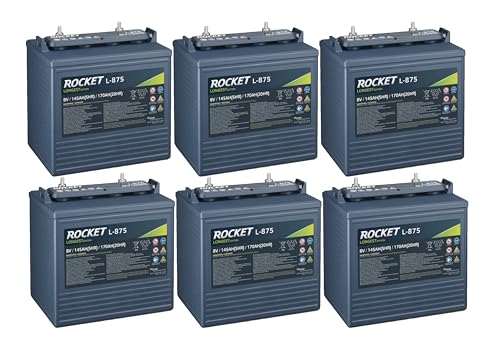
Features: Voltage: 8V, Capacity Amp-Hours @ 20 Hours: 170. This 170Ah lead-acid battery is designed to replace Trojan T-875 in golf carts. It targets long runtimes and reliable discharge in GC8-sized batteries, with a focus on standard maintenance routines and compatible connectors. The set-of-six configuration is common for robust course performance and steady power delivery across multiple cycles.
Trojan T-875 8V 170Ah Deep-Cycle Battery

Features: Trojan Model T-875, 170Ah 8-volt deep cycle, Flooded/Wet Lead-Acid design. Suitable for golf carts, RVs, homes, cabins, and renewable energy systems. BC1 group size GC8 with dimensions 10.27” x 7.10” x 11.14”. Built for extended cycle life with a focus on resilience in vibration-prone environments typical of golf vehicles.
Trojan T-875 8V 170Ah Deep-Cycle Battery (Pack of 6)
Features: 8V Deep-Cycle Flooded Lead-Acid; 170Ah capacity; GC8 size with durable construction for golf carts, renewable energy banks, and marine use. The pack is designed to deliver long runtime and consistent discharge—well-suited for fleets and frequent charging cycles in demanding environments.
LOSSIGY 48V Lithium Golf Cart Battery Kit
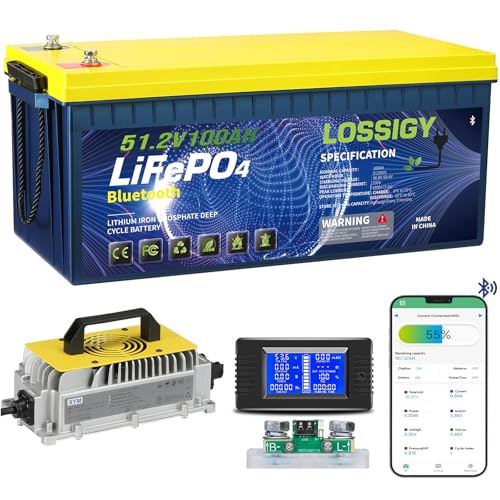
Features: Grade A LiFePO4 cells with higher energy density, built-in BMS for protection against high/low temperatures, short circuits, and over-current. The kit is designed for easy installation, reducing maintenance compared to traditional lead-acid systems. Suitable for golf carts with a 48V system, it emphasizes longevity and lower total cost of ownership through extended cycles.
TEMGO 48V 100Ah LiFePO4 Golf Cart Upgrade Kit

Features: All-in-One upgrade with 58.4V 18A charger, LCD display, and included app access. Bluetooth-enabled 200A BMS protection supports overcharging, over-discharging, short circuits, and temperature extremes. Promises 5000+ deep cycles with 80% depth of discharge, delivering long life and minimal maintenance compared to legacy systems.
Elefast 48V 100Ah Lithium Golf Cart Battery Kit

Features: 48V LiFePO4 with 2C discharge capability and a built-in 200A BMS. Included 58.4V 18A charger and 2.8-inch LCD touchscreen for real-time status. Bluetooth connectivity enables remote monitoring, and the kit is compatible with major golf cart brands such as Ezgo, Club Car, Yamaha, and Icon, plus potential solar integration.
Buying Guide: Key Considerations For Golf Cart Batteries
- Technology: Lead-acid vs. lithium. Lead-acid (including the Trojan and Rocket options) tends to cost less upfront but requires more maintenance and offers shorter cycle life. Lithium (LOSSIGY, TEMGO, Elefast) provides longer lifespans, higher energy density, lighter weight, and smarter BMS features, though with a higher initial price.
- Voltage System: Most golf carts run on 36V, 48V, or 48V equivalents. Ensure compatibility with your cart’s controller and charger. The 8V options (Rocket and Trojan T-875) require proper series/parallel arrangements to achieve the desired pack voltage.
- Capacity and runtime: Higher Ah rating generally means longer operation between charges. For frequent play or larger courses, prioritize higher capacity or a modular upgrade path like those offered in kits with built-in BMS and monitoring.
- Maintenance needs: Flooded lead-acid batteries (like Trojan T-875) require regular watering and equalization charging. Sealed options (AGM) are lower maintenance but can have higher total cost. Lithium systems reduce maintenance and often include comprehensive BMS protection.
- Charging and monitoring: Kits with built-in chargers (TEMGO, Elefast) simplify setup. Look for LCD displays and Bluetooth apps for real-time status, which helps optimize charging schedules and battery health.
- Durability and form factor: Golf cart batteries must withstand vibration and outdoor conditions. Check case materials, venting, and dimensions to ensure a secure fit in your cart model.
- Lifecycle and warranty: Lithium options typically offer thousands of cycles and longer warranties. Consider your expected ownership period and total cost of ownership when evaluating upfront price.
- Environment and safety: Lithium systems require proper handling and ventilation considerations, while flooded lead-acid batteries require spill management and proper recycling at end of life.