Best Batteries for Off Grid Solar System
Finding reliable power storage for an off-grid solar setup means balancing capacity, longevity, safety, and space. This guide spotlights five top battery options tailored for RVs, cabins, and remote homes, covering AGM and LiFePO4 chemistries. Each entry includes a concise overview of its key strengths, ideal use cases, and what to watch for when expanding your solar storage. The selections emphasize long lifespans, high cycle counts, and scalable configurations to suit growing energy needs.
Quick reference at a glance: the table below summarizes core specs to help you compare at a glance. All models are compatible with common off-grid solar systems but vary in chemistry, weight, and temperature performance. Use this as a starting point for deeper reading on each product section.
| Product | Chemistry | Capacity | Typical Use | Expandable |
|---|---|---|---|---|
| Weize Deep Cycle AGM 12V 100Ah | AGM Lead-Acid | 100Ah | RVs, small off-grid setups | Limited |
| Dyness 12V 100Ah LiFePO4 (2 Pack) | LiFePO4 | 100Ah per battery | Solar systems, RVs, off-grid | High (parallel/series) |
| Dumfume 12V 300Ah LiFePO4 | LiFePO4 | 300Ah | Medium-to-large off-grid, home storage | Yes (4S4P) |
| ECO-WORTHY 12V 280Ah LiFePO4 (2 Pack) | LiFePO4 | 280Ah total | Off-grid, RVs, cabins | Yes (series/parallel) |
| ECO-WORTHY 200W Solar Kit Battery Included | LiFePO4 | Integrated with battery | Starter/off-grid kits | Limited |
Weize 12V 100Ah AGM Battery for Off-Grid Power
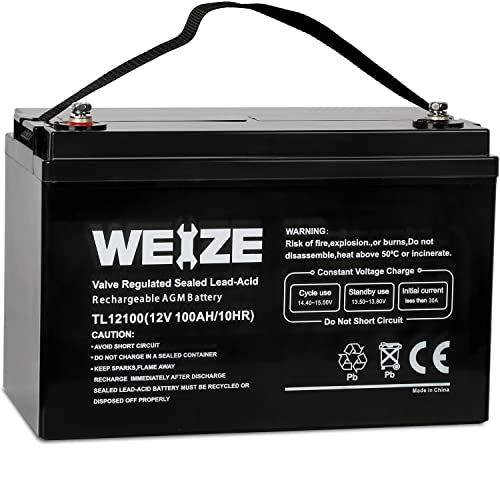
The Weize AGM battery offers maintenance-free operation with a compact footprint ideal for RVs and small off-grid systems. Its AGM design minimizes acid leakage and allows for straightforward installation in tight spaces. With a 1–3% monthly self-discharge rate and a strong 1150A max discharge current, it supports reliable day-to-day use and longer storage between charges. Operating temperature support covers a wide range, though best results are achieved near room temperature. Suitable for simple, expandable setups where weight and space are factors.
Key considerations: AGM chemistry trades some energy density for robustness and safety. Expect moderate cycle life compared with LiFePO4, but a lower upfront cost. Ensure proper ventilation in enclosed spaces and plan charging strategies to prevent deep discharges, which can shorten life even in maintenance-free designs.
Dyness 12V 100Ah LiFePO4 Battery (Two Pack)

Dyness delivers LiFePO4 performance in a lighter, more compact package. Two 100Ah units form a scalable system that can be configured in series or parallel to reach higher voltage or capacity—great for RVs, cabins, or small homes. A+ grade LiFePO4 cells promise a long lifespan with thousands of deep cycles and improved energy density compared with lead-acid counterparts. The included low-temperature charging protection helps preserve performance in cooler climates, reducing the risk of cold-weather damage.
Key considerations: LiFePO4 chemistry provides superior longevity and safety but at a higher upfront cost. The modular 2-pack design supports straightforward expansion, though multiple modules increase the complexity of wiring and BMS requirements. Consider whether your climate necessitates enhanced thermal management and protective enclosures for outdoor mounts.
Dumfume 12V 300Ah LiFePO4 Battery

This Dumfume LiFePO4 battery packs a substantial 300Ah capacity in a relatively compact form, designed for more robust off-grid systems, including home storage and large RV setups. A built-in 200A smart BMS delivers protections against overcharge, overdischarge, overcurrent, and temperature extremes, complemented by a flame-retardant housing. The unit is scalable via 4S4P configurations, enabling sizable energy banks while maintaining manageable weight for installation.
Key considerations: high capacity and strong BMS support make this a solid backbone for larger off-grid arrays. Weight and size are still factors for shipping and mounting, and ensure adequate airflow and protection in exposed environments. Compatibility with inverters and charge controllers should be verified to maximize efficiency and safety.
ECO-WORTHY 12V 280Ah LiFePO4 (Two Pack)

The ECO-WORTHY 12V 280Ah LiFePO4 option emphasizes long lifespan and robust cycle resilience. The two-pack design supports easy expansion, enabling higher total capacity for mid-to-large off-grid systems. Low-temperature protection and a built-in 200A BMS help safeguard performance in cold conditions, while Bluetooth monitoring on related ECO-WORTHY models enables remote status checks and configuration tweaks. This combination suits permanent installations in sheds, cabins, or RV setups seeking reliable, scalable energy storage.
Key considerations: LiFePO4 chemistry offers extended cycles and resource efficiency, but ensure proper thermal management in outdoor enclosures. The two-pack approach is convenient, yet proper busbars, fuses, and system wiring are essential for safe high-current operation. Confirm compatibility with your inverter’s input and charging profile to optimize charging efficiency.
ECO-WORTHY 10KW Off-Grid Solar System Starter Kit

This starter kit combines a robust solar array with a substantial LiFePO4 energy storage solution, designed for off-grid living and RV deployments. It includes multiple high-efficiency panels and a capable controller, plus lithium batteries intended to deliver dependable daily power. The integrated design aims to reduce the complexity of sourcing components separately, while enabling a turnkey off-grid system with space for future expansion.
Key considerations: while kits promise convenience, evaluate the total energy storage, inverter capacity, and charging profiles to ensure alignment with your load demands. Kits may offer limited configurability compared with modular builds; for long-term growth, plan future expansions and replacement cycles that align with your consumption patterns and climate.
Buying Guide: Key Purchase Considerations For Off-Grid Battery Storage
- Chemistry choice: AGM batteries are maintenance-free and robust in many environments but offer lower energy density and cycle life than LiFePO4. LiFePO4 provides long lifespan, thousands of cycles, better safety margins, and lighter weight, at a higher upfront cost. Your climate, space, and required daily cycles drive the decision.
- Capacity and scalability: estimate daily energy usage, then select a base capacity with room to grow. LiFePO4 systems often scale well through series/parallel configurations, enabling larger banks as needs evolve.
- Cycle life and warranty: look for deep-cycle ratings and reputable BMS protections. Long warranties are common with LiFePO4; verify coverage periods and what constitutes acceptable use.
- Temperature performance: extreme cold or heat affects charging efficiency and capacity. Battery management systems with low-temperature protection help preserve longevity, especially in off-grid cabins or RVs.
- Weight and space: heavier lead-acid options require stronger mounting and support, while LiFePO4 batteries offer lighter weight per amp-hour but can be more expensive upfront.
- Safety and protection: a robust BMS is essential for LiFePO4 packs to guard against overcharge, overdischarge, short circuits, and thermal events. Enclosures should be ventilated and weather-resistant if outdoors.
- System integration: confirm compatibility with your solar charge controller, inverter, and existing wiring. Check for expandable configurations and ensure you have proper fusing, cabling, and voltage compatibility.
- Maintenance and monitoring: consider Bluetooth or app-based monitoring, especially for remote off-grid setups. Real-time voltage, current, and temperature readings help optimize charging strategies.
- Cost of ownership: initial costs are higher for LiFePO4, but total cost of ownership can be lower thanks to longer lifespan and greater efficiency. Balance upfront investment against long-term reliability and energy savings.
In sum, the best battery for your off-grid solar system depends on your energy profile, climate, and expandability needs. LiFePO4 options offer longevity and safety with scalable configurations, while AGM can be a cost-effective choice for smaller setups or beginners. Evaluate total system compatibility, ensure proper protection measures, and plan for future growth to maximize solar reliability in remote environments.