Best Bathroom Underfloor Heating Thermostats for Warm Floors and Easy Control
In brief, the best bathroom underfloor heating thermostat options combine reliable temperature control, safety features, and easy installation for homeowners. This guide highlights five top thermostats designed for radiant floor systems, ideal for bathrooms where precise warmth and moisture resistance matter. The picks cater to different needs: simple plug-and-play use, dual-sensor floor + air monitoring, and complete kit systems for tile or laminate floors. Read on to compare features, suitability, and any limitations.
Product Quick Reference
| Product | Best For | Key Benefit | Limitations |
|---|---|---|---|
| Programmable Thermostat for House Radiant Underfloor Heating (BOWSEN) | Homeowners needing dual sensors and built-in GFCI | Self-adapting, dual air & floor sensors, 120/240V compatibility | Requires proper wiring; GFCI testing needed after install |
| OJ Microline UTN4 Radiant Floor Thermostat | Simple, reliable non-programmable control | Built-in Class A GFCI; dual voltage support | No programming features |
| BLARALA Electric Radiant Floor Heating System | All-in-one kit for bathrooms | Includes mat, thermostat, sensors, and monitors | Size and wattage vary by kit; suitable for smaller spaces |
| 7-Day Programmable Thermostat for Underfloor Heating (starEEl) | Daily scheduling with energy savings | 7-day programming; dual sensors; auto-adaptive 120/240V | May require careful setup for compatibility with existing mats |
| LuxHeat 50sqft Floor Heating Cable Kit | DIY installers wanting a full kit | Includes heater cable, UDG4 thermostat, sensor, alarm | Cable-based system may require leveling underlayment |
Programmable Thermostat for House Radiant Underfloor Heating
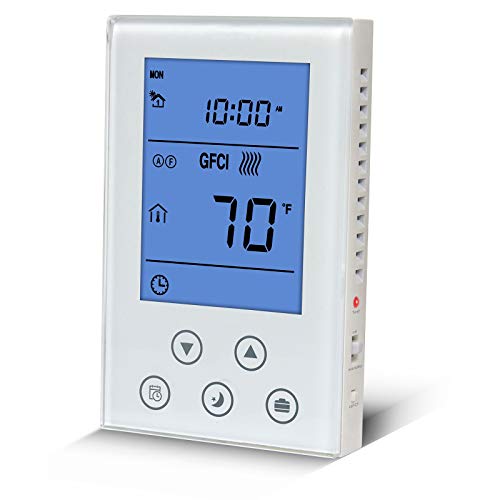
The BOWSEN programmable thermostat is designed for both 120VAC and 240VAC systems, with a maximum current of 15A and a maximum power of 1800W at 120V or 3600W at 240V. It features dual sensing (air and floor), a built-in GFCI, and a ground fault test function for safety. This model is best for homeowners who want precise control with safety protections in a bathroom setting and who may be wiring for both voltages. Caution: If the GFCI trips, shut down power and inspect for leakage or shorts, then re-enable via the hidden GFCI menu if necessary.
Why chosen: Dual sensors help prevent over- or under-heating floors, and the integrated GFCI adds essential protection in wet bathroom environments.
OJ Microline UTN4 Radiant Floor Heat Thermostat

OJ Microline’s UTN4 thermostat is a straightforward, non-programmable option with built-in Class A GFCI and dual voltage support (120V, 240V). It’s a solid choice for bathrooms where a simple, reliable on/off temperature control is sufficient and safety is a priority. Best for: users who want plug-and-play setup without programming. Caution: Non-programmable units won’t support schedule-based energy savings.
BLARALA Electric Radiant Floor Heating System

This all-in-one kit includes a 20 sq. ft. mat, programmable thermostat with floor sensor, installation monitor, and temperature sensors. It’s well-suited for bathrooms where a complete, self-contained system is preferred, especially under tile or laminate floors. Best for: quick, contained installation with integrated safety features. Caution: Mat size is fixed; plan layout around fixtures to avoid overheating near outlets.
7-Day Programmable Thermostat for Underfloor Heating (starEEl)

The starEEl 7-Day Programmable Thermostat supports auto-adaptive voltage across 120V/240V and features dual sensors (air and floor). It emphasizes energy savings through seven-day programming and provides LED backlit display for easy reading. Best for: households seeking routine-based warmth with precise floor protection. Caution: Compatibility details with existing mats should be confirmed before installation.
LuxHeat 50sqft Floor Heating Cable Kit

The LuxHeat 50sqft kit includes 50 sq ft of 120V heating cable, a UDG4 programmable thermostat with built-in GFCI, a floor sensor, alarm, and installation accessories. It’s ideal for bathrooms needing a full room solution with independent zone control. Best for: DIYers installing under tile or laminate floors. Caution: Wires must be embedded in self-levelling underlayment or mortar; do not cut heater cable.
Buying Guide
What should I look for in a bathroom underfloor heating thermostat?
Key factors include voltage compatibility (120V vs 240V and auto-adaptive options), built-in safety features like GFCI, sensor types (air and floor), and the ability to program or schedule warmth. Choose a model that aligns with your electrical setup, floor type, and desired level of control.
What’s the difference between programmable and non-programmable thermostats?
Programmable thermostats offer scheduled warmth—helping reduce energy use by adjusting temperatures across wake, away, home, and sleep periods. Non-programmable units provide simple, on-demand control and are easier to install but lack automated energy savings.
Is dual-sensor (air and floor) control important?
Yes for rooms where floor temperature must be regulated to protect materials (like tile or wood). A floor sensor prevents overheating, while an air sensor keeps the room comfortable. This is especially valuable in bathrooms where moisture and temperature swings occur.
Do all kits come with GFCI protection?
Many do, and GFCI protection is strongly recommended in wet locations. In some kits the GFCI is built into the thermostat; in others, it’s part of the control module. Verify the presence of GFCI and understand how to test it safely after installation.
How should I plan installation in a bathroom?
Map the heating area to avoid obstructions, ensure proper subfloor preparation, and use a compatible underlayment or mortar. Ensure all wiring conforms to local electrical codes and, if needed, consult a licensed electrician for wiring and safety checks.
What about warranty and support?
Look for systems with long warranties and accessible customer support. Warranties often cover mats or cables for many years and thermostats for several years, offering peace of mind for bathroom installations.
How does one choose between a full kit vs. a single thermostat?
A full kit simplifies setup for DIY projects and ensures all components work together. A single thermostat may suffice if you already own compatible mats or cables and want to add temperature control to a specific zone.
How can I avoid common installation issues?
Follow manufacturer instructions precisely, ensure electrical supply is correctly rated, test GFCI after installation, and confirm no shorts or leaks in the floor heating cables. Keep pathways clear to avoid damage to sensors or mats during installation.
What’s the best option for a bathroom with a wet environment?
Thermostats with Class A GFCI protection and robust water resistance are preferred. Dual-sensor models help regulate heat safely, protecting both occupants and flooring materials.
Frequently Asked Questions
- What voltage options should I choose for a bathroom underfloor heater? – Most bathrooms use 120V or 240V systems; many thermostats support auto-adaptive 120/240V compatibility for flexibility.
- Is GFCI necessary for underfloor heating? – GFCI is strongly recommended in wet locations to protect against electrical shock and fire risk.
- Can I install underfloor heating myself? – Many kits are designed for DIY installation, but wiring and electrical safety may require a licensed electrician.
- Do programmable thermostats save energy in bathrooms? – Yes, scheduling warmth during occupied times reduces unnecessary heat and lowers energy use.
- What should I consider when choosing dual-sensor thermostats? – Dual sensors balance floor protection with room comfort and prevent overheating of flooring materials.