Best Baseboard Heater Thermostats for 240V Homes
Choosing the right thermostat for a 240V baseboard heating system ensures steady comfort, responsive control, and energy savings. This guide reviews five top options, spanning manual line-voltage models and smart, Wi‑Fi connected thermostats. Each product section highlights compatibility, control range, installation notes, and key features to help you compare at a glance.
Product Quick Reference
| Product | Brand | Key Feature |
|---|---|---|
| 240 V Only 4-Wire Manual Baseboard Thermostat | YeloDeer | Slim design; high accuracy; 40–80 °F range |
| Cadet F Series Double Pole Baseboard Thermostat | Cadet | Double pole; 45–80 °F range; easy end mounting |
| Mysa Smart Thermostat Lite | Mysa | Wi‑Fi, 120/240V, app control, home integrations |
| 2 Pack 240 V Manual Baseboard Thermostat | YeloDeer | Dual pack; same features as single unit |
| Honeywell TL7235A1003 Pro Line Volt Thermostat | Honeywell | Non-programmable, 240V, clear on/off indicators |
240 V Manual 4-Wire Baseboard Thermostat — YeloDeer

The YeloDeer 240V four-wire manual thermostat combines a slim white profile with a large adjustment knob for easy temperature control. It is designed to sit flush against the wall and integrates with 240V baseboard heating systems up to 4800 W. This model emphasizes higher-accuracy electronic control compared with traditional mechanical thermostats, helping maintain consistent room temperatures across a 40 °F to 80 °F (4.4 °C to 26.7 °C) range. It is suitable for modern, stylish interiors while delivering reliable performance for 240V setups.
Cadet F Series Double Pole Baseboard Thermostat (BTF2W)

The Cadet F Series BTF2W is a double-pole, line-voltage thermostat designed for Cadet F series baseboard heaters. It features a straightforward 45º–80ºF (7ºC–27ºC) temperature range controlled by a large dial. The unit is engineered for mounting at either end of the baseboard heater, simplifying installation and reducing wiring complexity. It provides reliable, uncomplicated operation and is compatible specifically with Cadet F heaters, making it a practical upgrade for Cadet-based systems.
Mysa Smart Thermostat Lite — Line Voltage
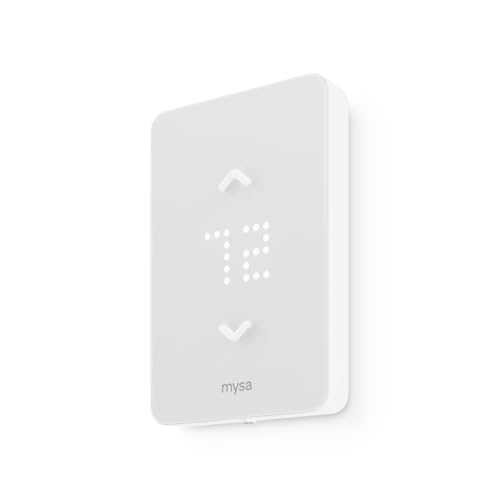
The Mysa Smart Thermostat Lite is a Wi‑Fi connected line-voltage thermostat compatible with 120V and 240V baseboard heaters. It supports single-pole configurations and works with major smart ecosystems via Alexa, Google, and HomeKit. The device offers cloud-free app control, remote scheduling, and energy-saving features, making it suitable for users seeking modern, voice-assisted, energy-conscious operation without ongoing subscription fees. Installation is designed for DIY enthusiasts with standard 2-wire line-voltage wiring.
Honeywell Home CT410B Manual 4-Wire Thermostat

The Honeywell CT410B is a 4-wire, non-programmable line-voltage thermostat suitable for electric baseboards and convectors. Its bimetal temperature sensor provides straightforward, worry-free operation with robust durability. The device is designed for compatibility with a wide range of electric heating products and offers a simple control experience ideal for users who prefer direct manual adjustment and long-term reliability without smart features.
Stelpro SWT1F Single Pole Line Voltage Thermostat

The Stelpro SWT1F is a single-pole line-voltage thermostat designed for electric baseboards, wall heaters, and similar applications. It features a mechanical dial for precise temperature control and two-wire installation, supporting quick setup for residential and light commercial environments. The SWT1F is compatible with a wide range of heating products and offers dependable manual control for steady comfort in 240V systems.
Buying Guide: Key Purchase Considerations
- Voltage and compatibility: Ensure the thermostat is rated for your system’s voltage (120V, 208/240V) and is compatible with your baseboard heater type (single-pole or double-pole).
- Control type: Choose between manual line-voltage thermostats for straightforward operation or smart thermostats with Wi‑Fi, app control, and voice integrations for remote management and scheduling.
- Installation: Consider mounting options (end-mounted vs. wall-mounted), wiring requirements, and whether you prefer a unit that can be installed without additional wiring or one that requires professional installation.
- Temperature range and accuracy: Look for a wide, precise control range (commonly around 40–80 °F) to maintain consistent comfort and energy efficiency.
- Durability and build: For 240V environments, choose thermostats with robust enclosures and reliable sensors to withstand heat and potential electrical interference.
- Smart features and ecosystems: If selecting a smart model, check compatibility with your preferred ecosystems (Alexa, Google Home, HomeKit) and whether there are any ongoing subscription fees (most reputable options offer app control without fees).
- Future-proofing: If you anticipate expanding to more zones or integration with smart home routines, a smart line-voltage thermostat may offer the best long-term value, despite higher upfront cost.
When evaluating options, balance installation effort, control precision, and long-term energy savings. Manual models excel in reliability and simplicity, while smart models offer scheduling, remote access, and energy insights that can reduce heating costs over time. For multi-room comfort, pairing a non-programmable unit in some zones with a smart thermostat in others can provide a flexible, scalable solution.