Best Ballast Solutions for Modern Lighting Fixtures
Choosing the right ballast can improve efficiency, extend lamp life, and stabilize performance across commercial and residential lighting. This guide highlights five top ballast options from trusted brands, focusing on compatibility with common lamp types, voltage ranges, and key features like instant start, energy savings, and emergency support. Read on to compare options and find the ballast that best fits your lighting project.
| Product | Brand | Lamp Type | Voltage Range | Key Benefit |
|---|---|---|---|---|
| GE Lighting T8 UltraMax Proline | GE | T8 Fluorescent | 120-277V Multivolt | High efficiency; instant start |
| PHILIPS Advance RELB-2S40-N | PHILIPS | T12 Fluorescent | 120V | Commercial-grade reliability |
| BAL700 Emergency Lighting Ballast | BEST | Emergency Fluorescent | 120/277V | Emergency illumination; backup power |
| PHILIPS ICN4P32N | Philips | 4-P32 Fluorescent | 120V | Compact, reliable control |
| UNIVERSAL B234SR120M | UNIVERSAL | T12 Fluorescent | 120V | Two-lamp ballast option |
These selections cover a range of common lighting setups—from standard household and office setups to emergency lighting scenarios—emphasizing reliability, compatibility, and energy efficiency.
GE Lighting T8 UltraMax Proline Electronic Ballast

GE’s UltraMax Proline is designed for both residential and commercial use, supporting 120-277V across multiple configurations. The ballast emphasizes instant-start operation and high efficiency, with GE claiming efficiency exceeding 90% under typical conditions. It supports F32T8/WM and F17T8 lamps, making it a versatile choice for retrofit projects that require quick startup and reduced energy consumption. The device is positioned as a long-burn option, suitable for installations with lower daily switching frequency, which can help minimize ballast wear and maintenance needs.
PHILIPS Advance RELB-2S40-N Electronic Ballast

The RELB-2S40-N is a solid, commercial-grade ballast designed for T12 lamp configurations at 120V. While product details emphasize brand heritage and origin, the RELB line from Philips Advance is known for dependable performance in professional settings. This model focuses on stable operation and compatibility with traditional fluorescent systems, making it a practical choice for upgrading older fixtures while maintaining reliable light output. Suitable for retrofit projects that require durable, industry-standard components.
BAL700 Emergency Lighting Ballast

The BAL700 is built for emergency lighting systems, providing dual 120/277-volt compatibility and an automatic solid-state transfer switch. In routine operation, it manages AC output while ensuring rapid battery transfer to fluorescent lamps during an outage for a minimum of 90 minutes. This ballast is ideal for facilities that require compliant emergency illumination as part of safety and egress planning. It emphasizes reliability, straightforward integration, and dependable backup performance when power fails.
PHILIPS ICN4P32N 3/4F17-F32 Electronic Ballast

The ICN4P32N corresponds to a compact, reliable electronic ballast for mixed lamp configurations in fluorescent fixtures. While specific technical details in the listing are minimal, Philips ICN series are generally chosen for consistent performance, controlled ballast operation, and compatibility with mid-power T12/T8 lamps. This unit is suitable for multi-lamp fixtures where consistent light output and dependable startup are essential, such as retail or office environments that require stable illumination.
UNIVERSAL B234SR120M-A000I Electronic Ballast
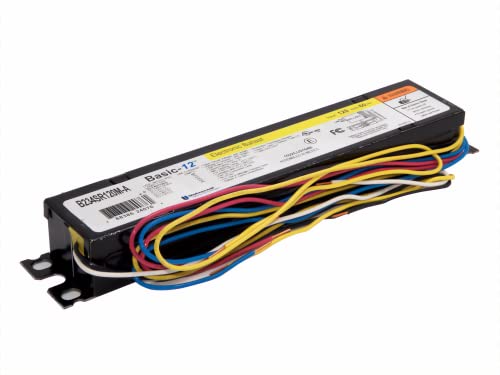
Universal’s B234SR120M-A000I is a two-lamp electronic ballast designed for T12 fluorescent fixtures at 120V. Electronics from Universal Lighting Technologies are typically compact and straightforward to install, delivering reliable performance for two-lamp configurations. This ballast is well-suited to upgrades in classrooms, offices, or hallways where a proven, cost-effective solution is preferred for maintaining consistent brightness and lamp life.
Buying Guide
Key considerations when choosing a ballast include lamp compatibility, voltage range, and whether you need a standard or emergency ballast. The five options above cover common configurations, but here are deeper factors to weigh:
- Lamp type compatibility: Ensure the ballast supports your lamp type and size (T8, T12, etc.).
- Voltage range: Multivolt ballasts simplify wiring across different supply conditions but verify compatibility with your local mains (120V, 208V, 277V, etc.).
- Starting mechanism: Instant-start ballasts reduce flicker and startup time, but some environments may prefer programmed start for longer lamp life.
- Emergency functionality: If emergency lighting is required, choose a ballast with a built-in transfer switch and battery support to meet safety codes.
- Energy efficiency: Look for ballasts with high efficiency ratings (often around 90% or higher) to minimize energy costs.
- Retrofit vs. new installation: Retrofit projects may favor universal or multi-lamp ballasts that fit existing fixtures, while new builds can leverage optimally matched ballast configurations for performance.
- Maintenance and warranty: Consider the long-term reliability and any warranty terms, especially in commercial applications where downtime is costly.
- Compatibility with LED retrofits: Some ballasts are ballast-compatible with LED tubes or designed for ballast bypass conversions; plan accordingly if you intend an LED transition.
In summary, selecting the right ballast involves balancing compatibility with lamp types, voltage flexibility, and the specific needs of the space—whether you prioritize immediate energy savings, emergency illumination, or long-term reliability. The five options presented offer a practical cross-section of the market for typical residential and commercial lighting projects.