Best 3 Way Ball Valve Options for Fluid Control
When choosing a 3 way ball valve, look for performance, material compatibility, and installation ease. This guide highlights five practical options suited for water, irrigation, fuel, and general liquid transfer. Best for: residential plumbing and small-scale irrigation projects, budget-conscious fittings, and professional setups requiring durable stainless steel or brass valves. The table below compares key choices at a glance.
| Product | Material | Port Type | Thread | Best For |
|---|---|---|---|---|
| Horiznext 3 Way Valve | 304 Stainless Steel | T-Port | 3/4 in NPT Female | Water tanks and line switching |
| QWORK 2 Pack 1/4″ NPT Brass | Brass | L Port | 1/4″ NPT Female | Instrumentation and small-diameter lines |
| QWORK Series 3-Way (L-Port) | Forged Brass | L-Port | 1/2″ NPT Female | General fluid routing |
| DERNORD 3-Way Ball Valve | 304 Stainless Steel | L Mounting Pad | 1/2″ NPT Female | Water, oil, gas with vinyl lock |
| Banjo 3/4″ FNPT Polypropylene | Polypropylene | 3-Way | FNPT | Budget-friendly, US-made |
Horiznext 3 Way Valve, 3/4 in NPT

The Horiznext 3 way ball valve uses a T-port design to direct flow between connected lines. It features 3/4 in NPT female threads for easy compatibility with common piping. The 304 stainless steel body supports durable, long-term performance in water and liquid transfer. Best for: water tank routing and branch-line control in residential or light commercial systems. Caution: ensure correct threading and sealant compatibility to prevent leaks in galvanized or coated pipes.
QWORK 2 Pack 1/4″ NPT Brass 3 Way Ball Valve
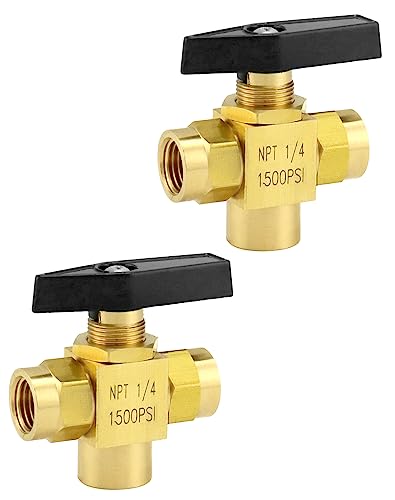
These brass 3 way ball valves use a 1/4″ NPT connection with an L Port configuration. Brass provides corrosion resistance and durability for instrumentation or small-diameter lines. Best for: instrumentation panels and compact installations where space is tight. Choose this if you need multiple valves with a consistent 1/4″ NPT size. Limitation: smaller ports limit flow compared to larger valves, which can affect higher-volume applications.
QWORK Series 3-Way L-Port Ball Valve

This lever-operated, forged brass 1/2″ NPT valve features an L-Port design with PTFE seats for wear resistance. The 1 inch valve body provides robust construction and long working life in water, oil, and gas lines. Best for: versatile general-purpose fluid routing with reliable manual control. Limitation: forged brass requires careful handling to prevent cross-threading during installation.
DERNORD 3-Way Ball Valve, L Mounting Pad

DERNORD offers a stainless steel 304 3-way ball valve with an L mounting pad and 1/2″ NPT ports. It is designed for water, oil, and gas and includes a vinyl locking handle for secure operation. Best for: industrial or industrial-adjacent setups needing secure, lockable control. Limitation: mounting pad orientation may require additional brackets for complex installations.
Banjo 3/4″ FNPT Polypropylene Valve

Banjo’s polypropylene 3-way valve is a budget-friendly option made in the United States. It uses FNPT threads and is suitable for general-purpose, low-pressure liquid routing. Best for: quick installs and projects where cost is a key factor. Caution: polypropylene has lower heat and chemical resistance compared to stainless steel or brass in some environments.
Buying Guide: Key Considerations for Selecting a 3-Way Ball Valve
What port configuration do you need? T-Port (straight-through) supports lateral switching between two lines, while L-Port directs flow from a single inlet to two outlets. Choose based on how you plan to route fluids in your system.
What material suits your application? Stainless steel 304 offers corrosion resistance and durability for water and general liquids; brass is strong for instrumentation and medium pressures; polypropylene is budget-friendly but less durable under high heat or aggressive chemicals.
What thread size and connection type are required? NPT and FNPT threads differ in compatibility with piping. Match the thread size to your existing piping to avoid adapters and leaks.
Operating conditions matter. Temperature and pressure ratings determine suitability for water, oil, gas, or fuel. If you’ll encounter high temperatures or volatile substances, select a valve with appropriate seals and metals.
Maintenance and accessibility. Valves with locking handles or easy disassembly can improve safety and serviceability in industrial or outdoor settings.
FAQ
- What is a 3-way ball valve used for? It routes fluid between three ports, allowing diversion, mixing, or isolation in a single valve.
- Which material is best for drinking water systems? Stainless steel is preferred for corrosion resistance and cleanliness; ensure fittings are food-grade if needed.
- How do I choose between L-Port and T-Port? L-Port is best for diverting flow from one inlet to two outlets; T-Port provides more versatile line switching in some layouts.
- Are brass valves suitable for fuel lines? Brass works for many fuels, but verify compatibility with specific fuel types and temperatures in your system.
- Can I install a 3-way valve outdoors? Yes, but choose weather-resistant materials and seals; consider protective housings in harsh climates.
- Do 3-way valves require special tools? Basic wrenches and thread sealant are usually sufficient; consult manufacturer guidance for torque specs.