Best Home Backup Power Systems for Homes
The following guide highlights five top backup power systems that suit typical American homes, balancing capacity, reliability, and ease of use. From compact UPS units protecting PCs and networks to powerful portable stations with solar compatibility, these picks help keep essentials running during outages. Each entry includes a quick view of key features and how it fits common home scenarios—home offices, entertainment setups, refrigerators, and lighting. Use the buying guide to compare runtimes, expandability, charging options, and maintenance considerations to choose the right system for your household needs.
| Product | Capacity | Best For | Why It Stands Out |
|---|---|---|---|
| CyberPower CP1500PFCLCD | 1500VA / 1000W | Home office, PCs, networking gear | PFC sine wave output, 12 outlets, color LCD, USB-C |
| CyberPower CP1500AVRLCD3 | 1500VA / 900W | Mid-range home setup | Simulated sine wave, 12 outlets, LED status |
| Jackery HomePower 3000 | 3072Wh (solar-ready) | Whole-home essentials | High capacity, fast surge support, modular solar option |
| APC BX1500M | 1500VA / 900W | Multi-device protection | 10 outlets, dataline protection, USB charger |
| GOLDENMATE 1000VA | 1000VA / 800W | Compact backup with LiFePO4 | Long lifespan, eight outlets, cooling and BMS |
CyberPower CP1500PFCLCD PFC Sinewave UPS

The CP1500PFCLCD provides 1500VA / 1000W of PFC sine wave power, designed to support active PFC and conventional power supplies. It safeguards computers, workstations, network devices, and telecom equipment with 12 NEMA 5-15R outlets—six with battery backup and surge protection, and six surge-only. The unit includes a right-angle 5-foot cord, plus two USB ports for quick charging. A multifunction LCD panel offers real-time battery and power condition details, with a screen that tilts up to 22 degrees for easy viewing. Ideal as a central UPS for a small home office or media setup.
CyberPower CP1500AVRLCD3 Intelligent UPS System

The CP1500AVRLCD3 offers 1500VA / 900W with an AVR to stabilize voltage fluctuations. It uses a simulated sine wave and protects essential home devices, including workstations, routers, and home entertainment gear. It provides 12 outlets in total (six battery-backed, six surge-protected) and includes USB charging ports (Type-A and Type-C). The color LCD panel presents status information, enabling proactive maintenance and reducing downtime during outages. This model fits power needs for modest home networks or a small entertainment setup with reliable backup power.
Jackery HomePower 3000 Portable Power Station

The Jackery HomePower 3000 delivers a substantial 3600W continuous output with a 3072Wh LiFePO4 battery pack (7200W surge). It is designed for essential home backup, including refrigerators, lights, WiFi, and important electronics. The system supports a quick UPS transition within ≤20ms, preserving continuity for security cameras, medical refrigerators, and video calls. A notable advantage is the potential for solar recharging, making it suitable for longer outages and off-grid recharging. It is a robust choice for homeowners seeking a portable, high-capacity power station.
APC BE600M1 Back-UPS
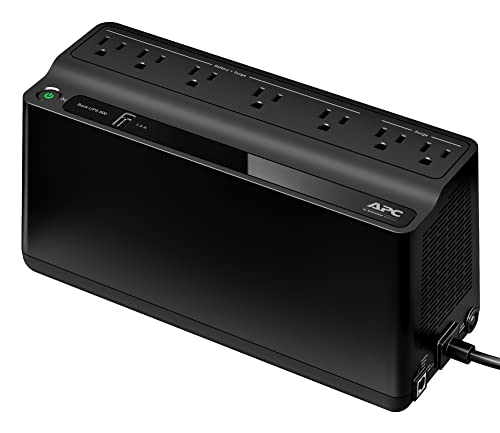
The APC BE600M1 offers 600VA / 330W, featuring seven outlets with five backed by battery and surge protection. Two outlets are surge-only, and a USB charger port adds mobile convenience. The compact form factor makes it suitable for small home offices or media setups where space is at a premium. While not as high-capacity as larger units, it provides essential protection for a router, computer, and peripheral devices during short outages or voltage fluctuations.
APC BX1500M Back-UPS Pro

The BX1500M features 1500VA / 900W, with 10 outlets (5 with battery backup, 5 surge-protected) and a right-angle 3-prong plug. It supports PowerChute UPS management via a data port for Windows and macOS configurations. This model is well-suited for medium home networks, gaming setups, and multiple devices requiring battery backup alongside surge protection, offering a balanced mix of capacity and protection in a compact footprint.
GOLDENMATE 1000VA LiFePO4 UPS

This unit uses a Lithium Iron Phosphate (LiFePO4) battery pack for longevity, delivering over 10 years of life and more than 5000 charge cycles. It includes eight outlets with both surge protection and battery backup, plus a built-in Battery Management System (BMS) and cooling system. The UPS protects against outages and voltage issues while offering a lower total cost of ownership relative to traditional lead-acid batteries. It is a solid option for users seeking a longer-lasting, compact power backup with good runtime for multiple devices.
Buying Guide: Key Purchase Considerations
- Capacity and runtime: Match VA/W ratings to your critical devices. For home offices with desktops, routers, and NAS, aim for 1000W–1500W. For refrigerators and essential lighting, consider higher-capacity units or portable power stations.
- Power quality: Locate sine wave versus simulated sine wave outputs. PFC-compatible devices benefit from true sine wave (or high-quality simulated sine) to prevent equipment stress and ensure clean power.
- Outlet mix and accessibility: Check the number of battery-backed vs. surge-only outlets, plus the locations and spacing of outlets for bulky adapters.
- Connectivity and management: USB charging ports and software for monitoring (PowerChute or similar) help manage usage and predict battery health. Consider models with LCDs for at-a-glance status.
- Expansion and integration: If you plan solar recharging or accessory batteries, choose units with relevant ports and higher surge tolerance. Portable power stations like Jackery offer strong off-grid capabilities and solar compatibility.
- Maintenance and lifespan: Lithium-based packs like LiFePO4 last longer and require less frequent replacement, but initial costs are higher. Lead-acid options are cheaper upfront but have shorter lifespans.
- Security and safety: UL certification and proper enclosure protection reduce risk during outages. Ensure the device is appropriate for a home environment and has overcurrent protections.
In selecting a home backup power system, consider your essential loads, whether you need stationary protection or portable resilience, and how long you want your home to run during outages. The five options above cover a range of capacities and use cases, from compact desk setups to high-capacity stations suitable for refrigerators, routers, and critical devices. Always verify compatibility with your specific equipment and any home energy strategies (like solar pairing) you plan to employ.