Best Automotive Circuit Breaker Panel Options for 12V–24V Systems
The right automotive circuit breaker panel keeps marine, RV, and automotive electrical systems safe and tidy. This guide highlights five solid options and explains who each is best for. It targets buyers looking for durable, easy-to-reset protection without frequent fuse replacements. The top picks balance protection, ease of use, and weather resistance for engines, boats, trailers, and off-road vehicles.
| Product | Best For | Key Benefit |
|---|---|---|
| DaierTek 12 Way Fuse Block | General automotive and marine wiring | LED fault indication and tidy 12-circuit layout |
| Red Wolf 60 Amp Circuit Breaker | Single high-current protection | Manual reset and waterproof housing |
| Voltrish 60 Amp Marine Breaker | Replaces fuses in boat/marine setups | One-click reset, rugged build |
| Bolipoeq 300 Amp DC Breaker (Pack of 2) | Heavy-duty protection for high-current systems | IP67 waterproof and SAE/UL-compliant |
| WUPP 6-Circuit Fuse Block | Compact, clean wiring | LED indicators and bus bars for organization |
DaierTek 12 Way Fuse Block — 12V/24V Marine and Automotive

The DaierTek 12 Way Fuse Block provides 12 dedicated fuse jacks and a protective cover to keep wiring tidy. It operates up to 32V DC and supports up to 30A per circuit and 100A per panel. This makes it suitable for automotive, boat, RV, and small fleet applications where multiple circuits require individual protection. The included LED indicator helps quickly locate a blown fuse, aiding rapid troubleshooting. Best for a cabin or engine bay where neat wiring and fast fault identification are priorities.
Best for: owners needing a straightforward, all-in-one 12-circuit solution with clear fault indication. It’s particularly suited for vehicles or boats with many auxiliary accessories. Caution: ensure the total panel current does not exceed 100A to avoid overheating or early failure of the block.
Red Wolf 60Amp Circuit Breaker — Waterproof Auto Marine

This inline DC 12V–48V breaker is designed as a robust protection tool for battery systems and charging circuits. The manual reset switch provides a clear on/off control, and the waterproof housing supports marine or outdoor installations. It’s ideal when a single, reliable over-current protection point is needed without the complexity of a full multi-circuit panel. Best for: boats or trailers where a durable, easy-to-operate kill switch is essential. Limitation: it protects a single circuit; you’ll still need additional devices for multiple circuits.
Voltrish 60 Amp Marine Circuit Breaker — One-Click Reset

The Voltrish 60A DC breaker replaces fuses in trolling motor circuits and other marine setups. It features a one-click reset and a rugged, water-resistant build, with copper conductors and thermoset plastic housing. This is a strong pick when you want fuse-free protection with quick reset and splash tolerance. Best for: boat owners who want rapid reset capability on high-current trolling motor circuits. Caution: verify compatibility with your voltage range (12V–48V) and ensure proper panel clearance for heat dissipation.
Bolipoeq 300 Amp DC Breaker — Heavy-Duty Package

Bolipoeq offers a high-current 300A DC circuit breaker with IP67 waterproofing and SAE J1625/J1171/UL1500 compatibility. The pack includes two units with a long reset lever and a manual reset function, making them fit for heavy automotive or marine loads such as trolling motors or power systems on bigger boats or RVs. Best for: high-current protection in harsh environments where scratch resistance and waterproofing are critical. Limitation: heavier units may require more mounting space and larger wiring gauge.
WUPP 6-Circuit Fuse Block — Compact Organization
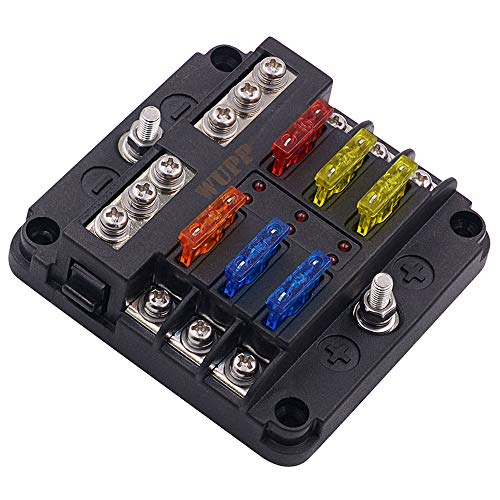
The WUPP 6-circuit fuse block focuses on neat wiring with six dedicated fuse positions and a negative bus. Each circuit can carry up to 30A, with a 32V input rating. LED indicators help identify blown fuses, and the nickel-plated copper bus bars resist corrosion. Best for: compact installations where space is limited but reliable circuit protection is still required. Caution: LED wiring may introduce small voltage on the circuit when off due to internal indicator circuit.
Buying Guide: Key Purchase Considerations
- Voltage and current ratings: Choose a panel that matches your system voltage (12V, 24V, or 48V) and total current draw. High-current demands benefit from breakers with higher amperage and robust housings.
- Environmental protection: For boats and outdoor installations, prioritize IP-rated or waterproof housings and corrosion-resistant materials.
- Indication and diagnostics: LED indicators help quickly locate faults. Decide if you need individual indicators per circuit or a single panel-wide signal.
- Layout and expansion: If you plan to add more accessories, select a multi-circuit block with spare capacity or easy bus integration.
- Ease of use: Manual reset or one-click reset breakers reduce downtime. Consider kill-switch capability for critical circuits.
- Compatibility: Verify fuse types (ATO/ATC) or direct DC breakers and ensure mounting options fit your panel or dash space.
- Maintenance: Look for corrosion-resistant terminals and solid housing to minimize maintenance in damp or salty environments.
Frequently Asked Questions
- What is the difference between a fuse block and a circuit breaker panel?
A fuse block uses replaceable fuses, while a circuit breaker panel uses resettable breakers to protect circuits without swapping fuses. - Can I mix fuses and circuit breakers in the same system?
Yes, but ensure electrical design consistency and follow manufacturer guidelines for current ratings and safety. - Which features matter most for marine use?
Waterproofing, corrosion resistance, and reliable reset mechanisms are most important for saltwater environments. - Is LED indicator visibility important in daylight?
Yes, clear indicators help identify blown customers quickly; ensure the indicator design suits your mounting location. - Should I choose a multi-circuit panel or individual breakers?
A multi-circuit panel is convenient for organized layouts and future expansion, while individual breakers can be simpler for small systems. - How do I determine the right amperage per circuit?
List all devices and their typical draw; size each breaker to protect the smallest wiring capable of safely carrying the load.