Best Auto Start Backup Generators for Seamless Power in an Emergency
When outages strike, an auto start backup generator can keep essential appliances running without manual priming. The following selections emphasize reliable remote or auto start features, CO sensors, and transfer switch compatibility to help you choose a model that fits your home or RV needs. The list includes a range of wattage to cover lights, HVAC, and daily power essentials with safety and ease of use in mind.
Summary of chosen products:
- Westinghouse 6600 Watt Home Backup Portable Generator – Remote start, auto choke, CO sensor, transfer switch ready.
- Westinghouse 12500 Peak Watt Home Backup Portable Generator – Higher running watts, remote start, CO shutdown, multiple outlets.
- AIVOLT Inverter Generator 4300W – Quiet operation, RV ready, EPA compliant (inverter) with auto-start compatibility in portable uses.
- Champion Power Equipment 4500-Watt Wireless Remote Start Inverter – Quiet technology, CO shield, wireless remote.
- Champion Power Equipment 4500-Watt Electric Start Dual Fuel – RV ready, dual fuel option, quiet tech, CO shield.
Westinghouse 6600 Watt Back-Up Generator With Auto Start

This portable unit offers a robust 6600 peak watts and 5300 running watts, designed for home backup with a user-friendly remote start and auto choke feature. A 4.7-gallon fuel tank and fuel gauge support extended runtimes, with up to 14.5 hours at a suitable load. The generator includes a transfer switch-ready outlet and RV-ready receptacle options, plus a safety-oriented rubber-covered outlets design. A complete starter kit—oil, funnel, tool kit, and wheel kit—helps you deploy quickly with minimal assembly.
Westinghouse 12500 Peak Watt Backup Generator

Designed for larger homes or demanding loads, this model delivers 9500 running watts and 12500 peak watts. It includes remote start via a key fob and an electric/recoil start option, plus a 6.6-gallon tank for up to daylight hours of operation. It features multiple outlets, including two GFCI 120V receptacles, a transfer switch-ready 120V L14-30R, RV-ready 120/240V 14–50R, and USB ports. A CO shutdown feature and a digital hour meter monitor health and safety, while a heavy-duty 457cc engine provides durability for longer life in adverse conditions.
AIVOLT 4300W Inverter Generator
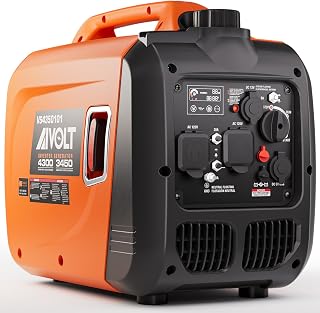
Compact and quiet, this 4300-watt inverter generator is designed for camping, tools, and home use with EPA compliance. It’s suitable for RVs and offers an accessible power solution for lighter essential loads. While not all models include auto-start, its inverter design focuses on efficiency and portability, with a compact profile and lower noise footprint for frequent outdoor usage.
Champion 4500-Watt Wireless Remote Start

This wireless remote start inverter generator combines compact size with powerful output and quiet operation. It includes CO shield protection to monitor emissions and reduce risk in occupied spaces. The wireless remote start feature enhances convenience for quick power restoration during outages while maintaining a focus on efficiency and safe operation for everyday use.
Champion 4500-Watt Electric Start Dual Fuel

This dual-fuel Champion model provides flexibility with propane or gasoline, ideal for RVs and remote worksites. It features quiet technology and a CO shield to reduce harmful emissions, supporting a safer power source during extended outages. The electric start option simplifies ignition, and the dual-fuel capability broadens fuel availability without sacrificing performance.
Champion 4500-Watt Quiet Inverter
Inverter technology provides clean power with reduced noise and enhanced efficiency. The Champion lineup highlights wireless or electric start options, CO shielding, and compatibility with RVs. These units are designed to support mobile lifestyles and smaller critical loads during outages, with emphasis on quiet operation and user-friendly remote control features.
Buying Guide: Auto Start Generators
Buying Guide: Key Factors For Auto Start Generators
- Power needs and wattage: Match running watts to the essential devices you plan to power during an outage. Consider surge wattage for startup spikes of appliances like refrigerators or air conditioners.
- Start method and convenience: Remote start, push-button, or electric start are common. Auto choke and CO sensors add safety and ease of use, especially for frequent outages or RV use.
- Fuel type and runtime: Gasoline models are common, but some dual-fuel options provide flexibility. Look for larger fuel tanks and fuel gauges for longer runtimes between fills.
- Transfer switch compatibility: A transfer switch-ready outlet simplifies integration with home electrical systems, allowing clean switching from utility to generator power.
- Safety and emissions: CO shutdown and rubber outlet covers protect occupants and protect power connections. Proper ventilation and placement reduce risk indoors or in enclosed spaces.
- Portability vs. stationary use: Wheel kits and lighter curb weights enhance portability, while higher-watt models prioritize continuous, stable power for whole-home scenarios.
- Noise and efficiency: Inverter models often run more quietly and with better fuel efficiency, ideal for frequent camping or apartment use where sound matters.
- Maintenance and accessories: Starter oil, funnels, tool kits, and manuals help ensure quick setup. Check warranty terms and service options for long-term reliability.
Choosing an auto start generator involves aligning safety features, power output, and ease of use with your specific needs—whether it’s keeping a fridge running during a storm, powering a worksite, or enabling comfortable living in an RV. The models listed above offer options across a spectrum of wattage, fuel types, and control methods to help you identify a fit that supports continuous, safe, and convenient power in emergencies.