Best ATX Benchtop Power Supply for DIY Electronics
The best ATX benchtop power supplies provide clean, adjustable power for projects, testing, and prototyping. This article highlights five options that fit typical DIY workflows, from precision CV/CC bench models to ATX transfer boards used for rapid voltage access during builds. Perfect for electronics hobbyists, students, and makers who want dependable, adjustable outputs with clear readouts.
| Product | Type | Best For | Key Feature |
|---|---|---|---|
| Jesverty SPS-3010 | DC bench power supply | Precision CV/CC testing | 4-digit display, CV/CC auto-switch |
| Onyehn ATX Breakout | ATX breakout board | Rapid access to 3.3V/5V/12V rails | Multiple voltages on one board |
| Yuuhseel ATX Transfer Board | ATX transfer board | Embedded prototyping with ATX rails | Four voltage outputs, 24-pin port |
| NICE-POWER 30V/10A | DC bench power supply | High-precision bench power | 0.01V / 0.001A readouts |
| Thermaltake PSUs | ATX power supply | General PC power needs | 80 Plus efficiency, Active PFC |
Introduction: The best ATX benchtop power supplies combine precise readouts, reliable protection, and user-friendly interfaces. For CV/CC applications, look for a unit with a clear display and stable regulation. For ATX breakout boards, prioritize compatibility with common rails and robust labeling. The following selections cover a range of use cases, from strict lab-style bench power to quick-access ATX rails for development work.
Jesverty SPS-3010 Benchtop Power Supply

The Jesverty SPS-3010 is a 0-30V, 0-10A adjustable DC bench power supply with a high-precision 4-digit LED display. It supports auto CV/CC mode, switching as load changes, making it suitable for labs, hobbyists, and test stations that require real-time readouts of voltage, current, and power. Best for projects needing accurate voltage and current control with easy CV/CC transitions.
Who it’s best for: makers and students who need precise voltage and current control with clear readouts. Why selected: the automatic CV/CC switching and high-resolution display simplify multi-step experiments. Caution: understand that crossovers between CV and CC depend on the setpoints; real-world loads may trigger mode changes unexpectedly if limits are set aggressively.
Onyehn ATX Breakout Adapter

This ATX breakout board provides quick access to typical voltages for development work, including 3.3V, 5V, 12V, and -12V. It’s designed for easy use with benchtop testing and prototyping, letting you tap rails without wiring through a full PC PSU. Best for rapid breadboarding and embedded projects that require stable rails at common voltages.
Who it’s best for: developers and hobbyists who want fast, safe access to standard rails. Why selected: the breakout kit speeds up experiments by reducing connector complexity. Caution: it’s a breakout accessory, not a standalone regulated supply; manage your load and limits accordingly to avoid overcurrent on the rails.
Yuuhseel ATX Transfer Board

The Yuuhseel ATX transfer board provides a four-rail output setup with a 24-pin ATX port and integrated power indicator and switch. It’s designed for rapid prototyping and testing with ATX-compatible voltages. Best for compact lab setups that need multiple rails accessible from a single board.
Who it’s best for: engineers and tinkerers performing ATX-based experiments or custom PC builds. Why selected: the four-output layout supports multiple simultaneous tests. Caution: compatibility is limited to ATX-type arrangements; verify your project’s rail requirements before use.
NICE-POWER 30V/10A DC Bench Supply

The NICE-POWER DC power supply offers 0-30V and up to 10A with a 4-digit readout of Voltage, Current, and Power. It emphasizes auto calculation, an OUTPUT control to switch power on/off, and safety protections. Best for users who need precise, clear measurements and safe, quick output control.
Who it’s best for: lab technicians and hobbyists who value accurate readouts and easy on/off control. Why selected: the OUTPUT switch helps prevent inadvertent load damaging events. Caution: the unit specifies 110V input; higher input voltages are not available, which may limit some setups.
Thermaltake Smart ATX Power Supplies
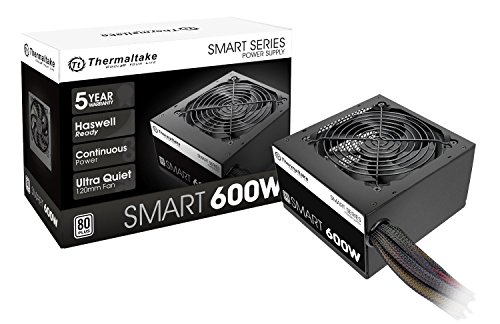
Thermaltake’s 600W and 500W Smart power supplies are standard ATX units with 80 Plus efficiency and Active PFC. They are designed for PC builds and diverse hardware needs where stable, continuous power is required. Best for desktop PC projects or as reference rails in bench setups.
Who they’re best for: PC builders and developers needing reliable, general-purpose ATX power. Why selected: widely used, with solid protection features and efficiency. Caution: they are not dedicated adjustable bench supplies and lack CV/CC precision features found in lab-grade models.
Buying Guide
What to consider when choosing an ATX benchtop power supply
- Output range and resolution: Choose models with a wide voltage/current range and high-resolution readouts (0.01V, 0.001A) for precise tuning.
- CV/CC behavior: If your projects involve charging, motors, or variable loads, a unit with automatic CV/CC switching reduces risk and simplifies operation.
- Display and controls: A bright, easy-to-read LED or backlit display helps during low-light work; consider separate on/off controls and quick-access outputs.
- Protection features: Look for over-voltage, over-current, over-temperature, short-circuit, and grounding protections to safeguard devices under test.
- Rail access and convenience: ATX breakout boards and transfer boards speed up prototyping, but ensure you understand each rail’s limits and labeling.
- Safety and compatibility: Ensure input voltage matches your region (commonly 110V in the US) and verify connector types align with your project.
FAQ
- What is CV/CC mode and why does it matter?
CV ensures constant voltage while CC limits current; switching between them automatically protects both supply and load as the circuit changes. - Are ATX breakout boards safe to use for experiments?
They are convenient for quick access to rails, but they are not power supplies; use them with a regulated source and follow safety guidelines. - Do I need a benchtop supply with high current for small projects?
Not always; many small projects run on 1-2A. Higher current models give headroom for testing while preserving stability. - Can I use PC power supplies for bench testing?
Yes, with care. Some enthusiasts repurpose PC PSUs for bench work, but be mindful of their lack of CV/CC controls and potential safety concerns. - What is the advantage of a 4-digit display?
It provides precise, easily readable readouts for voltage, current, and power, improving repeatability in tests.