Best Asset Trackers for Networks: Top Devices for Real-Time Location of Vehicles and Assets
The following guide highlights five reliable asset trackers that work across networks, delivering real-time location data for vehicles, trailers, equipment, and other valuable assets. Each option blends global coverage, battery life, and discreet installation to fit different tracking needs. Read on to compare features, benefits, and what to consider when choosing a tracker for your fleet or personal assets.
Summary Table Of Chosen Products
| Product | Brand | Key Strengths | Network Type |
|---|---|---|---|
| Tracki GPS Tracker | Tracki | Real-time tracking, compact, versatile mounting | 4G LTE + 3G/2G, worldwide |
| Trak-4 GPS Tracker | Trak-4 | Long battery life, rugged, reliable indoor tracking | 4G LTE + 2G fallback |
| LandAirSea Sync | LandAirSea | Real-time, OBD-II integration, fast updates | 4G LTE |
| Lonestar Barra GPS | LoneStar Tracking | Long-life, rugged, tamper alerts | 4G/5G, multi-GNSS |
| SPOT Trace | SPOT X | Satellite coverage, global tracking | Global satellite |
Tracki GPS Tracker For Vehicles
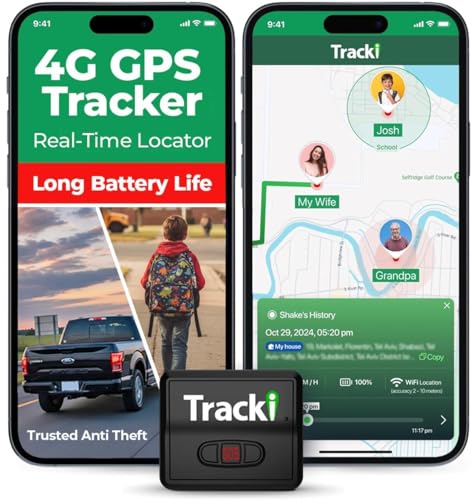
Tracki offers a compact, powerful GPS beacon designed for vehicles, assets, and even people. It provides real-time location data across 4G LTE plus fallbacks to 3G and 2G bands, ensuring broad coverage in the U.S. and worldwide. The device ships with an international SIM and a choice of mounting options, including a magnet, belt clip, or lanyard for versatile placement. Real-time positioning updates and historical data help with monitoring asset movement, recovery, and route optimization. A subscription is required per device to access the tracking app and cloud features. The battery choice supports different use cases, from short trips to extended, low-activity monitoring. A larger 3500 mAh option is available for extended life, extending operation beyond the standard device’s capacity when needed.
Trak-4 GPS Tracker For Vehicles And Assets

The Trak4 USB Rechargeable Tracker emphasizes rugged durability with a waterproof construction designed for harsh environments. It combines GPS tracking with Wi-Fi-based positioning, enabling reliable location data even when GPS signals are weak or obstructed by buildings. The device uses 4G LTE for worldwide coverage and has a fallback to 2G networks to maintain connectivity where newer networks are unavailable. Battery life is a standout feature, offering 12–18 months per charge under daily reporting. It supports multiple GNSS systems to improve accuracy, and optional accessories like the Mag Kit enhance discreet mounting. A subscription plan is required for ongoing service, with options for annual or monthly billing.
LandAirSea Sync GPS Tracker

The LandAirSea Sync is a compact, plug-and-play GPS tracker designed for quick deployments in vehicles and fleets. Real-time tracking updates are delivered via a web portal or the SilverCloud app, with location updates typically every few seconds, and historical data available for up to a year. OBD-II integration makes installation straightforward for cars and light trucks, enabling discreet tracking with minimal wiring. Geofencing capabilities and alert options support security and fleet management needs. A subscription is required to access the service and maps, with plans tailored to different reporting frequencies and storage durations.
Lonestar Barra GPS Tracker

The Barra GPS from LoneStar Tracking is built for long-term tracking with replaceable batteries and a rugged, IP68-rated housing. It supports dual battery configurations that can extend operation to several years under appropriate settings, and it provides multi-GNSS tracking (GPS, GLONASS, Galileo, BeiDou) with cellular backup when satellite signals are weak. Real-time security is enhanced by movement-based updates and tamper alerts, with geofence features to detect unauthorized movement. The device is designed for vehicles, trailers, boats, and other assets, delivering reliable tracking in harsh environments. A low-cost subscription supports ongoing data access and alerting.
SPOT Trace Satellite Tracking Device

SPOT Trace uses satellite technology to provide location tracking when GPS networks are unreliable or unavailable. It is suitable for tracking moving vehicles, boats, trailers, backpacks, or other assets across remote areas. The device supports preprogrammed waypoint updates and status messages, giving families and fleet managers a way to monitor distant assets. The Globalstar network-scale coverage ensures location data outside traditional cellular zones. A subscription is required to access reporting and alert features. While satellite tracking offers global reach, update frequency and data costs should be considered for daily or high-activity monitoring.
Narrative Buying Guide: Key Purchase Considerations
- Network compatibility: Choose between 4G LTE, 5G, or satellite-based tracking depending on location stability, infrastructure, and required coverage. Cellular trackers excel in urban and suburban areas, while satellite trackers shine in remote or maritime environments.
- Battery life and maintenance: Longer-life devices reduce maintenance frequency, but some trackers require periodic battery replacements or optional high-capacity packs. Consider your asset’s location, movement, and reporting frequency when evaluating battery performance.
- Mounting and concealment: For discreet tracking, select trackers with magnetic mounts, waterproof housings, or compact form factors that fit under vehicles or within cargo areas without drawing attention.
- Geofencing and alerts: Use geofences to detect entry/exit and tampering. Choose devices offering customizable alert types (movement, low battery, geofence breach) and delivery methods (app, SMS, email).
- Indoor vs. outdoor performance: Some trackers leverage Wi-Fi proximity or GPS indoors but may vary in accuracy in garages or containers. A combination of GNSS systems can enhance precision.
- Subscription model: Most devices require ongoing service. Compare monthly vs. annual plans, included data limits, and whether the plan fits your usage pattern and fleet size.
- Security and privacy: Look for encryption, data access controls, and secure cloud storage. Ensure compliance with relevant regulations for asset tracking and location data.
- Ease of use and integration: Assess app interfaces, web portals, and compatibility with fleet management tools you may already use. Some trackers offer APIs for deeper integration.