Best Natural Gas Detectors for Home and RV Safety
If you’re searching for a natural gas detector, you want quick alerts, clear readings, and portable options for home or RV use. This guide highlights five reliable models that cover different needs—from long reach probes to compact pocket sizes. Best for homeowners: PT520A and PT205 provide visual bars and rapid alerts. Best for RV enthusiasts: PT177 and PT199 offer compact, easy-to-carry forms with fast response. Best for general portability: PT210S combines a pen-style form with a 4-inch probe. Use the brief buying table below to compare core features at a glance.
| Product | Best For | Detection Range / %LEL | Key Feature |
|---|---|---|---|
| PT520A Natural Gas Detector | Home and RV leak locating in tight spaces | 50-10,000 ppm (Methane) | 17-inch flexible gooseneck probe for hard-to-reach areas |
| PT199 Natural Gas Leak Detector | Quick leaks in smaller spaces | Detects methane, propane, butane; alarm within 0.5 s | Includes two batteries; portable and easy to use |
| PT177 Gas Leak Detector | Pocket-sized, everyday use | 0.5–3 s response; up to five LED indicators | Pocket clip and storage bag included |
| PT205 Natural Gas Detector | Advanced home safety with %LEL readouts | 1%LEL to 10%LEL (100 ppm – 5,000 ppm) | Clear %LEL readouts and rapid alerts |
| PT210S Gas Leak Detector | Portable probe-based detection | 100–5,000 ppm (1–10 %LEL) | 4-inch probe with pen-shaped design |
PT520A Natural Gas Detector with 17-Inch Gooseneck

The PT520A from TOPTES is designed for locating gas leaks in tight spaces such as pipelines, storage areas, basements, and under appliances. It detects methane, propane, natural gas, LPG, and butane with a fast 0.5-second response and a visual 7-bar display paired with a 75 dB audible alarm. The 17-inch gooseneck probe helps reach hard-to-access areas. Best for homeowners performing regular checks and for RV setups where space is constrained. Limitation: probe length may require careful handling in very cramped spaces. Best for quick pinpointing in difficult corners.
PT199 Natural Gas Leak Detector with Audible & Visual Alarm
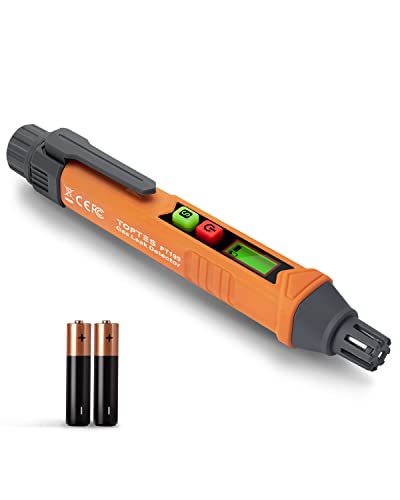
The PT199 from TOPTES offers a compact, portable gas sniffer ideal for quick checks around home appliances. It detects natural gas, methane, propane, butane, LPG, and more, with a rapid 0.5-second alarm and a red LCD indicator when levels rise. Includes two AAA batteries and a 30-second warm-up. Best for: families and individuals who want a simple, ready-to-use device for quick checks. Limitation: smaller form factor may have a shorter reach compared to longer probes.
PT177 Gas Leak Detector with Audible & Visual Alarm

The PT177 is a pocket-sized gas detector suitable for RV enthusiasts and homeowners with portable needs. It detects a broad range of combustible gases including LPG, methane, ethane, propane, butane, and natural gas. Important: it requires a 30-second warm-up in a clean environment for accurate results and features five red LEDs with a 75 dB alarm that intensifies with higher concentrations. Best for: on-the-go checks and quick spot checks around appliances. Limitation: warmer-up step may delay initial readings in cold environments.
PT205 Natural Gas Detector with %LEL Readouts

The PT205 from TOPTES adds an advanced readout with %LEL (Lower Explosive Limit) values, offering accurate detection from 1%LEL to 10%LEL (roughly 100 ppm to 5,000 ppm methane-based). It detects a wide range of gases including LPG, methane, ethane, propane, and butane. Visual and audible alarms are rapid, and the LCD shows a red display at high concentrations. Best for: homes needing precise explosion-risk awareness. Caution: ensure proper warm-up and interpret %LEL readings within the device’s stated range for safety decisions.
Klein Tools ET190 Gas Leak Detector
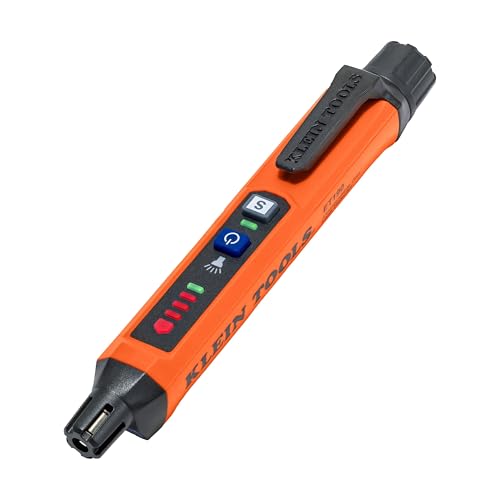
The Klein Tools ET190 offers a wide detection range from 100 to 2,000 ppm with visual LED indicators and audible alerts. It is compact and pocket-sized, making it suitable for quick checks on the go, in homes, or in small business environments. Best for: users who want a slim, portable detector with straightforward alerts. Limitation: broader ppm range is useful, but may be less precise for very small leaks compared to some higher-sensitivity models.
TopTes PT210S Gas Leak Detector with Probe

The PT210S combines portability with a four-inch probe, designed to reach difficult spots while detecting propane, natural gas, methane, and butane. It displays gas leakage in Percent LEL and provides a two-digit reading for quick assessment. The device emits a 75 dB alarm and green-to-red color coding as concentration increases. Best for: users who want a compact detector with an extended probe for hard-to-reach areas. Limitation: the %LEL display may require interpretation alongside other indicators for precise risk assessment.
Buying Guide: How to Choose the Right Natural Gas Detector
- Coverage needs: For thorough fixed-location detection, devices with long probes (like PT520A) help access tight spaces. If you need pocket portability, PT177 or ET190 is ideal.
- Readout type: %LEL readings provide explosion-risk context, while ppm readings indicate concentration. Consider whether you want a simple alarm or detailed data.
- Response time: Most models respond within 0.5 seconds to 3 seconds. Faster alarms are preferable in high-risk areas such as kitchens and RVs.
- Power and maintenance: Some units include batteries; others require replacement. Check warm-up time and auto-shutoff features to balance readiness and battery life.
- Alarm modalities: Visual bar graphs, LED indicators, and audible alarms help in loud environments. A combination of alarms improves reliability across situations.
- Portability versus durability: Pocket-sized detectors are easy to carry, while rugged models suit workshop or outdoor use. Consider where you’ll use the detector most often.
- Use-case scope: For homes with gas appliances, a detector with broad gas compatibility is beneficial. For RVs, compact and portable detectors may be preferred.
Frequently Asked Questions
- What is a natural gas detector best used for?
They help identify leaks from methane, propane, and other hydrocarbons to reduce explosion risks and improve home safety. - Do all detectors require warm-up time?
Most devices require a short warm-up to ensure accurate readings, typically around 20–60 seconds depending on model. - What does %LEL mean?
LEL stands for Lower Explosive Limit. A higher %LEL indicates a greater level of gas concentration approaching explosive limits. - Can I use these detectors for RV safety?
Yes. Several models are designed specifically for RV use, offering portable designs and easy-to-reach probes. - Which detector is best for quick spot checks?
Pocket-sized options like PT177 or ET190 are ideal for quick, everyday checks around appliances. - Are alarms sufficient without a professional inspection?
Gas detectors are critical safety tools, but if you detect a leak, evacuate and contact professionals for assessment and repair.