Best American Tankless Water Heaters for Instant Hot Water on Demand
Tankless water heaters deliver hot water on demand, saving space and improving energy efficiency. This guide highlights five American-friendly electric and gas models, covering performance, ease of installation, energy use, and suitability for typical households. Each entry summarizes key strengths and practical considerations to help you choose the right unit for your home or RV needs.
| Product | Brand | Key Strength |
|---|---|---|
| EcoSmart ECO 11 Electric Tankless Water Heater | EcoSmart | Self-modulating technology for energy efficiency |
| Rheem 18kW 240V Tankless Electric Water Heater | Rheem | Advanced self-modulation and durable heating elements |
| Rheem RTEX-24 24kW 240V Tankless Electric Water Heater | Rheem | High flow capacity and precise temperature control |
| Orbek 18kW Tankless Electric Water Heater | Orbek | Strong on-demand performance for 2–3 fixtures |
| DDAYBF 110V Tankless Water Heater | DDAYBF | Portable under-sink solution with digital display |
Below are five product sections with concise details, safety notes, and installation considerations to help you compare options side by side.
EcoSmart ECO 11 Electric Tankless Water Heater

Model highlights patented self-modulating technology that adjusts power based on demand, helping conserve energy. It provides on-demand hot water with consistent temperatures, a key advantage for small to mid-size homes. Electrical requirements include a 54 A draw, with installation typically on a wall or at point of use. Compact dimensions allow mounting in tight spaces, preserving valuable storage. Consider its flow rate when planning for multiple fixtures simultaneously.
Rheem 18kW 240V Tankless Electric Water Heater
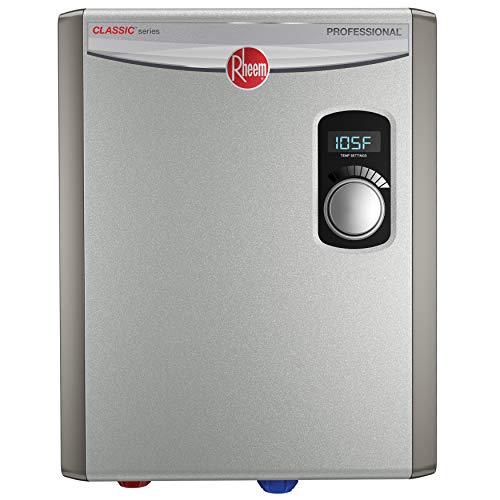
External digital thermostatic control uses LED display with 1-degree accuracy. Features advanced self-modulation to adjust power to meet hot water demand. Durable copper immersion two heating elements promote reliable operation. The unit is field serviceable, which can simplify maintenance. Typical hot water flow is up to 4.4 GPM. Suitable for homes where a single-point of-use solution or small apartment requires efficient, instantaneous hot water.
Rheem RTEX-24 24kW 240V Electric Tankless Water Heater
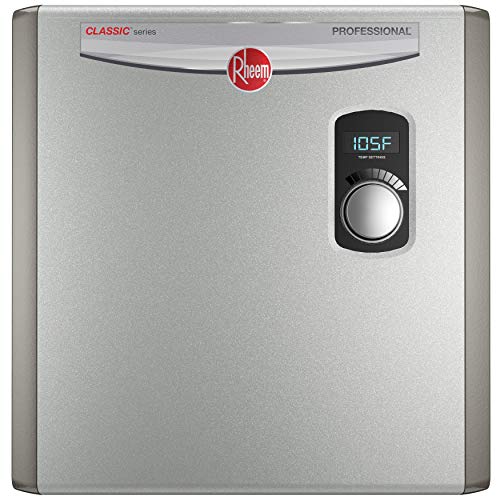
Requires a robust electrical setup: three 40-amp double-pole breakers and ample panel capacity. Provides continuous hot water with performance influenced by groundwater temperature and installation location. Features an ON/OFF dial and a digital temperature display with 1-degree increments, enabling precise temperature control. Suitable for whole-home usage where higher flow is needed, with careful electrical planning.
Orbek 18kW Tankless Electric Water Heater
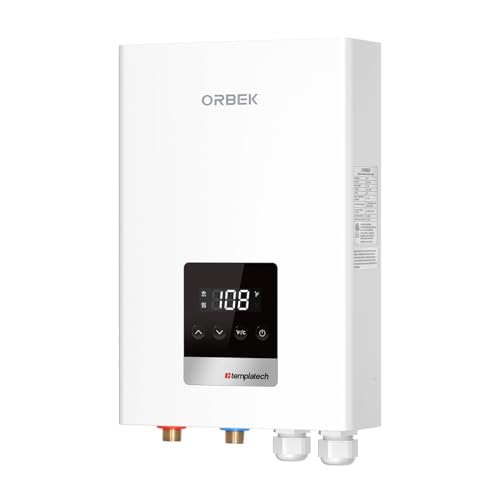
Notes emphasize heavy-duty electrical requirements: 2 x 240V/40A breakers with adequate wiring and water connections. Delivers up to 4.17 GPM for 2–3 fixtures and employs water-electricity separation to reduce scale buildup and corrosion. The unit emphasizes quick hot water generation and energy efficiency, making it suitable for small homes or cabins with higher demand in short bursts.
DDAYBF 110V Tankless Water Heater

Compact, portable under-sink model with a digital display for real-time status. Delivers hot water in 3–5 seconds and tops at 131°F, suitable for kitchens, bathrooms, RVs, and small apartments. Features IPX4 waterproof protection, leak safeguards, dry-burn prevention, and auto-shutoff when idle. Space-saving design makes it a practical point-of-use option for speed and convenience.
Buying Guide
- Hot water demand and flow rate: Calculate the required gallons per minute (GPM) for showers, sinks, and appliances to select a model with adequate capacity. Electric models tend to have lower GPM ratings than gas-rated units for larger homes.
- Electrical capacity and wiring: Higher-wattage electric units require adequate service and a compatible breaker panel. Verify total amperage draw and check if your home can support the installation without upgrading service.
- Gas vs. electric considerations: Gas-powered units offer higher flow (GPM) and are a common choice for whole-home heating, while electric models are easier to install in many urban settings where gas lines are limited or costly.
- Space and mounting: Tankless units save space, but installation location matters. Wall-mounted options fit compact areas; ensure venting or proper clearance for gas models and safe electrical access for electric models.
- Maintenance and longevity: Look for field-serviceable components and copper elements for durability. Regular descaling and flushing help maintain efficiency, especially in hard-water areas.
- Energy efficiency: Self-modulating technology helps reduce standby losses and energy use. Compare energy factors (EF/UEF) and potential energy savings when evaluating models.
- Ventilation and code compliance: Gas models often require venting and professional installation to meet code requirements. Electric models typically need minimal venting but may require dedicated circuits.
- Warranty and support: Consider brands with robust warranty coverage and accessible customer support for long-term peace of mind.
Choosing the right tankless water heater involves balancing hot-water needs, electrical or gas capacity, and installation constraints. The models listed above provide a cross-section of American options, from compact point-of-use units to higher-flow whole-home systems. Always consult a licensed professional for electrical or gas hookups to ensure safe and compliant installation.