Best All-Power 6000-Watt Generators for Home Backup
For reliable home backup power, a 6000-watt generator offers ample capacity for essential appliances, tools, and electronics during outages or remote job sites. This guide highlights top 6000-watt models, comparing open-frame, inverter, and portable options to fit different needs, from emergency home power to RV camping. Each featured unit emphasizes durability, fuel flexibility, and startup convenience to keep lights on and essentials running when it matters most.
Below is a concise overview of five highly capable options. The table summarizes core specs to help you compare quickly.
| Product | Brand | Power (Running / Peak) | Fuel | Key Strength |
|---|---|---|---|---|
| A-ITECH AT10-260001 | A-ITECH | 5,500W running / 6,000W starting | Gas or LPG | CO sensor; electric start |
| GENMAX GM6000XiE | GENMAX | 5,250W running / 6,000W peak | Gas | Inverter, ultra-quiet |
| Pulsar NEX60BiSRCO | Pulsar | 5,400W running / 6,000W peak | Gas or Propane | Remote start, CO sensor |
| PowerSmart PS5055C | PowerSmart | 6,000W rated / 7,000W surge | Gas | Open-frame inverter; 120/240V dual voltage |
| OUPES Guardian 6000 | OUPES | 6,000W continuous / 7,200W boost | Battery-based power station | House transfer switch ready; multiple outlets |
A-ITECH 6000W Dual Fuel with CO Sensor
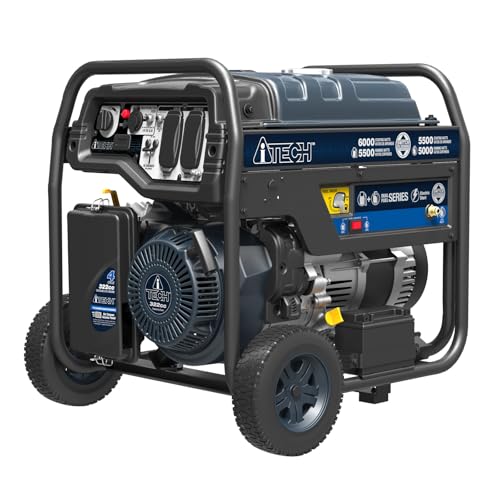
The A-iTech AT10-260001 combines a 322cc OHV engine with 6,000 starting watts and 5,500 running watts on gasoline, plus 5,500 starting watts and 5,000 running watts on LPG. An electric start provides quick access to power for home backup, campsite, or jobsite needs. A 4.0-gallon fuel tank supports up to 12 hours of runtime at 25% load and around 9.5 hours at 50% load, giving extended operation between refuels. The unit is EPA and CARB compliant and includes a carbon monoxide sensor for added safety. Features emphasize reliability for essential circuits and appliances during outages.
GENMAX 6000XiE Open-Frame Inverter
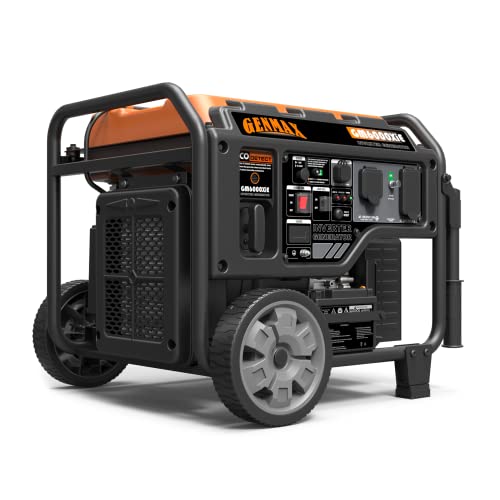
The GENMAX GM6000XiE delivers 6,000 peak watts and 5,250 running watts with inverter technology to provide clean power suitable for sensitive electronics (THD under 3%). Its portability is enhanced by a sturdy steel handle and two wheels; at about 107 pounds, it remains relatively easy to transport for home use or job sites. Key conveniences include an electric start, cold-weather reliability, a 3.8-gallon steel fuel tank, and a multi-functional control panel with LED indicators and a variety of outlets for home, RV, or workshop needs.
Pulsar 6000-Watt Dual-Fuel, Remote Start
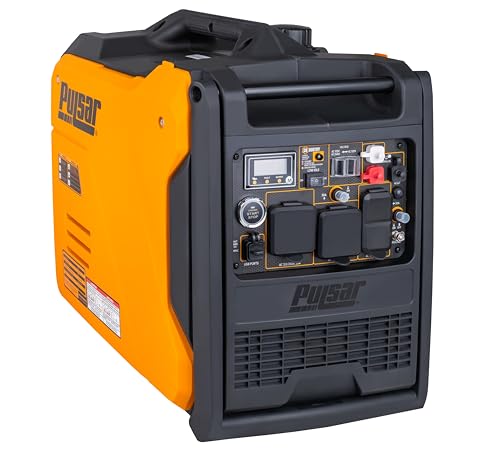
The Pulsar NEX60BiSRCO is a 6000-watt-class dual-fuel inverter offering 6,000 peak watts and 5,400 running watts on gas, with comparable performance on propane. It supports up to six hours runtime at half load and provides a 2-way start system: remote start, push-button, and recoil. CO sensor and low-oil shutdown deliver safety and longevity, while its compact, quiet operation makes it suitable for RVs, camping, or home backup. The dual-fuel capability provides flexibility for fuel availability and cost considerations.
PowerSmart 7000-Watt Open Frame
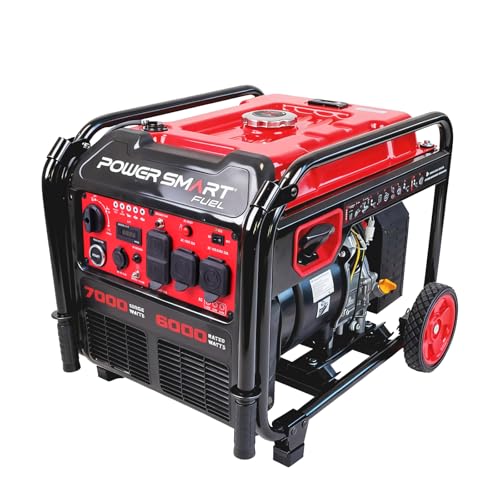
The PowerSmart PS5055C opens up to 7,000W surge with 6,000W running, powered by a 322cc OHV engine for robust performance. It offers 120/240V dual voltage, with clean sine wave output suitable for sensitive electronics. An electric push-button start simplifies startup, with a recoil backup for reliability. The unit’s 3.2-gallon fuel tank provides about six hours at 50% load, making it a strong option for whole-house backup or robust RV/boondocking configurations. It supports transfer switch connections for seamless home integration.
OUPES Guardian 6000 Power Station

The OUPES Guardian 6000 is a portable power station with 4608Wh LiFePO4 capacity, delivering 6000W continuous output (7200W boost) and 9000W surge. It provides 120V/240V dual voltage and can connect to standard transfer switches for immediate home backup. The model offers 11 output ports, including multiple AC outlets, USB-C PD, USB-A, a 12V car port, and XT90 for external battery systems. It is designed for emergency power outages and expands to larger capacities through modular expansion, making it a flexible choice for modern homes seeking inverter-based resilience.
Buying Guide: Key Purchase Considerations
- Power needs: Assess running watts, surge watts, and whether you need peak capacity for motors or compressors (fridges, sump pumps, AC units). Inverter generators deliver clean power for electronics, while open-frame units excel at high wattage for longer runtimes.
- Fuel type and availability: Gas, LPG, dual-fuel, or battery-based power stations each have trade-offs for runtime, storage stability, and availability during outages. LPG may be steadier in some regions; dual-fuel adds flexibility.
- Portability and setup: Weigh the unit, wheel setup, and handle design. Lighter, wheeled models are easier to move but may sacrifice some durability. Electric start and remote start features improve convenience during outages.
- Safety features: CO sensors, low-oil shutdown, overload protection, and automatic shutoff can protect equipment and occupants, especially in enclosed spaces.
- Clean power and reliability: Look for THD under 3% for sensitive electronics. Inverter technology generally delivers cleaner power, while traditional open-frame units may have higher THD.
- Running time and fuel tank: Consider runtime at typical loads and the size of the fuel tank. Longer runtimes reduce refueling frequency during emergencies.
- Transfer switch readiness: If whole-house backup is a goal, ensure compatibility with a transfer switch or inlet box and confirm local electrical code compliance.
- Noise levels: Quieter models are preferable for camping, apartments, or daytime outages. Compare decibel ratings at typical loads to gauge suitability for your environment.
- Warranty and service: Check manufacturer coverage and the availability of authorized service centers to minimize downtime during repairs.
These considerations help balance power, reliability, and cost. When selecting among the six-kilowatt class, prioritize models that align with your home’s essential circuits and the climate in which you operate. For outdoor use, weight, portability, and fueling flexibility often drive the choice. For home backup, transfer-switch compatibility and continuous power output become decisive factors.