Best All-in-One Hybrid Inverter for Off-Grid Power
Answering the major buyer question: these all-in-one hybrid inverters serve as a combined solar inverter, charge controller, and sometimes UPS, ideal for off-grid cabins, RVs, and backup home power. The top picks below suit different needs—from compact setups to high-output, expandable systems. Read on to find the best fit for your load, battery type, and whether you want battery-less operation or a full battery backup.
| Product | Best For | Key Benefit |
|---|---|---|
| SUMRY Hybrid Solar Inverter (SRGFTS) | Small to mid-size off-grid setups | Glass-top display, built-in MPPT, strong 4000W output |
| Aninerel 12000W Solar Hybrid Inverter | Heavy loads & scalable systems | Dual MPPT, up to 6 units in parallel, high 12kW continuous |
| SUNGOLDPOWER UL1741 5000W Hybrid Inverter | Simple off-grid needs, no parallel | All-in-one with 80A charging, UL1741 listed |
| EcoSolLi All-in-One 6500W Solar Hybrid | Residential off-grid or backup | Real-time monitoring, wide protection, WiFi-ready |
| PROSOLI 10000W All-in-One Hybrid | Large homes or farms needing expansion | UL listed, 10kW rating, supports parallel units |
SUMRY Hybrid Solar Inverter, 4000W Power Converter

Best for compact systems requiring a clean interface and reliable pure sine wave output. This inverter delivers 4000W rated and 8000W peak power with a built-in 140A MPPT charge controller. The glass top with a large LCD makes real-time data easy to read, and it supports battery-less or AGM/Lithium setups. Choose this if you want a sturdy, all-in-one unit for a small cabin or RV setup where space and visibility matter.
Caution: Confirm your total load stays within the 4000W continuous range. The 5600W PV input capability requires proper array sizing for maximum efficiency.
Aninerel 12000W Solar Hybrid Inverter

Best for large loads and scalable solar systems. This model provides 12,000W continuous output and up to 24,000W peak, with two MPPT controllers and compatibility with up to 6 units in parallel. It supports 48V systems and a broad PV input range, making it ideal for off-grid homes, workshops, or RVs needing substantial power and expansion potential. It also accommodates high-voltage PV arrays up to 500VDC.
Limitations: Parallel expansion requires matching units and careful configuration; ensure your wiring and safety plans account for multiple units in operation.
SUNGOLDPOWER UL1741 5000W Hybrid Inverter

Best for straightforward off-grid setups that need reliable AC output with straightforward charging modes. This all-in-one unit provides 5000W continuous power, 110V/120V output, and four charging modes (AC Priority, Solar Priority, Only Solar, Hybrid). It does not support parallel expansion, making it simpler to install but less scalable than multi-unit configurations.
Note: No parallel capability means you should size this single unit to cover peak demand; otherwise, you may need to upgrade to a larger single unit or composite system.
EcoSolLi All-in-One 6500W Solar Hybrid Inverter
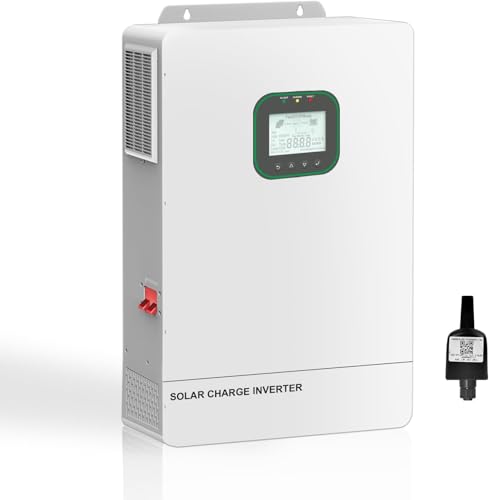
Best for home backup and off-grid living with real-time monitoring. EcoSolLi combines a 6500W pure sine wave inverter with built-in MPPT and a smart LCD, plus WiFi remote monitoring. It supports 360° protection and allows easy energy management, including adjusting battery charging current and load preferences. This model suits homes or RV setups seeking integrated monitoring and robust safety features.
Caution: Ensure the remote monitoring module you need is compatible or purchased separately for full app access.
PROSOLI 10000W All-in-One Hybrid Inverter
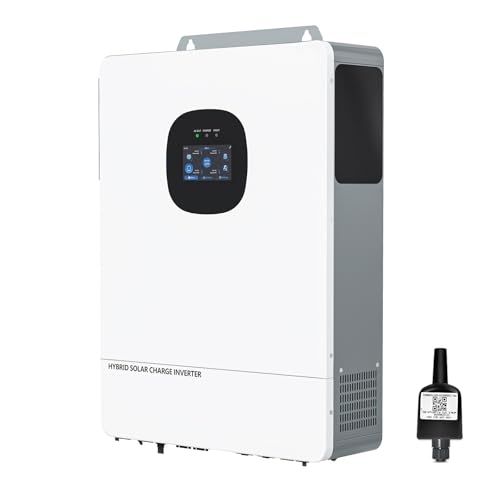
Best for large homes, farms, or remote facilities requiring high power and expandability. This UL-listed 10000W unit supports 20KW surge and 6-unit parallel operation to scale up to 60kW. It offers 48V DC to 120/240V AC output and can work in battery-free direct PV or hybrid modes, reducing infrastructure needs in some configurations.
Limitation: Parallel setup adds system complexity; ensure proper electrical design and safety clearances when expanding beyond a single unit.
Buying Guide
Key considerations for selecting an all-in-one hybrid inverter:
- Power needs: Estimate continuous and peak loads to pick a unit with headroom (look at watts, surge, and whether you plan parallel units).
- Battery compatibility: Confirm compatible battery chemistries (AGM, Li-ion, LiFePO4) and whether you want battery-less operation.
- MPPT capacity: Higher MPPT input allows more solar energy to charge faster; check PV input range and max PV wattage.
- Paralleling capability: If you need more power later, choose models that support multi-unit parallel connections and the required voltage (single or three-phase).
- Protection features: Look for short-circuit, over-voltage, over-current, and temperature protections; verify LCD/monitoring capabilities.
- Monitoring options: Some units offer built-in WiFi/Bluetooth or require a separate module; consider how you’ll monitor remotely.
- Installation environment: Check enclosure options, cooling needs, and whether the unit is suitable for indoor or outdoor use.
- Warranty and compliance: Ensure UL or ETL listings where required; verify installation and maintenance requirements with local codes.
FAQ
- What is an all-in-one hybrid inverter?
It combines solar charging, inverter, and battery management in one unit for off-grid or backup power. - Do I need parallel units for more power?
Not always; some models offer parallel capability to scale up output, others are fixed-size. - Can these run without batteries?
Some units support battery-free operation using PV power to run loads directly, with caveats on PV input and grid conditions. - Which features matter most for home backup?
Reliable pure sine wave output, MPPT efficiency, load management, and remote monitoring are key. - What maintenance is required?
Regular inspection of wiring, battery health, and firmware updates; follow local electrical codes. - Are these suitable for RVs?
Yes, several models are compact and designed for mobile setups, but check mounting and cooling requirements.