Best Aircraft Warning Lights for Buildings: Reliable Obstruction Signaling in Modern Skies
Building owners and facility managers require dependable obstruction lighting to safeguard aviation corridors and nearby pedestrians. This guide highlights top-rated aircraft warning lights suited for tall structures, towers, bridges, and other critical installations. Each selection features weather resistance, strong illumination, and straightforward installation to meet regulatory expectations while maintaining energy efficiency and long service life.
Summary of Selected Products
| Product | Brand | Light Type | Key Strength |
|---|---|---|---|
| Aviation Obstruction Light | FECAMOS | AC110V, continuous | UV-resistant PC housing; surge protection; versatile applications |
| ASPL 48LED Roof Top Strobe Light | ASPL | 12-24V, LED strobe | High brightness; durable magnets and weatherproofing; 16 flash patterns |
| QWORK Industrial Warning Lights | QWORK | LED tower beacon | 360° viewing; IP54 dust/moisture protection; long lifespan |
| Baomain Warning Continuous Light | Baomain | 110V AC LED beacon | Simple all-in-one beacon; compact form factor |
| Aolyty Solar Strobe Warning Light | Aolyty | Solar-powered LED | Wireless operation; IP48 protection; automatic flashing |
Aviation Obstruction Light, Multipurpose Warning Beacon

This model from FECAMOS is designed for a variety of critical signaling scenarios, including marine channels and aviation corridors. Its PC housing is UV resistant and capable of withstanding heat, impact, and exposure to harsh environments. The lamp is suitable for bridges, towers, chimneys, airport runways, helipads, and other tall structures requiring visible, continuous illumination. A built-in surge protection device helps ensure reliable operation under demanding conditions, making it a practical choice for long-term installations.
Key considerations include material durability, environmental sealing, and electrical integration. The product’s rugged construction helps minimize maintenance needs in outdoor settings, while the 110V operation aligns with common building electrical systems. For facilities near waterways or industrial zones, its broad applicability supports compliance with aviation lighting guidelines without compromising on reliability or safety.
ASPL [Upgraded 5] 48LED Roof Top Strobe Light
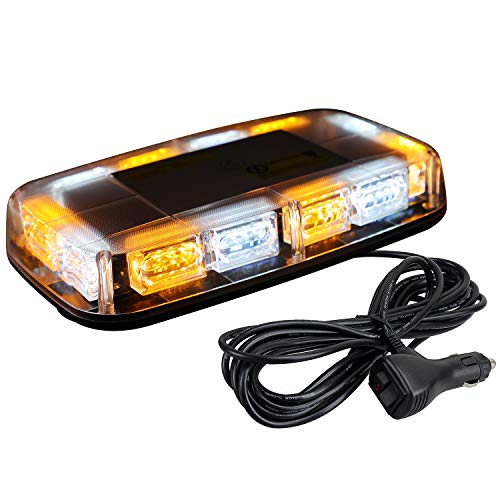
ASPL’s upgraded strobe light bar uses 48 high-intensity LEDs with magnifying lenses to maximize visibility. The design emphasizes durability through improved waterproofing, longer cable length, and a robust magnet-based mounting system. The unit ships with a 16.4-foot heavy-duty cable and a 12-24V plug-and-play setup, simplifying installation on tall structures or rooftop equipment. With 16 flash patterns and a memory function, operators can select the most appropriate warning sequence for different operating conditions.
Operational versatility is a standout feature. The two strong magnets and reinforced mounting materials make it compatible with a variety of surfaces without risking damage to the roof or mounting area. The wide voltage range allows integration with standard vehicle power systems or building power supplies in temporary or semi-permanent setups. This combination of brightness, reliability, and ease of installation is particularly valuable for temporary construction sites near air traffic corridors or fixed infrastructure that requires visible daytime and nighttime signaling.
QWORK Industrial Warning Lights, 12-24V Tower Beacon

QWORK’s 12-24V LED stack tower provides a 360-degree viewing angle with a prism-cut PC lampshade for uniform light distribution. Its IP54 rating guards against dust and moisture, while the NEMA 5-class construction suits industrial environments exposed to challenging conditions. The LED spectrum emphasizes long life, with the system designed to maximize energy efficiency and minimize maintenance through a 100,000-hour lifespan. The combination of wide visibility and rugged protection makes this beacon a dependable choice for building-mounted warning applications where consistent operation is essential.
The model’s modular approach supports scalable signaling. For facilities with multiple elevations or complex architectural silhouettes, adding additional beacons can improve overall visibility without overloading individual units. The emphasis on low power consumption also helps reduce operating costs over the system’s lifetime, aligning with sustainability goals for large public structures.
Baomain Warning Continuous Light 110V AC

Baomain’s continuous 110V AC LED beacon emphasizes straightforward installation with a compact footprint. The device uses LED as a light source and features blue illumination, suitable for specific signaling requirements at towers, bridges, or other tall structures. The unit’s plastic construction keeps weight manageable while delivering reliable illumination for routine visibility tasks. While not the most feature-rich option, its simplicity appeals to installations that require dependable, constant signaling without additional modes or setups.
Key considerations here include voltage compatibility with existing electrical systems, ease of maintenance, and the intended color coding for signaling. The compact form factor allows flexible mounting on various substrates and supports quick replacement without extensive electrical work. For facilities prioritizing a steady, constant beacon rather than fast flashing patterns, this Baomain model provides a clean, dependable solution.
Aolyty Solar Strobe Warning Light
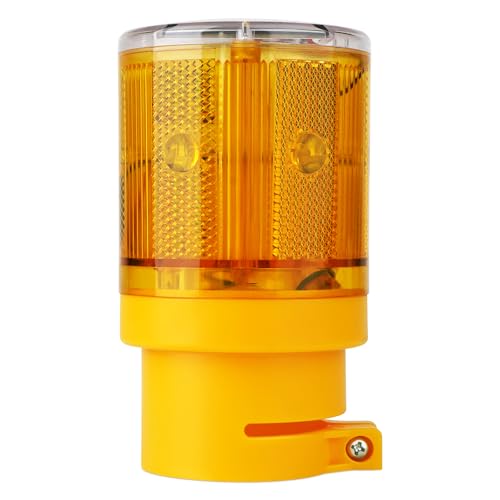
The Aolyty solar-powered strobe is designed for installations where grid power is limited or not available. It charges during daylight and provides automatic flashing after dusk, with no ongoing electrical costs. The IP48-rated body offers resistance to corrosion and water, alongside durable construction capable of withstanding typical outdoor conditions. While solar-powered, it still delivers reliable visual signaling suitable for temporary or remote installations near building perimeters, towers, or bridge approaches, where wiring may be impractical or restricted.
Considerations for solar beacons include solar panel efficiency, battery capacity, and the balance between flash frequency and brightness. The automatic on/off functionality simplifies operation for sites with limited access or complex maintenance schedules. In environments with extended cloud cover, placement and panel orientation become crucial to maintaining consistent performance across seasons.
Buying Guide: Key Purchase Considerations
- Environment and exposure: Choose IP ratings and housing materials that match local climate, wind loads, and potential exposure to salt spray or industrial pollutants. UV resistance and impact durability are critical for long-term outdoor performance.
- Power source and energy efficiency: Decide between AC-powered lights (commonly 110V) or low-voltage/solar options. Solar-powered units reduce wiring complexity and operating costs but require adequate daylight exposure and battery capacity.
- Visibility and coverage: Assess the light’s lumen output, beam angle, and the ability to provide 360-degree visibility. For tall structures, overlapping beacons or multi-beacon configurations can improve warning effectiveness.
- Modes and signaling patterns: If choosing strobe or flashing beacons, consider the number of patterns, ease of switching, and memory function for quick restoration after power interruptions or maintenance.
- Mounting and installation: Evaluate mounting hardware compatibility (roof rails, magnets, suction cups, or brackets) and the potential impact on substrate surfaces. Ensure mounting methods do not compromise structure integrity or paint finishes.
- Maintenance and lifespan: Prioritize products with long LED lifespans and robust protection against dust and moisture. Plan a maintenance schedule to inspect seals, wiring, and battery health (for solar options).
- Compliance and market standards: Verify that the chosen lights align with aviation obstruction lighting standards and local regulations for building-mounted signaling.
- Total cost of ownership: Consider initial cost, installation labor, power consumption, and expected replacement or maintenance cycles to determine overall value over the equipment’s lifetime.
When selecting aircraft warning lights for buildings, the goal is to balance visibility, reliability, and ease of maintenance. Light color, energy source, and mounting method should align with the structure’s role and the surrounding airspace, ensuring consistent signaling across day and night conditions. Each of the five highlighted products offers a distinct combination of features, enabling building managers to tailor a signaling solution to their specific site characteristics and regulatory requirements.