Best Air Shut-Off Solenoid Valves for Quick, Reliable Control
Answering the need for fast, dependable air shut-off control, these solenoid valves provide rapid actuation and durable construction for industrial and DIY air systems. Best for compact projects, portable equipment, and high-demand air lines, these options fit a range of applications from pneumatics labs to workshop compressors. This guide highlights five solid choices, focusing on reliability, materials, and ease of integration. See the quick product table below for quick comparisons.
| Product | Best For | Key Benefit |
|---|---|---|
| U.S. Solid 1/4″ Brass 12V DC | Small to mid-size air systems | Fast actuation, high temp tolerance |
| U.S. Solid 3/8″ Brass 12V DC | Mid-sized lines needing lower power | Low-power coil, robust brass body |
| U.S. Solid 3/4″ Brass 110V AC | Fixed installations with AC power | Fast response, durable for larger flows |
| U.S. Solid 1″ Stainless Steel 110VAC | High-pressure, water/air mixes | Stainless steel corrosion resistance |
| Plum Garden 1/4″ DC 12V | Compact, versatile mounts | Zero differential capability |
U.S. Solid 1/4″ Brass Electric Solenoid Valve – 12V DC

Best for small to medium air lines, this normally closed valve uses a brass body and a VITON gasket, delivering quick response times (opens/closes in under 1 second). It’s suited for air, fuel, and some hydrocarbons, with corrosion resistance and high-temperature capability. The brass construction means it should not be used with drinking water or potable water projects. Best for: compact pneumatics setups, automotive-like air lines, and projects requiring fast shut-off in a durable brass valve. Limitation: not ideal for water service.
U.S. Solid 3/8″ Brass Electric Solenoid Valve – 12V DC

Choose this if your air line requires a larger bore with manageable power use. This valve features a low-power coil—starting around 19W and reducing to roughly 10-13W as it warms—making it better for continuous duty than some higher-power options. Best for mid-range systems and air lines where energy efficiency is desirable. Caution: brass construction means not for potable water use, and ensure compatibility with the media being controlled.
U.S. Solid 3/4″ Brass Electric Solenoid Valve – 110V AC

Best for larger air lines or mixed media projects (air, diesel, or other fluids compatible with brass and VITON seals). Its rapid opening/closing (less than 1 second) suits systems needing quick shut-off. It’s designed for non-potable water or air/diesel applications and carries a brass body for corrosion resistance and welding compatibility. Limitation: not intended for drinking water lines.
U.S. Solid 1″ Stainless Steel Electric Solenoid Valve – 110VAC

Best for high-pressure, high-durability needs or projects involving water and other fluids where sanitary requirements apply. The stainless steel body ensures durable performance and leak resistance in demanding environments. It uses a VITON seal like the others for chemical and temperature resilience. Best for: systems requiring robust corrosion resistance and longer service life. Limitation: heavier and typically pricier than brass options.
Plum Garden 1/4″ DC 12V 2-Way Normally Closed Solenoid Valve
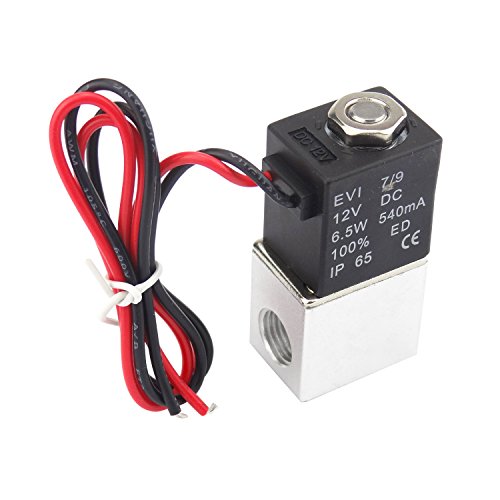
Best for compact setups that require reliable 2-way control and easy mounting. The valve uses a DC coil with a 1/4″ port and is designed for continuous energization with an ED 100% encapsulated coil. It’s a solid choice for space-constrained pneumatic lines. Caution: check compatibility with the media and ensure proper mounting orientation for optimal sealing.
Buying Guide: Key Purchase Considerations
- Media compatibility: Is the valve rated for air only or can it handle water, fuels, or oils? Brass valves should not contact potable water in many cases, while stainless steel variants are more versatile for mixed media.
- Actuation and power: Do you need 12V DC or 110V AC? Consider coil power draw and whether a low-power coil will reduce heat in continuous duty setups.
- Port size and flow: Match the valve bore (1/4″, 3/8″, 3/4″, 1″) to your system’s required airflow and pressure.
- Seals and temperature resistance: VITON seals provide high-temperature and chemical resistance but verify compatibility with your media.
- Mounting and installation: Some models offer easy mounting options or compatible footprints with existing systems; consider mounting orientation and space constraints.
- Durability and cycles: A longer life cycle usually indicates better reliability under proper conditions.
Frequently Asked Questions
- What does “Normally Closed” mean for an air shut-off solenoid?
It means the valve remains closed when de-energized and opens when energized, allowing controlled start/stop of air flow.
- Is brass or stainless steel better for air valves?
Brass is common and cost-effective for many air applications, while stainless steel offers greater corrosion resistance and durability in harsher environments or mixed media.
- Can these valves handle liquids besides air?
Some models are designed for air and non-potable liquids; check the media compatibility on each product to avoid damage or safety issues.
- What power options do these valves use?
Most listed models operate on 12V DC or 110V AC, with different coil efficiency and heat characteristics. Choose based on your power availability and duty cycle.
- Do all models support continuous energization?
Several have coils designed for continuous energized service, but confirm coil ratings for your long-term use case.
- How important is the valve’s seal material?
Seal material affects chemical resistance and temperature tolerance. VITON is common and robust for fuels and oils but verify compatibility with your exact fluids.