Best AGM Solar Battery Banks for Home and RV Installations
Answering the demand for reliable, maintenance-free energy storage, AGM battery banks offer safe indoor use, low self-discharge, and strong discharge power for off-grid homes, RVs, and small-scale industrial setups. This guide highlights five solid options, explains who each is best for, and compares their key features. The selections emphasize long life, safety, and ease of use with typical solar and off-grid systems.
Buying quick-reference table (selected products):
| Product | Type | Capacity | Best For |
|---|---|---|---|
| VMAXTANKS Qty 4 V6-225 | AGM Deep Cycle Bank | 6V 225Ah each (4 x 6V) | Home or RV setups needing 24V bank with maintenance-free operation |
| VMAXTANKS XTR6-235 | AGM Deep Cycle Bank | 6V 235Ah each (4 x 6V) | Higher capacity 6V bank for larger solar arrays |
| Renogy 12V 200Ah AGM | AGM Deep Cycle | 12V 200Ah | Long shelf life and low self-discharge for RVs and cabins |
| WEIZE 12V 100Ah | AGM Deep Cycle | 12V 100Ah | Compact, maintenance-free option for smaller systems |
| VMAXTANKS SLR125 | AGM Deep Cycle | 12V 125Ah | Reliable backup for off-grid or RV banks |
VMAXTANKS Qty 4 V6-225: 6.2kWh 24V AGM Bank
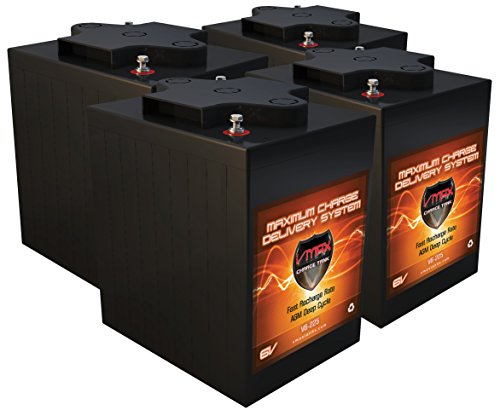
What it is: A 4-pack of 6V 225Ah AGM deep-cycle batteries forming a 24V bank, designed for indoor safety and maintenance-free operation. Specifications place each battery at about 1.55 kWh, yielding a robust bank for solar backup and heavy-use needs.
Best for: Home and RV setups requiring a high-capacity, sealed battery bank with minimal maintenance. Its heavy-duty construction supports float or cyclic use with good service life.
Why selected: The four-battery configuration gives substantial 24V storage in a compact footprint. Maintenance-free design reduces upkeep in living spaces or cabins.
Caution: Heavier weight and handling require proper mounting and ventilation in enclosed spaces. Ensure compatibility with existing 24V systems and fusing.
VMAXTANKS XTR6-235 6V 235Ah: 4-Battery 6V Bank

What it is: A four-pack of 6V 235Ah AGM deep-cycle batteries designed to deliver higher total capacity for demanding solar arrays and longer runtimes.
Best for: Larger off-grid installations or RV systems that need extra energy to power appliances during extended outages.
Why selected: Higher Ah per battery improves available energy in a 24V configuration, allowing more daily cycles and resilience in cloud-heavy days.
Caution: As with any high-capacity bank, ensure proper wiring, equalization strategies, and ventilation to manage gas generation and temperature.
Renogy Deep Cycle AGM 12V 200Ah

What it is: A 12V, 200Ah AGM deep-cycle battery offering low self-discharge, solid discharge performance, and long shelf life.
Best for: RVs or cabins using 12V systems with extended storage and fewer maintenance needs. Well-suited for solar setups that require reliable daily energy or backup power.
Why selected: Renogy emphasizes thick AGM separators and controlled plate grids to enable low internal resistance and high discharge, which helps maintain performance in off-grid conditions.
Caution: 12V systems require proper inverter/charger compatibility and may need higher total bank capacity for larger loads. Monitor for temperature sensitivity in hot climates.
WEIZE Deep Cycle AGM 12V 100Ah

What it is: A compact 12V 100Ah AGM deep-cycle battery designed for maintenance-free operation and long storage life.
Best for: Small solar setups, RVs, and off-grid cabins where space and weight are considerations.
Why selected: WEIZE offers a balance of compact size and practical capacity with a low self-discharge rate, making it a practical retrofit for existing 12V banks.
Caution: Lower total energy than larger 200Ah+ packs means more frequent recharging for higher power draws; plan for total system capacity accordingly.
VMAXTANKS SLR125 AGM 12V 125Ah

What it is: A single 12V 125Ah AGM deep-cycle battery in the SLR125 lineup, designed for reliable energy storage in off-grid or RV banks.
Best for: Standalone 12V backups or as one component of a modular 12V/24V bank system with room to expand.
Why selected: The SLR125 combines robust construction with a 125Ah capacity, offering a scalable option for incremental growth in a solar setup.
Caution: When expanding to larger banks, balance charging and parasitic loads to preserve long-term cycle life.
Buying Guide: AGM Solar Battery Bank Essentials
What should you consider when choosing an AGM battery bank?
- Voltage and configuration: Decide between 12V and 24V banks. For higher power, combine 6V blocks in series (to reach 24V) or use 12V packs in parallel as needed.
- Capacity and depth of discharge: Higher Ah ratings yield more usable energy. Consider daily consumption and desired autonomy to avoid deep discharges.
- Maintenance and safety: AGM batteries are maintenance-free and sealed, making them suitable for indoor use. Ensure adequate ventilation in enclosed spaces and proper mounting.
- Self-discharge and shelf life: Low self-discharge (often 1–3% per month) helps store energy longer between uses, especially for off-grid cabins or seasonal relies.
- Temperature tolerance: Extreme temperatures can affect performance and lifespan. Place batteries in temperature-controlled areas when possible.
- Compatibility with charger/solar controller: Check charging profiles, float voltages, and ensure the system supports AGM chemistry.
- Reliability and service life: Look for batteries designed for deep-cycle use with military-grade plates or similar construction for extended service life.
FAQ
- What is an AGM battery bank best used for?
AGM battery banks are ideal for off-grid homes, RVs, cabins, and solar backup systems where maintenance needs to be minimal and indoor safety is a priority.
- How many batteries do I need for a 24V system?
Typically, two 12V batteries in series or four 6V batteries in series/parallel configurations to reach 24V, depending on capacity.
- Are AGM batteries safe to use indoors?
Yes. AGM batteries are sealed and maintenance-free, reducing the risk of acid leaks and making them suitable for indoor installations with proper ventilation.
- How do I know if an AGM battery fits my charger?
Match charging voltages (float/absorb) and ensure the charger supports AGM chemistry. Check the system’s voltage and current needs.
- What affects the lifespan of AGM batteries?
Depth of discharge, temperature, charging rate, and maintenance practices influence longevity. Avoid frequent deep discharges and ensure proper ventilation.