Best AGM Battery for RV: Top 5 Selections for Reliable Off-Grid Power
Choosing the right AGM battery for an RV depends on capacity, safety, cycle life, and maintenance needs. The following picks are optimized for camping trips, full-time RV living, and off-grid setups, offering solid performance, reliable charging, and long shelf life. The list focuses on sealed AGM batteries known for safety, low self-discharge, and compatibility with standard RV charging systems. Use this guide to compare options that maximize travel convenience and power reliability.
Product Snapshot
| Product | Capacity | Type | Max Discharge Current |
|---|---|---|---|
| Renogy Deep Cycle AGM 12V 100Ah | 100 Ah | AGM | 1100 A |
| WEIZE Deep Cycle AGM 12V 100Ah | 100 Ah | AGM | 1150 A |
| Renogy Deep Cycle AGM 12V 200Ah | 200 Ah | AGM | 2000 A |
| WEIZE Dual Purpose AGM Group 24M | 90-100 Ah (rated) | AGM | 550->?? A ranges per model |
| WEIZE Dual Purpose AGM Group 27M | 92 Ah | AGM | 580 A |
Note: Specifications vary by model. Always verify current ratings from the product page and ensure your RV’s charging system matches the battery’s charging voltage and maximum current.
Renogy 100Ah AGM: Solid Choice for RVs

Renogy’s 12V 100Ah Deep Cycle AGM battery is designed for RVs, camping, and off-grid cabins. It offers a low self-discharge rate and a safe, sealed design that reduces maintenance needs. The internal architecture supports series connections without strict limitations and allows parallel configurations up to four batteries, making it adaptable for larger power needs. This model emphasizes safety and reliability in harsh environments, with a focus on stability and ease of use for RV enthusiasts.
WEIZE 100Ah AGM: Maintenance-Free Performance
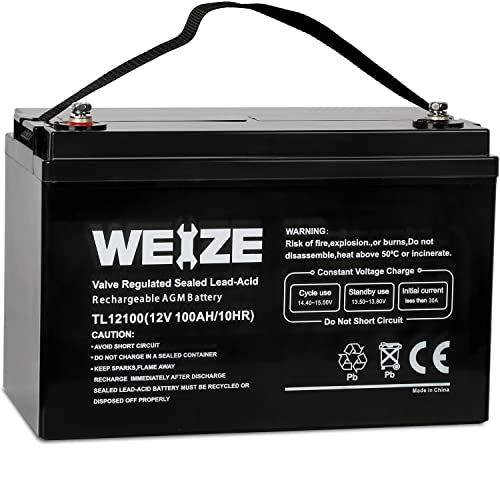
WEIZE’s 12V 100Ah sealed AGM battery emphasizes maintenance-free operation with a low self-discharge rate. It operates across a wide temperature range and is designed for RVs, solar setups, trolling motors, and off-grid systems. Its long shelf life and robust safety profile make it a practical option for travelers who want dependable power without regular upkeep.
Renogy 200Ah AGM: Expanded Capacity

This higher-capacity Renogy AGM battery targets RVs with larger power demands, such as full-time travel or extended camping, offering up to 2000A max discharge current. The battery maintains a low self-discharge rate and is maintenance-free, designed to withstand frequent cycling while providing stable voltage for essential appliances and electronics on the go. It’s ideal for users who need more usable capacity without adding multiple smaller batteries.
WEIZE 24M Dual Purpose AGM: Quick Charge

The WEIZE 24M Group 24M dual-purpose AGM battery provides strong starting power and deep cycling ability for RVs and marine use. It emphasizes quick charging to reduce downtime and supports both starting and deep-cycle applications, making it versatile for mixed-use RV setups. Always follow the recommended charging practice to maximize cycle life and performance.
WEIZE 27M Dual Purpose AGM: Starting Power

The WEIZE 27M model combines strong starting capability with deep cycling capacity, designed for RVs and marine use. It features quick charging and a robust BMS design to protect against overcharge and short circuits. This makes it a practical option for RV owners who prioritize reliable starting power and dependable cycling performance in variable conditions.
Buying Guide: Key Considerations For AGM Batteries In RVs
- Capacity and usable energy: Choose a rating that matches your RV’s daily power usage, including lights, refrigeration, and electronics. Higher Ah means more stored energy but adds weight and footprint.
- Discharge current and efficiency: Look for batteries with high peak discharge capabilities if you frequently run high-draw appliances or in cold climates where performance can dip.
- Maintenance requirements: AGM batteries are designed to be maintenance-free, but pay attention to terminal cleanliness and venting if applicable in your setup.
- Temperature tolerance: Extreme temperatures affect AGM performance and lifespan. Some models specify operating temperature ranges and low-temperature protection features.
- Charge compatibility: Ensure your RV’s converter/ charger supports 12V AGM charging with appropriate voltage (typically around 14.4–14.6V for bulk charging) and a suitable charging current.
- Weight and space: Higher-capacity batteries weigh more and take up more space. Plan the installation area to avoid unnecessary stress on mounts and electrical links.
- Cycle life and warranty: Consider expected cycle life under your use pattern and check the warranty terms for coverage on deep discharges and faults.
- Safety and chemistry: AGM chemistry offers sealed, maintenance-free operation with reduced leakage risk. For portable or off-road use, sealed construction is advantageous.
- System integration: If you plan a larger system, verify whether the battery supports in-parallel connections or series configurations and how this affects monitoring.