Best AGM Batteries for Solar Storage and Off-Grid Power
Choosing the right AGM (Absorbent Glass Mat) battery for solar setups involves balancing capacity, durability, and safe operation. The following selections are among the most reliable 12V AGM options for RVs, cabins, boats, and home backup. Each entry highlights core specs, efficiency, and maintenance expectations to help you compare quickly.
style=”display:none”>Summary Table of Selected Products
| Product | Brand | Cap. (Ah) | Max Discharge Current | Key Benefit |
|---|---|---|---|---|
| Weize Deep Cycle AGM 12V 100Ah | WEIZE | 100 | 1100A | Low self-discharge, maintenance-free |
| Renogy Deep Cycle AGM 12V 100Ah | Renogy | 100 | 1100A | Proven safety and wide compatibility |
| Renogy Deep Cycle AGM 12V 200Ah | Renogy | 200 | 2000A | Higher capacity for larger systems |
| Interstate Batteries 12V 110Ah DCM0100 | Interstate Batteries | 110 | Not specified in listing | Strong deep-cycle performance and wide fit |
| VMAX SLR125 AGM 12V 125Ah | VMAXTANKS | 125 | Not specified in listing | Military-grade plates, long float life |
WEIZE 100Ah AGM Battery: Maintenance-Free Power
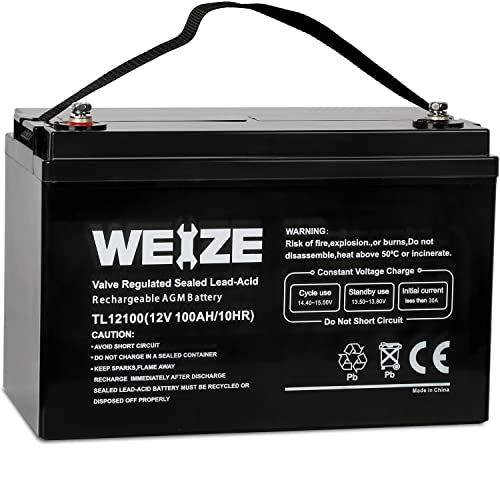
The Weize 12V 100Ah deep cycle AGM battery is designed for off-grid systems, RVs, and marine use. It features a maintenance-free design with AGM separators to minimize acid leakage and reduce the need for water maintenance. The battery supports a wide operating temperature range and has an impressive 1100A max discharge for short, high-demand periods. A low monthly self-discharge rate (1–3%) helps with long-term storage, provided the unit is stored in a suitable environment. The left-positive/right-negative terminals enable straightforward wiring in most solar configurations.
Renogy 100Ah AGM Deep Cycle Battery: Safe And Reliable

Renogy’s 12V 100Ah AGM battery is built for safety and stable performance in RVs, cabins, and off-grid systems. It is maintenance-free and supports series and parallel configurations (including up to four in parallel). Renogy has earned broad trust with substantial unit sales and emphasizes a sealed design that minimizes troubleshooting compared with some other chemistries. The battery’s minimal self-discharge and robust internal structure help sustain charge through longer storage periods and varied temperatures.
Renogy 200Ah AGM Battery: Higher Capacity For Bigger Systems

Renogy’s 200Ah AGM model presents a higher capacity option for larger solar setups or those requiring longer runtime between charges. It uses thick AGM separators and advanced valve regulation to limit leakage and maintain performance over multiple cycles. The battery promises a low self-discharge rate and reliable discharge performance, supporting off-grid cabins, campers, and remote installations. Owners can expect maintenance-free operation with a strong emphasis on safety and longevity.
Interstate DCM0100: Deep-Cycle Reliability For Solar

Interstate’s 12V 110Ah AGM deep-cycle battery is designed for reliable performance in solar, RV, and wind setups. This battery emphasizes spill-proof, maintenance-free operation with VRLA technology. It is positioned as a practical drop-in option compatible with many 12V systems. The listed dimensions indicate easy fit in common battery compartments, and the design supports deep discharge cycles suitable for off-grid living. The model is noted for compatibility with various brands and a broad range of configurations when matched with a suitable charge controller.
VMAX SLR125 AGM Battery: Heavy-Duty 125Ah
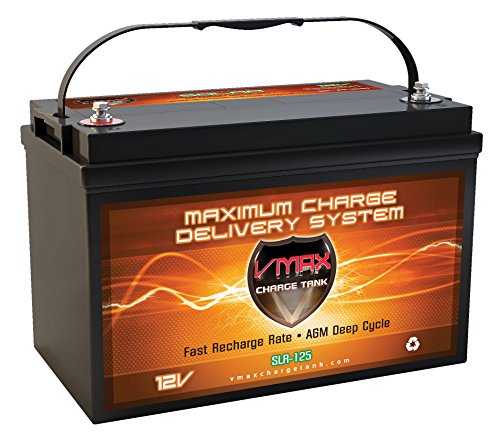
The VMAX SLR125 is a robust 12V 125Ah AGM option built for off-grid solar, backup power, and RV use. It highlights heavy-duty construction with a focus on long float-life, illustrated by its 8–10 year expectancy in stability-focused environments. The product notes emphasize rugged plates and a sealed design to minimize maintenance. For users needing dependable energy storage with extended service life, this model aligns with long-term solar installations where periodic replacement is less frequent.
Buying Guide: Key Considerations For AGM Solar Batteries
When selecting an AGM battery for solar, readers should weigh capacity, discharge behavior, compatibility, and maintenance needs. Below are multiple perspectives to support informed choices.
- Capacity vs. Load: Match Ah rating to daily energy use. If you run essential electronics daily, a higher Ah bank (like 200Ah) can reduce cycling and extend service life, though it adds weight and cost.
- Discharge Strategy: AGM batteries perform best with moderate discharge depths. Some models market higher permissible discharges; verify recommended DOD to maximize cycle life.
- Charge Compatibility: Ensure your solar charge controller can support a 12V AGM with the right charging profile (bulk/absorption/float). Some batteries require specific voltage tolerances (e.g., around 14.6V for proper charge).
- Temperature Range: Off-grid systems in cold climates benefit from batteries with low-temperature protection and stable performance across a wide range of temperatures.
- Maintenance: AGM batteries are marketed as maintenance-free, but they still benefit from proper ventilation, secure mounting, and periodic inspection for corrosion on terminals.
- Physical Fit: Compare dimensions to your battery enclosure. Some models sit higher or wider than standard group sizes, influencing installation feasibility.
- Lifecycle Cost: Consider long-term costs, including expected cycle life, self-discharge rate, and storage needs. A higher upfront cost may yield lower total cost of ownership if cycles are extended.
- Safety and Warranty: Look for sealed, spill-proof designs and verify warranty terms to understand coverage for deep-cycle use and cycling frequency.
- System Architecture: Decide between parallel or series configurations. AGM chemistry supports both, but wiring, BMS integration, and charging must be planned for stability and safety.
In summary, the five AGM options highlighted here provide a spectrum from maintenance-friendly 100Ah units to a higher-capacity 200Ah model, plus 110–125Ah options from well-known brands. For solar users, the choice depends on daily load profiles, available space, and local climate. Always pair batteries with a suitable solar controller and a robust mounting plan to maximize safety and longevity.