Best Adjustable Pressure Release Valves for Safe, Reliable System Protection
These adjustable pressure release valves are designed to protect pneumatic, hydraulic, and fluid systems by setting precise relief thresholds. They are best for shop compressors, irrigation systems, water or oil lines, and DIY projects that require reliable over-pressure protection. The top picks below target varying pressure needs, installation sizes, and environments, making it easier to choose the right valve for your application.
| Product | Best For | Key Range | Installation |
|---|---|---|---|
| Sellerocity Adjustable 0-100 psi | General pneumatic systems | 0–100 psi | 1/4″ NPT |
| Otoolling 100–300 psi (Water/Oil/Air) | Water and multi-fluid lines | 100–300 psi | 3/4″ NPT / 1/2″ NPT outlet |
| Valley Industries 400 psi | High-pressure fluid systems | Up to 400 psi | 3/4″ MNPT / FNPT |
| Watts 530C 1/2″ Poppet | Water, oil, or air protection | Calibrated (varies by setting) | 3/4″ NPT / 1/2″ drain |
| Midwest Control CPR-25 0-20 psi | Air and low-pressure control | 0–20 psi | 1/4″ NPT |
Notes: This table highlights representative options among the listed products. For installation, always verify thread standards and compatibility with your system. The listed ranges are adjustable within the stated limits and may vary by model and setup. The buyer should confirm the operating environment (liquid, gas, or mixed fluids) and maintenance needs before purchasing.
Sellerocity American Made Brass 0-100 PSI Valve

Best for: Small to mid-size pneumatic setups requiring precise relief at low-to-mid pressures. The 0–100 psi range is ideal for general air tools, compressors, and equipment where tight threshold control matters. The micrometer-style adjustment knob enables exact setting, supporting repeatable protection across cycles.
Why chosen: The rugged brass body with a stainless-steel poppet and durable fluorocarbon O-rings offers corrosion resistance and leak protection. Standard 1/4″ NPT threading makes retrofitting straightforward in many existing systems.
Limitations: The 1/4″ size may limit higher flow scenarios; for larger line volumes, consider a valve with a bigger port. Ensure the system’s maximum operating pressure remains within the adjustable range.
Otoolling 1/2″ x 3/4″ Poppet Adjustable Relief Valve
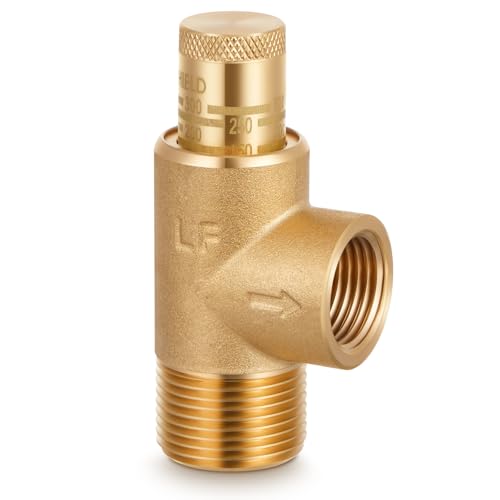
Best for: Water or oil systems and multi-fluid lines that require a broader pressure window. With a 100–300 psi range, this valve accommodates higher operating pressures while maintaining adjustable control through a calibrated knob.
Why chosen: Brass construction provides corrosion resistance and durability for long-term service. The combination of 3/4″ NPT male and 1/2″ NPT female threads fits many standard piping arrangements, reducing the need for adapters. The design emphasizes leak minimization via an O-ring seal.
Limitations: Check the exact port sizes before purchasing to confirm compatibility with your piping plan. This model is best when your system operates within or near the 100–300 psi band.
Valley Industries 400 PSI Pressure Relief Valve

Best for: High-pressure fluid or air lines where robust relief is critical. The 3/4″ MNPT inlet and 3/4″ FNPT outlets support demanding flow needs and quick adjustment when required.
Why chosen: Positive Viton seals help prevent leaks, while a brass knurled locknut and tee-handle make field adjustments straightforward. It’s designed to balance reliability with ease of use in dynamic systems.
Caution: High-pressure applications demand careful setup to avoid unnecessary venting or misadjustment. Ensure the relief setting aligns with system tolerances and safety requirements.
Watts 0371271 530C Poppet Adjustable Valve

Best for: Systems needing calibrated relief for water, oil, or air with precise set points. The supplied calibrated adjustment helps tailor relief pressure to specific process requirements.
Why chosen: The valve includes a stainless steel spring, lead-free brass bonnet, Buna-N disc, and an O-ring, delivering a corrosion-resistant assembly with robust seating. The 3/4″ NPT male inlet and 1/2″ drain outlet support common piping layouts.
Limitation: The model emphasizes calibration accuracy; ensure your installation allows for stable mounting to prevent drift from vibrations or temperature changes.
Midwest Control CPR-25 0-20 psi

Best for: Low-pressure applications where precise control close to ambient is essential, such as small air tools or delicate pneumatic systems. The 0–20 psi range supports fine-tuning for sensitive operations.
Why chosen: This proportional relief design is not a simple “pop” valve, providing controlled relief with a knurled adjustment screw and a locking jam nut to secure settings in place. It offers repeatable settings for steady system performance.
Caution: The low-pressure range may limit use in high-demand lines; pair with a higher-range valve if system pressures sometimes exceed 20 psi.
Buying Guide
How to choose the right adjustable pressure relief valve?
- Pressure range: Match the valve’s adjustable range to your system’s operating range. For high-demand lines, prefer models with broader ranges or higher maximums. For delicate systems, opt for low-range, finely adjustable options.
- Port size and threading: Confirm the valve’s inlet and outlet sizes (NPT or MNPT) to fit your piping. Consider whether adapters are acceptable in your installation plan.
- Material and seals: Brass valves with stainless springs, Viton or Buna-N seals offer good durability in air, water, and oil environments. For corrosive or hot conditions, verify material suitability.
- Calibration and locking: Valves with calibrated adjustment and locking nuts minimize drift during operation. This is important in processes that experience vibration or temperature swings.
- Installation location: Place the relief valve where vented fluid can safely escape and where backflow is unlikely. Ensure accessibility for adjustment and inspection.
- Leak risk and maintenance: O-ring and seal quality influence long-term leak resistance. Periodic checks help maintain reliable over-pressure protection.
Frequently Asked Questions
- What is an adjustable pressure relief valve used for?
It protects systems by venting excess pressure at a user-set threshold, preventing damage to components and lines. - What should I consider when selecting a valve for water vs. air systems?
Consider fluid compatibility, maximum pressure, and acceptable venting flow. Water systems may require corrosion-resistant materials; air systems emphasize leak resistance and response time. - How important is the port size?
Very important. Incompatible ports can restrict flow or require adapters, increasing installation complexity and potential leak paths. - Can I mix valve brands in a single system?
Yes, provided port sizes, materials, and pressure ratings are compatible. Ensure consistent installation practices and safety alignments. - Do these valves require maintenance?
Yes. Regular inspection of seals, springs, and threads helps maintain reliable relief performance and prevents leaks or drift. - What installation safety steps are recommended?
Depressurize the system before installation, verify vented fluid path safety, and mount securely to minimize vibration-induced drift.