Best AC Leak Detector Tool for Home and Auto Diagnostics
For buyers searching for an accurate, easy-to-use AC leak detector tool, this guide highlights five top options and explains why each may fit different needs. The focus is on cordless operation, sensor technology, adjustable sensitivity, and practical limitations. This overview helps DIYers, auto enthusiasts, and professional technicians pick the right tool for locating refrigerant leaks in automotive and household AC systems.
Summary table of selected products:
| Product | Key Benefit | Best For | Notes |
|---|---|---|---|
| SENSYX SFD200 Rechargeable Refrigerant Detector | Cordless, high-sensitivity sensor | Homeowners and mobile technicians | Rechargeable with USB-C, adjustable sensitivity |
| Elitech WJL-6000S Freon Leak Detector | Halogen gas coverage, adjustable sensitivity | Auto shop use and advanced DIYers | All halogenated refrigerants compatible |
| SENSYX SFD201 2-in-1 Detector | Freon and combustible gas detection | Multi-system diagnostics | USB-C powered, high/low sensitivity |
| Elitech ILD-200 Infrared Leak Detector | Infrared sensor, long-term stability | Precise leak workups | High sensitivity range, broad gas coverage |
| Aprvtio WJL-6000PRO Refrigerant Detector | Enhanced sensitivity, DIY-friendly | Home and hobbyist use | LCD visuals, 0.14 oz/yr sensitivity |
SENSYX Rechargeable HVAC Refrigerant Leak Detector SFD200

The SENSYX SFD200 uses a rechargeable lithium battery for cordless operation and a USB-C charger for convenient power on the go. It features a Japanese-made heat dioxide semiconductor sensor noted for sensitivity and reliability in detecting gas leaks, with adjustable High/Low sensitivity levels. Best for mobile techs and homeowners who prioritize portability and quick spot checks. Caution: battery life depends on usage; prolonged high-sensitivity testing may reduce runtime.
Elitech WJL-6000S Freon Leak Detector

The WJL-6000S detects all halogenated refrigerants (R22, R134A, R404A, R410A, R1234YF, etc.) with seven adjustable sensitivity levels. It provides audible and visual gas leakage indicators and dual battery indicators for clear status at a glance. Best for auto shops or serious DIYers who need broad refrigerant compatibility. Limitation: traditional corona-style sensors can be affected by ambient heat or strong background odors, so calibration is important.
SENSYX 2-in-1 SFD201 Refrigerant & Combustible Gas Detector

The SFD201 offers a 2-in-1 capability for refrigerant leaks and combustible gas detection with a rechargeable lithium battery and a USB-C charging port. Its Japanese-made sensor provides high sensitivity with adjustable High/Low levels. Best for users who want both refrigerant and gas leak detection in one tool. Caution: ensure the device is configured correctly for mixed gas scenarios to avoid misreads.
Elitech ILD-200 Refrigerant Leak Detector
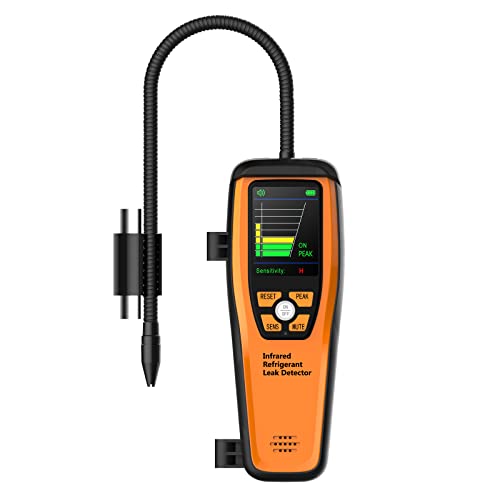
The ILD-200 uses infrared sensing for robust anti-interference performance and fast response. It detects all halogenated gases and supports a wide gas range (CFCs, HFCs, HCFCs, HFOs, and blends). It features adjustable High/Medium/Low sensitivity and a maximum sensitivity up to 0.14 oz/yr. Best for technicians needing precise, long-lasting performance and broad coverage. Limitation: higher-end infrared sensors may have a higher initial cost compared to diode-based models.
Aprvtio WJL-6000PRO Pro Refrigerant Leak Detector

The WJL-6000PRO is tailored for DIYers and car enthusiasts with upgraded sensitivity up to 0.14 oz/yr, enabling earlier detection of tiny leaks. It features a clear visual LCD screen showing current sensitivity and gas leakage levels, reducing guesswork. Best for hobbyists who want an approachable yet capable tool. Caution: LCD readability depends on lighting conditions; outdoors glare may affect readability.
Buying Guide: Key Considerations When Choosing an AC Leak Detector Tool
- Gas coverage: Decide if you primarily need to detect halogenated refrigerants (R22, R134A, R410A, etc.) or also combustible gases. Tools like WJL-6000S emphasize halogen coverage, while multi-sensor models like SFD201 cover broader scenarios.
- Sensing technology: Infrared sensors tend to be more stable and less prone to false alarms in some environments, while heated diode sensors can be fast and cost-effective. Consider reliability, response time, and long-term durability.
- Sensitivity settings: Look for adjustable High/Medium/Low sensitivities. Higher sensitivity helps detect tiny leaks but may increase false positives; lower sensitivity reduces noise but can miss small leaks.
- Power and portability: Cordless, rechargeable units offer mobility for automotive work or on-site checks. Ensure the included charging method (USB-C) aligns with your charging habits.
- Readouts and indicators: Visual and audible alerts help in challenging lighting conditions. Some units include LCD or TFT displays for precise readings, while others rely on beeps and LEDs.
- Physical design and reach: A flexible probe or long probe length helps access tight engine bays or HVAC components. Consider a compact form factor for quick checks in a vehicle.
- Maintenance and calibration: Some devices require periodic calibration or sensor replacement to maintain accuracy. Check the warranty and service options if available.
Frequently Asked Questions
- What is an AC leak detector tool best used for?
Best used for locating refrigerant leaks in automotive air conditioning systems and home HVAC units, helping pinpoint leak sites for repairs.
- Do I need a detector that covers all halogen refrigerants?
Yes if you work with various refrigerants, as coverage across R22, R134A, R410A, and R1234YF reduces the need for multiple devices.
- Is infrared detection superior to diode-based detection?
Infrared sensors offer strong anti-interference performance and broad gas coverage, while diode sensors can be faster and more affordable for simple checks.
- How important is sensor sensitivity customization?
Very important. It lets you tailor detection to the leak environment, balancing accuracy with the risk of false alarms.
- Can I use these tools for DIY home repairs?
Yes, many models are designed for DIYers and hobbyists, offering straightforward operation and visual readings to guide repairs.
- What should I expect in terms of maintenance?
Expect periodic calibration or sensor checks and battery maintenance; follow manufacturer guidelines for optimal performance.