Best 9500 Watt Super Quiet Generators for Home Backup and RV Use
When you need reliable, quiet power for home backup or RV trips, a 9500-watt class generator is a strong choice. This guide highlights five top options that balance noise levels, fuel versatility, and ease of use. The listed buyers are best for frequent campers, homeowners seeking whole-house backup, or job sites needing portable power without excessive noise. Below you’ll find quick comparisons and detailed notes to help you pick the right model. A summary table of the chosen products is provided for at-a-glance planning.
| Product | Best For | Key Benefit |
|---|---|---|
| Pulsar PGD95BISCO Super Quiet Dual Fuel 9500W | Home backup, RV use | Dual fuel flexibility, remote/electric start |
| Westinghouse 9500 Peak Dual Fuel Backup | Home backup, transfer-ready setups | Remote start, CO sensor, multiple outlets |
| Pulsar 9500 Watt Tri Fuel Inverter | Travel, RV, camping | Dual-fuel plus natural gas, parallel capable |
| Champion 11,000-Watt Wireless Remote Start | Home backup with long runtimes | Wireless remote, CO shield, long run time |
| AIVOLT 11250W Dual Fuel Inverter | Home backup, job sites | CARB compliant, high power, easy switching |
Pulsar PGD95BISCO Super Quiet Dual Fuel 9500W

Best for: Home backup and RV enthusiasts who want flexible fuel options. This Pulsar model delivers a peak of 9500W on gas and 8550W on LPG, with 7600W running on gas and 7200W on LPG. It operates at a quiet 62 dBA, making it suitable for neighborhoods and campsites with minimal disturbance. Features include electric start and a remote option, plus safety shutoffs for CO, low oil, and battery health. Use this if you need clean power for sensitive electronics and plan to run a compressor, fridge, or essential appliances during outages. Caution: dual-fuel operation requires regular fuel management and periodic maintenance to optimize longevity.
Westinghouse 9500 Peak Watt Dual Fuel Backup

Best for: Homeowners needing a robust, transfer-switch-ready unit with remote start. This Westinghouse offers 7500 running watts and 9500 peak watts on gasoline, with a propane option, and a long runtime of up to 11 hours on a full tank. It includes a remote start key fob, dual GFCI outlets, and a twist-lock receptacle. It’s ideal for whole-home backup and for setups that require multiple outlets and weatherproof safety features. Caution: assembly is minimal but requires basic wiring for panel integration and transfer-switch readiness.
Pulsar 9500 Watt Tri Fuel Inverter

Best for: RVs and outdoor enthusiasts who demand versatility. This generator supports gasoline, propane, and natural gas, delivering 9500 peak/7600 running watts on gasoline, 8500/7200 on propane, and 7600/6000 on natural gas. It includes a CO sensor and low-oil shutdown for safety. The 6-hour runtime at half load makes it practical for extended outings or smaller job sites. Caution: dual fuel selections require proper fuel management and regulator compatibility for propane or natural gas with fixed hookups.
Champion 11,000-Watt Wireless Remote Start

Best for: Households needing longer runtimes with convenient remote operation. The Champion model offers 11,000 starting watts and 9000 running watts, with up to 15 hours of runtime on a full tank and a noise level of 64 dBA at 23 feet. It includes a wireless remote, battery-included electric start, and Cold Start Technology for easier starts in cold weather. Choose this if you want a larger power reserve and a simple control experience for frequent outages. Caution: the higher power requires careful handling of load to avoid tripping breakers in smaller panels.
AIVOLT 11250W Dual Fuel Inverter
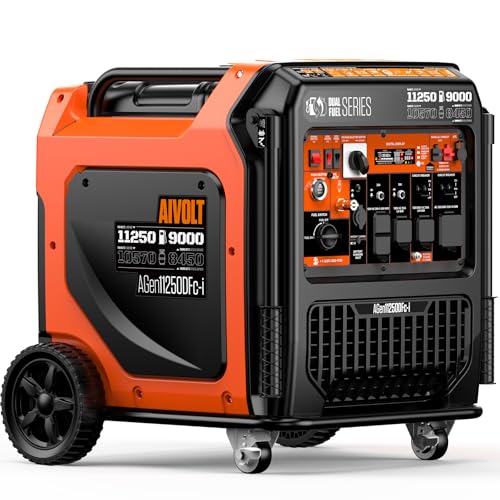
Best for: Home backup, RVs, and job sites requiring strong power with fuel flexibility. This CARB-compliant unit runs on gasoline or propane, delivering 11250W peak/9000W running on gasoline and 10570W/8540W on propane. It features a remote start, easy gas/propane switching, and safety features including low oil and carbon monoxide shutoffs. Eco Mode helps extend runtime. Caution: high power draw may necessitate careful generator placement and load management to stay within noise and amp limits.
Buying Guide: Key Purchase Considerations
- Fuel Type and Availability: Dual-fuel or tri-fuel models offer flexibility during outages when specific fuels are scarce. Consider local fuel accessibility and storage safety.
- Power Output and Runtime: Match peak and running watts to your essential loads. Longer runtimes are beneficial for extended outages.
- Remote Start and Safety Features: Remote start, CO sensors, and low-oil shutoffs improve safety and convenience, especially for indoor or semi-enclosed spaces.
- Portability and Noise: Look for noise levels around 60-65 dBA for quiet operation. Wheel kits, handles, and compact footprints aid portability.
- Transfer Switch Compatibility: If you plan to back up a whole house, ensure the generator supports transfer switch integration and has the appropriate outlets (NEMA 5-20R, L14-30R, etc.).
- Warranty and Support: A reliable warranty and accessible customer support reduce total cost of ownership over time.
FAQ
- What does 9500W mean in practice?
Peak wattage (e.g., 9500W) indicates the maximum power the generator can deliver for a short period. Running watts (e.g., 7600W) show the steady power available for continuous use.
- Which fuel type is best for emergencies?
Dual- or tri-fuel models are flexible. Gasoline is commonly available, but propane or natural gas can offer storage and longer shelf life for some setups.
- Are these generators safe for indoor use?
Always use outside or in well-ventilated areas. Models with CO sensors and auto shutoffs improve safety, but proper ventilation is essential.
- What is transfer switch compatibility?
Transfer switches isolate house circuits from the grid during outages. Check outlets and panel compatibility when selecting a unit.
- How important is noise level?
Lower dBA numbers reduce disturbance for neighbors and campers. Aim for models in the 60–65 dBA range for a balance of power and quiet operation.
- Do these models include remote starts?
Most featured models offer remote or push-button start. Confirm remote range and battery requirements before purchase.