Best 9500 Running Watt Generators for Home Backup
When the power goes out, a 9500 running watt generator can keep essential appliances, HVAC systems, and electronics running. This guide reviews five Westinghouse and related models that deliver strong running watts, reliable starting methods, and useful safety features for American homes. Each entry includes key specs, transfer-switch readiness, and safety features to help compare options for outages, RVs, or job-site use.
| Product | Running Watts | Peak Watts | Fuel | Start | Run Time |
|---|---|---|---|---|---|
| Westinghouse 9500 Peak Watt Home Backup Portable Generator | 7500 | 9500 | Gas | Remote Electric Start | Up to 11 hrs |
| Westinghouse 9500 Peak Watt Dual Fuel | 7500 | 9500 | Gas/Propane | Electric Push Start with Remote | 6.6 gal tank |
| Westinghouse 12500 Peak Watt Dual Fuel | 9500 (gas) | 12500 | Gas/Propane | Remote Start | Up to 12 hrs |
| Westinghouse 12500 Peak Watt EFI Dual Fuel | 9500 | 12500 | Gas/Propane | Remote Start | Up to 15 hrs |
| Westinghouse 14500 Peak Watt Tri-Fuel | 11,500 | 14,500 | Gas/Propane/Natural Gas | Remote Electric Start | Up to 19 hrs |
Westinghouse 9500 Peak Watt Home Backup Portable Generator

The Westinghouse model delivers 7500 running watts and 9500 peak watts. It includes remote electric start via a key fob, plus both electric and recoil start options. The 6.6-gallon fuel tank provides up to 11 hours of runtime, and a fuel gauge helps manage usage. Safety outlets include two 5-20R GFCI receptacles and a 30A 120/240V twist-lock. The unit ships with essential accessories such as a battery charger, oil, funnel, tool kit, and user manual, enabling quick setup with minimal assembly.
Westinghouse 9500 Peak Watt Dual Fuel Home Backup Generator

This dual-fuel model provides 7500 running watts and 9500 peak watts on gasoline, with 6750 running and 8550 peak watts on propane. It houses a 6.6-gallon tank with a fuel gauge and offers electric push-button start via remote key fob. The control panel includes two GFCI 5–20R 120V outlets and an L14-30R 120/240V outlet. Rubber outlet covers boost safety, and the package includes a remote start key fob, battery charger, oil, funnel, tools, and manual for straightforward setup.
Westinghouse 12500 Peak Watt Dual Fuel Generator

This model delivers 9500 running watts and 12500 peak watts on gasoline, or 8500 running and 11200 peak watts on propane. Features remote start, a 6.6-gallon fuel tank with gauge, and multiple outlets including GFCI 120V 5–20R, transfer-switch-ready 120V L14-30R, and an RV-ready 14–50R. A heavy-duty engine with safety features such as auto low-oil shutdown and a digital hour meter provides reliability. It comes with a comprehensive tool kit and manual for quick, confident operation.
Westinghouse 12500W Dual Fuel Generator And Wire Kit

Equipped for versatility, this 12,500 peak/9,500 running watts on gasoline model operates on gasoline or propane. It powers up to 12,500 peak or 9,500 running watts on gasoline; propane delivers 8,500 running watts. The kit includes 540 mixed electrical connectors suitable for various projects. Dual-fuel capability allows choosing fuel sources based on availability, and a 6.6-gallon tank supports extended runtimes, enabling dependable outages or remote job sites without frequent refueling.
Westinghouse 14500 Peak Watt Tri-Fuel Generator

Designed for larger homes or portable power needs, this tri-fuel generator delivers 11,500 running watts (gasoline) and 14,500 peak watts, with propane and natural gas options (12,000 peak/9,500 running on natural gas; 13,500 peak/10,500 running on propane). A 550cc engine powers up to 19 hours on a 9.5 gallon tank. The unit includes a remote electric start, transfer switch-ready outlets, and a robust safety system to support prolonged outages or demanding outdoor work.
Westinghouse 12500 EFI Dual Fuel Generator
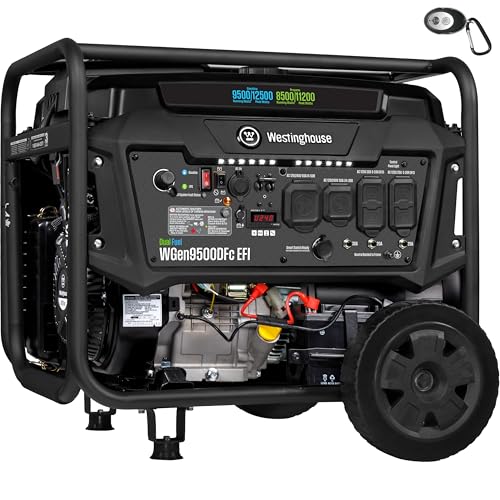
Fuel-flexible for home, RV, and jobsite use, this EFI model offers 12,500 peak watts and 9,500 running watts on gasoline, with 11,200 peak and 8,500 running watts on propane. It runs up to 15 hours on a 6.6-gallon tank, features a remote start key fob, and has multiple outlets including a 50A RV/secondary outlet and a 50A transfer-switch-ready 14–50R. Rubber-covered outlets and a CO sensor enhance safety, and a digital hour meter aids maintenance planning.
Buying Guide: Key Purchase Considerations And Comparisons
- Power needs: Calculate essential loads (fridge, furnace, sump pump, lights) and choose a unit with a comfortable margin above those running watts and compatible peak watts for startup surges.
- Fuel flexibility: Dual-fuel and tri-fuel options provide versatility when fuel availability varies; propane and natural gas can be easier to store and access during emergencies.
- Starting method: Remote electric start adds convenience, especially for frequent outages; consider backup recoil or push-button options for reliability in cold weather or low battery conditions.
- Transfer switch compatibility: Units labeled transfer-switch ready simplify home integration with existing electrical panels, reducing the need for external transfer equipment.
- Safety and durability: Look for CO sensors, automatic low-oil shutdown, and weather-resistant outlets with rubber covers to extend life and protect occupants.
- Run time and fuel capacity: Larger tanks provide longer runtime; balance with portability and storage space in your garage or shed.
- Maintenance features: Hour meters, included oil, funnels, and tool kits help with routine maintenance and reliability during outages.
- Noise and footprint: Higher-watt units can be louder and heavier; check enclosure design and dimensions to ensure suitable placement on a property or jobsite.
- Warranty and support: Consider manufacturer support, warranty terms, and replacement parts availability when planning long-term use.