Best 9 GPM Tankless Water Heaters for Fast, On‑Demand Hot Water
Homeowners seeking reliable, high‑flow hot water often target models around 9 GPM. This guide compares five top options that deliver near‑9 GPM performance, indoor or outdoor installation versatility, and energy‑efficient operation. We list each model with key specs, plus a practical buying guide to help you pick the right heater for your family’s needs and home layout.
Summary snapshot of selected products:
- Rheem Natural Gas Condensing Tankless Water Heater Indoor Up To 9 GPM — 180,000 BTU
- Rheem RTG-95DVLN-3 High Efficiency Non-Condensing Indoor Tankless Natural Gas Water Heater 9.5 GPM
- Rinnai RXP160iN Condensing Smart Sense — Up to 9 GPM, Indoor/Outdoor
- Rinnai CU160eN Commercial Natural Gas Condensing Tankless Water Heater — 9 GPM
- WINTEMP 36kW Tankless Electric Water Heater — Up to 8.7 GPM
Rheem Natural Gas Condensing Tankless Water Heater Indoor Up To 9 GPM

The Rheem unit provides a compact, indoor, condensing design with a flow capacity up to 9 GPM and a robust 180,000 BTU input. It supports a broad temperature range from 100 to 140°F, with a default of 120°F, making it suitable for busy households with simultaneous hot water needs. An electric ignition simplifies startup and reduces standby energy use. This model is well-suited for homes needing reliable hot water for multiple fixtures without a traditional tank.
Rheem RTG-95DVLN-3 High Efficiency Non-Condensing Indoor Tankless Natural Gas Water Heater

Designed for indoor installation, this non-condensing model delivers up to 9.5 GPM with a 199,900 BTU rating. It’s tailored for households with 2–3 bathrooms and multiple hot water draws, such as simultaneous showers and laundry. The compact cabinet and wall‑mount readiness simplify installation by a qualified professional, while its efficiency supports fast hot water delivery during peak demand periods.
Rinnai RXP160iN Condensing Smart Sense Tankless Water Heater

Rinnai’s compact design packs up to 9 GPM and 160,000 BTU of gas input. This model is installed indoors or outdoors using Versa Vent and is compatible with either propane or natural gas via Smart Sense control. Features include a Quick Flush function, a modern interface, and a high energy efficiency factor of 0.97 UEF. It’s designed to supply hot water for multiple fixtures with a focus on control and ease of use, including potential Wi‑Fi monitoring via compatible modules.
Rinnai CU160eN Commercial Natural Gas Condensing Tankless Water Heater

This commercial unit focuses on energy and space efficiency while delivering a steady 9 GPM. Its compact footprint makes it suitable for tight installations, and multiple venting options provide installation flexibility. Circ-Logic technology supports efficient recirculation patterns, and Wi‑Fi monitoring helps ensure hot water is available on demand. It’s a dependable choice for small businesses or larger homes with high hot water demand.
WINTEMP 36kW Tankless Electric Water Heater
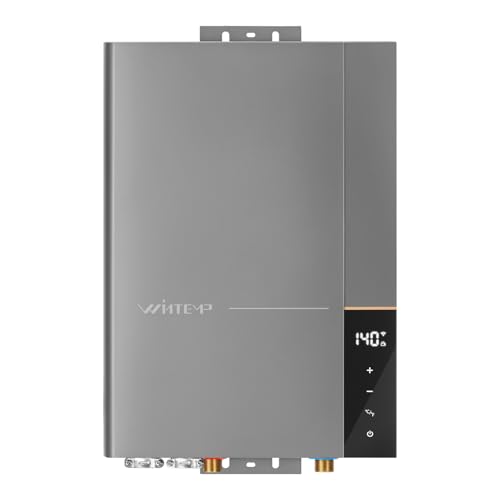
The WINTEMP electric tankless model provides up to 8.7 GPM for whole‑house hot water needs, with a 36 kW rating at 240V. It includes a robust configuration note: a significant electrical load requiring multiple large breakers and sizable wiring. While not a gas unit, it is a strong electric option for high‑demand households that prefer electric heating with instant on‑demand water and Wi‑Fi control compatibility. It serves as a practical alternative where gas access is limited.
Buying Guide: Key Purchase Considerations
- Flow capacity and fixture count: For homes with multiple bathrooms or high simultaneous usage, target models rated near 9 GPM or higher. Consider peak simultaneous loads (showers, appliances, and laundry) to avoid cold water shocks.
- Fuel type and venting: Gas models require venting and gas supply reliability. Condensing units tend to be more energy efficient but may have higher upfront costs. Electric models simplify installation but demand substantial electrical capacity.
- Installation location: Indoor versus outdoor installation affects venting requirements, exhaust routing, and space planning. Indoor units typically need a dedicated vent system and clearance space.
- Energy efficiency and operating costs: A higher UEF (or EF) rating lowers long‑term energy use. Condensing gas models generally offer better efficiency than non‑condensing versions.
- Vent and piping flexibility: Some models provide multiple venting options and easy wall mounting. Ensure compatibility with existing vent systems and water piping layouts.
- Control and convenience features: Look for user‑friendly interfaces, temperature regulation accuracy (±1°F when possible), and optional Wi‑Fi monitoring or smart control modules for remote management.
- Maintenance considerations: Periodic flushing and filter checks extend unit life. Quick access panels and serviceability influence ease of maintenance for frequent hot water usage.
- Warranty and service network: Confirm warranty terms and regional service availability. A broad service network reduces downtime in case of needed repairs or parts replacement.
- Electrical requirements (electric units): If choosing an electric model, verify the electrical panel capacity and required feeder cables. High‑amperage installations may need upgrades.
- Cost of ownership: While initial cost matters, consider gas or electricity costs, replacement parts, and labor for installation when evaluating total cost of ownership.
In summary, when selecting a 9 GPM tankless unit, balance flow needs with installation constraints and energy efficiency. Condensing gas models tend to maximize efficiency for high demand, while non‑condensing options may offer simpler installation in certain layouts. Electric models provide a different pathway for households without gas access, but require careful electrical planning. Your final choice should align with household hot water patterns, existing infrastructure, and long‑term energy goals.