Best 8-10 GPM Tankless Water Heaters for Whole-House Hot Water
For households seeking instant hot water with steady temperatures, 8 to 10 gallons per minute (GPM) tankless models offer a balance of flow and efficiency. This guide reviews five popular options designed to deliver reliable hot water to multiple outlets, even under varying water pressure. Each product below includes key specs, installation notes, and what to consider when choosing the right unit for your home. Use this overview to compare capacity, energy source, and smart features before you buy.
Summary of chosen products
- APUS 190,000 BTU Outdoor Tankless Water Heater – 8.1 GPM, propane, WiFi remote
- 2025 GEN II Ranein Propane Gas Tankless Water Heater – 8.5 GPM, indoor use
- WINTEMP 36kW Tankless Electric Water Heater – up to 8.7 GPM, 240V
- VEVOR Electric Tankless Water Heater – 8KW, compact 24/7 hot water
- Rheem 18kW 240V Tankless Electric Water Heater – up to 4.4 GPM (dual-stage self-modulating)
APUS 190,000 BTU Outdoor Tankless Water Heater

APUS offers a high-output outdoor unit that reaches 190,000 BTU and supports 8.1 GPM. Designed for whole-house water heating, it can serve three showers and two faucets simultaneously. A low minimum flow of 0.79 GPM helps maintain reliability under weaker water pressure. The smart controls enable temperature adjustment via app or wired controller, with a precise temperature accuracy of ±1°F. Compact dimensions facilitate outdoor installation while minimizing indoor footprint. Connections use standard 3/4″ water and gas lines, and it plugs into a standard 120V outlet.
2025 GEN II Ranein Propane Gas Tankless Water Heater

The GEN II Ranein model delivers up to 8.5 GPM with a 190,000 BTU output, aiming to support multiple outlets for consistent hot water. It emphasizes high-efficiency operation and a steady temperature by auto-adjusting flow and heat. The unit is designed for indoor installation and includes LED temperature control for easy monitoring. A bottom blower design is highlighted to reduce smoke backflow and maintain efficient combustion. This model targets households seeking strong performance for daily showers and kitchen uses in a compact form.
WINTEMP 36kW Tankless Electric Water Heater
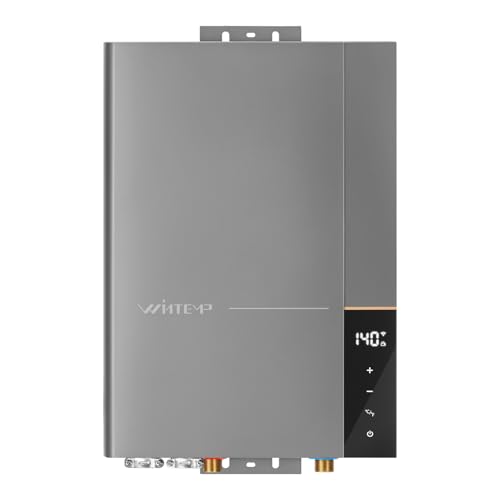
This 36kW electric tankless unit is designed for whole-home supply with a maximum of 8.7 GPM, depending on incoming water temperature. It requires substantial electrical capacity, including 4 x 40 Amp breakers and 4 x 8 AWG cables, with a recommended 300A main power. The device features auto-adjusting power to stabilize temperature and maximize efficiency, plus a 3/4″ NPT water connection. It provides high flow for multiple simultaneous uses, while emphasizing energy-saving, self-regulation, and a compact footprint for indoor installation.
VEVOR Electric Tankless Water Heater, 8KW

VEVOR’s 8KW electric tankless heater emphasizes quick hot water delivery with instant temperature control. It uses a high-performance cast aluminum heater, designed to resist scale and corrosion while delivering stable temperatures. An LED display and touch controls allow precise temperature settings, complemented by a compact, space-saving design. This model is suitable for smaller installations such as kitchens and bathrooms, delivering on-demand hot water without preheating and enabling flexible placement in tight spaces.
Rheem 18kW 240V Tankless Electric Water Heater
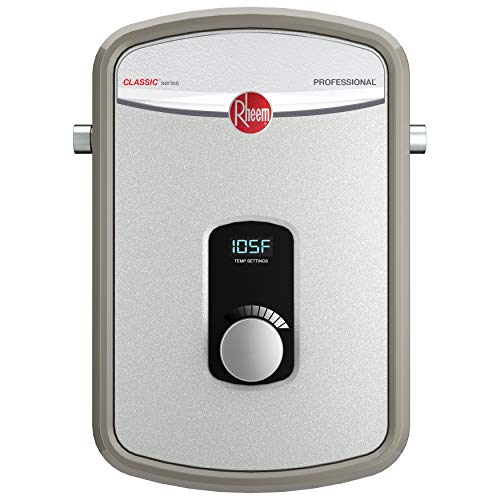
Rheem’s 18kW electric model uses self-modulating power with external digital thermostatic control and LED display. Although it’s rated for up to 4.4 GPM, it represents a robust option for homes needing reliable on-demand hot water at higher flows where electrical capacity permits. The system uses durable copper immersion heating elements and is designed for field service. It’s suitable for moderate-to-high demand points where electrical capacity supports higher power draw and consistent performance across daily routines.
Buying Guide: Key Considerations for 8-10 GPM Tankless Units
What to evaluate when selecting an 8–10 GPM tankless heater:
- Water flow and temperature rise: GPM rating depends on incoming water temperature. In colder climates, a unit’s actual usable GPM may be lower. Check how many outlets you plan to run simultaneously and estimate temperature rise to choose a model with adequate headroom.
- Fuel type and installation location: Propane units deliver strong performance in outdoor setups or regions with unstable electric service, while electric models require sufficient circuit capacity and proper electrical panels. Indoor vs outdoor installation impacts venting, clearance, and wiring.
- Electrical requirements: Electric units with high KW values require multiple dedicated breakers and large gauge wiring. Ensure your service panel can accommodate the load without compromising other appliances.
- Temperature control and accuracy: Look for models with precise digital or LED displays and auto-adjusting flow control to maintain stable temperatures during varying usage.
- Remote monitoring and smart features: WiFi or wired controllers can improve convenience, enabling temperature tweaks and diagnostic access from a mobile app.
- Installation footprint and connections: Check dimensions, mounting requirements, and water/gas connections (NPT sizes) to ensure compatibility with your home’s plumbing layout.
- Safety and certification: Confirm product certifications and safety features such as flame sensors, overheat protection, and backflow prevention to ensure safe operation in your environment.
- Maintenance and serviceability: Access to replacement parts, ease of tankless service, and availability of local support influence long-term reliability.
Choosing the right 8–10 GPM model depends on your climate, household size, and electrical/gas infrastructure. For homes relying on propane or outdoor installations, ensure proper venting, clearance, and weatherproofing. Electric models demand careful electrical planning and breaker capacity, especially for newer builds or renovations. Compare not only peak flow, but also how a unit handles temperature stability as demand changes—this determines comfort during back-to-back showers or simultaneous hot water use.