Best Radiant Ceiling Panel Solutions for 750, 277V and More
If you’re upgrading a cold room, workshop, or utility space, radiant ceiling panels offer quiet, efficient heating with minimal HVAC impact. This guide focuses on panels that run at 277V and other common voltages, helping buyers choose the right size, wattage, and configuration. The top picks below suit facilities that want fast heat with clean installation, while avoiding noisy or high-maintenance options. Read on to compare options, identify who each product is best for, and find buying guidance that fits your space and electrical setup.
Summary of chosen products
| Product | Voltage / Wattage | Size | Best For |
|---|---|---|---|
| Radiant Ceiling Panel 48 x 24 in. – 750W 277V | 277V / 750W | 48 x 24 in | Large spaces needing strong, quick heat |
| Radiant Ceiling Panel 24 x 24 in. – 375W 277V | 277V / 375W | 24 x 24 in | Compact areas where wall/floor space is limited |
| 375W 277V Radiant Ceiling Panels | 277V / 375W | Standard panel size (unknown) | Balanced heat in moderate rooms |
| Radiant Ceiling Panel 48 x 24 in. – 500W 120-240V | 120-240V / 500W | 48 x 24 in | Flexible voltage environments |
| 750W 208V Radiant Ceiling Panels | 208V / 750W | Large or variable voltage systems | Medium-to-large spaces with 208V supply |
Radiant Ceiling Panel 48 x 24 in. – 750W 277V

Size 48L x 24W with a slim 1-inch depth, this panel delivers robust warmth for larger spaces. Best for workshops, cold storage corners, or rooms where ceiling space is ample and a higher heat output is needed. Best for spaces that can accommodate a dedicated 277V circuit and where quick heat is desired.
Selected for: high-heat requirements in sizeable areas. Potential limitation: requires appropriate 277V electrical setup and safe mounting in standard ceilings.
Radiant Ceiling Panel 24 x 24 in. – 375W 277V

This compact 24×24 panel provides efficient radiant heat at 375W. It is well-suited for smaller rooms, offices, or closets where ceiling space is at a premium. Best for users seeking a balance between heat output and a minimal footprint. Better for spaces without the need for very high heat output.
Selected for: smaller-to-medium spaces where 277V supply exists. Caution: may require multiple panels to reach larger heat targets in bigger rooms.
375W 277V Radiant Ceiling Panels
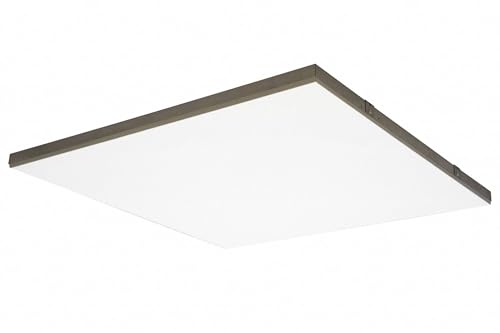
Radiant heat without moving parts, designed for surface mounting on flat ceilings, recessed installations, or T-bar suspended ceilings. This panel type helps maximize wall and floor space while delivering steady warmth. Best for rooms where installation flexibility is important and 277V is readily available.
Selected for: versatile mounting options and consistent 277V operation. Limitation: heat output is moderate, so larger rooms may require multiple panels.
Radiant Ceiling Panel 48 x 24 in. – 500W 120-240V
This 48×24 panel supports 120-240V and 500W, offering flexibility for voltage environments. Best for spaces where a single panel needs to adapt to different electrical supplies or where a broader heat spread is desired. Choose this if your system can accommodate mixed voltage requirements without compromising safety.
Selected for: voltage adaptability in mid-sized rooms. Caution: not a pure 277V solution, so plan electrical wiring accordingly for consistent performance.
750W 208V Radiant Ceiling Panels

Qmark panels rated at 208V, designed to free floor and wall space while mounting to a wide range of ceilings. Best for spaces served by 208V networks, such as certain commercial settings and cold rooms. They offset heat loss efficiently, reducing demand on central HVAC and energy costs. Heat is produced with no moving parts, which lowers maintenance needs.
Selected for: 208V installations where panel heat output must be substantial but electrical supply is not 277V. Limitation: not compatible with 277V systems without appropriate wiring changes.
Buying Guide
Voltage compatibility: Match the panel to your electrical system (277V, 208V, or 120-240V). Incorrect voltage can prevent operation or create safety risks.
Heat output vs. space: Larger rooms usually require higher wattage or multiple panels. For tight spaces, smaller panels at 277V may be more cost-efficient.
Installation flexibility: Consider surface, recessed, or T-bar mounting. Choose panels that offer mounting options that fit your ceiling type.
Ceiling space and aesthetics: Slim profiles preserve ceiling clearance and minimize visual impact in offices or retail spaces.
Maintenance and noise: Radiant panels have no moving parts, lowering maintenance. They are generally quiet, which is ideal for quiet environments.
Electrical safety: Ensure proper mounting, wiring, and adherence to local electrical codes. When in doubt, consult a licensed electrician for installation.
FAQ
- What voltage do radiant ceiling panels typically use? Most panels come in 277V, 208V, or 120-240V configurations; select based on your building’s electrical system.
- Are radiant ceiling panels suitable for large rooms? Yes, but you may need higher wattage panels or multiple units to achieve even heating across the space.
- Do these panels require moving parts? No, most radiant ceiling panels operate with no moving parts, reducing maintenance and noise.
- Can I mix panel voltages in the same space? It is possible if each circuit is wired correctly, but it’s best to keep consistent voltage per zone to avoid imbalance.
- What installation considerations matter most? Ceiling type, mounting method, electrical supply, and clearance around fixtures all affect performance and safety.
- Do panels heat quickly? Radiant panels heat the room area efficiently, with heat spreading from the panel to occupants and objects in the room.