Best 6000w–12000w Hybrid Solar Inverter Systems for 120/240 VAC Split-Phase Homes
Answering the common buyer question “which hybrid solar inverter best fits 120/240V split-phase homes,” this guide compares five reliable 48V systems. These inverters support grid-tied, off-grid, and hybrid modes with dual MPPT inputs, built-in charge controllers, and split-phase outputs. They are suited for homes, cabins, workshops, and small commercial spaces that require 120/240V power with strong solar harvesting. The top picks below emphasize clear setup, robust protection, and practical monitoring features to help you choose with confidence.
Summary of selected products:
– ECO-WORTHY 6KW Solar Off-Grid Split-Phase AIO Inverter (48V to 120/240 VAC)
– PowMr 5000W Hybrid Solar Inverter (48V to 110/120 VAC; parallel capable)
– VEVOR 6400W Hybrid Solar Inverter (48V; 120/240V split-phase)
– Anjfylque 12000W Hybrid Solar Inverter (48V; dual MPPT, split-phase)
– AuraSolar 7000W Hybrid Solar Inverter (48V; built-in MPPT, split-phase)
| Product | Output (Split-Phase) | MPPT | Battery Compatibility | Best For |
|---|---|---|---|---|
| ECO-WORTHY 6KW | 120/240 VAC | Single MPPT up to 500V | Lead acid, Lithium | Homes needing integrated AIO with grid-first backup |
| PowMr 5000W | 120/240 VAC | Single MPPT up to 500V | Lead acid, Li | Budget-friendly, scalable with parallel units |
| VEVOR 6400W | 120/240 VAC | Single MPPT | Lead acid, Li | Industrial-lite loads without WiFi |
| Anjfylque 12000W | 120/240 VAC | Dual MPPT up to 500V | Lead acid, Li | Large homes or shops needing high PV intake |
| AuraSolar 7000W | 120/240 VAC | Independent MPPT | Lead acid, Li | Expandable multi-unit deployments |
ECO-WORTHY 6KW Off-Grid Split-Phase Inverter
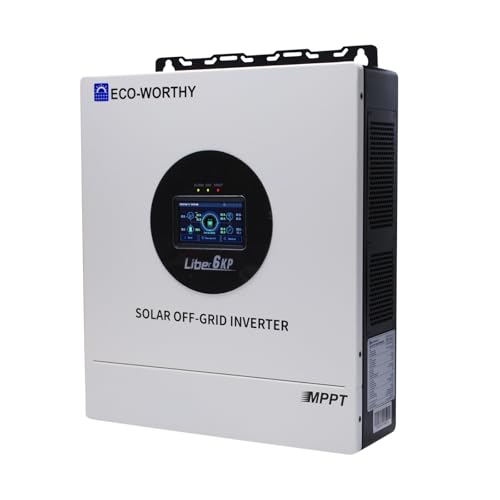
The ECO-WORTHY 6KW All-in-One Inverter converts 48V DC to split-phase 240V AC and includes a 9000W MPPT solar charge controller. It supports PV input up to 500V and an MPPT range of 125V–425V, with up to 120A charging current from PV and 100A AC charging. Built-in WiFi enables remote monitoring. Best for: homeowners seeking an integrated solution with grid-priority operation and straightforward monitoring. Limitation: larger PV arrays demand careful wiring to stay within the 500V limit.
PowMr 5000W Hybrid Inverter (Split-Phase)

The PowMr 5000W Hybrid Inverter provides 5200W continuous output with 6KW PV input capacity and a maximum 6000W PV input. It supports 120V/240V split-phase and 100A MPPT current, plus parallel operation for added capacity. Best for: budget-conscious setups needing parallel scalability and flexible communication options (CAN, USB, RS485, WiFi). Caution: ensure wiring and protection are rated for multi-unit parallel configurations.
VEVOR 6400W Hybrid Inverter
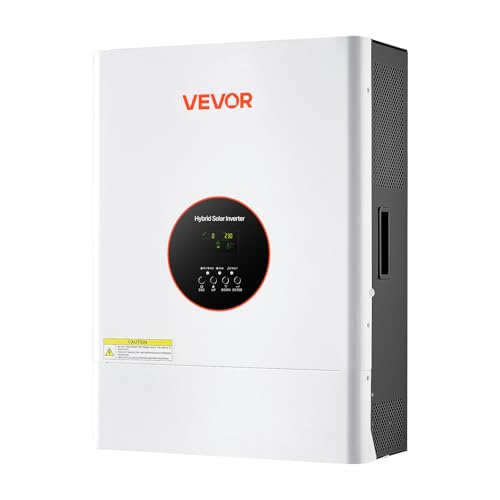
The VEVOR 6400W Low-Frequency Hybrid Inverter combines a 6400W inverter with a built-in 120A MPPT solar charge controller. It supports 110–120V and 220–240V split-phase operation and claims high conversion efficiency. Best for: users needing robust, grid-ready performance without WiFi reliance. Limitation: lack of built-in cellular monitoring may require separate remote options for updates.
Anjfylque 6500W Hybrid Inverter (Split-Phase)

This 6500W Anjfylque unit features dual MPPT and 300V/60A charging capabilities. It supports parallel operation and multiple output modes (UTL, BAT, SOL, HBR), with optional remote monitoring. Best for: larger homes or cabins needing flexible PV harvesting from two strings. Caution: ensure PV wiring respects the 500VDC PV input limit per controller/channel.
POWLAND 10000W Grid-Tied Hybrid Inverter
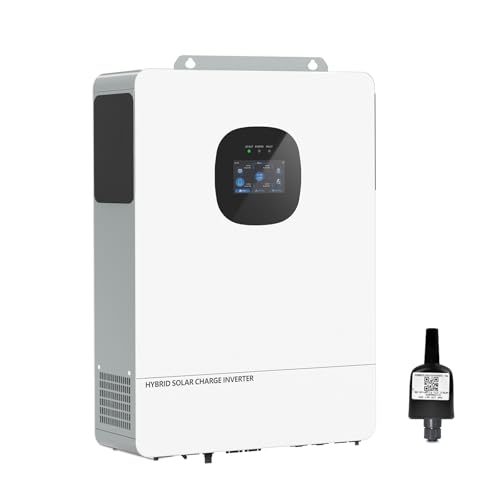
The POWLAND 10000W Grid-Tied Hybrid Inverter offers 120/240V split-phase with a battery-free design. It includes a built-in 250A MPPT, enabling substantial PV input and potential grid export. Best for: very large homes or properties looking to reduce battery costs by using excess solar to the grid. Limitation: batteryless operation requires reliable grid access to meet all loads when PV is insufficient.
AuraSolar 7000W Hybrid Inverter

The AuraSolar 7000W All-in-One inverter provides 14000W surge, split-phase 120/240V output, and two independent MPPT inputs up to 500V. It supports remote monitoring via WiFi/Bluetooth and can be paralleled up to six units for a 42kW system. Best for: scalable home backup or off-grid expansions. Caution: high capacity units require careful site layout and cooling considerations.
Buying Guide
What should you consider when choosing a 48V hybrid inverter for split-phase homes?
- Output power and headroom: Match continuous and surge ratings to your typical loads (HVAC, water heaters, pumps, refrigerators). Larger homes benefit from higher wattage units or parallel configurations.
- MPPT design and PV input: Dual MPPT tracks can increase energy harvest, especially with shaded or multi-orientation arrays. Check maximum PV input voltage and current to ensure compatibility with your panels.
- Battery dependency: Some inverters are battery-free or battery-optional. Decide whether you want battery storage or a grid-tied system that feeds excess solar back to the grid.
- Grid-tied vs off-grid vs hybrid modes: If utility reliability is strong, grid-tied with backup capability may suffice. For remote locations, prioritize strong off-grid operation and UPS features.
- Monitoring and control: Built-in LCD, capacitive touchscreens, or mobile apps help track status, faults, and energy flow. Consider remote monitoring if you need real-time visibility away from the device.
- Protection features: Look for short-circuit, over/under voltage, and anti-backflow protections. UL1741 or similar certifications indicate formal safety benchmarks for grid connection.
- Physical installation: Evaluate size, weight, ventilation, and mounting options. Split-phase units require careful wiring of 120V and 240V circuits to prevent misconfigurations.
Practical questions buyers often ask
- Can I parallel multiple inverters? Yes, several models support parallel operation to scale capacity, but follow the manufacturer’s specific limits and wiring guidelines.
- Is WiFi monitoring essential? It’s convenient for remote visibility, but not strictly necessary if local display and fault indicators meet your needs.
- What PV voltage is safe? Most listed models accept up to 500V PV input. Do not exceed per-channel limits to avoid controller damage.
- Do these require a battery? Some are battery-free, relying on grid or solar; others support lithium or lead-acid batteries for backup storage.
- What about efficiency? Pure sine wave inverters with high MPPT efficiency maximize energy harvest, especially in variable light conditions.
Frequently Asked Questions
- What is a split-phase inverter? It provides 120V and 240V outputs from a single unit, enabling standard household circuits and higher-demand appliances.
- What is MPPT and why is it important? Maximum Power Point Tracking ensures solar panels operate at peak power under varying conditions, improving energy capture.
- Can I run appliances directly from solar energy? In many systems, yes, especially under Solar Priority modes, but critical loads may require battery or grid support.
- Are these inverters appropriate for outdoor use? Check enclosure ratings and installation guidelines; most require indoor or sheltered placement with proper cooling.
- Do I need a professional to install? For split-phase and high-voltage PV connections, professional installation is strongly advised to meet electrical codes.