Best 60 RPM AC Motor Options for Low-Noise Gear Reduction and High Torque
If you’re shopping for a precise, low-speed motor with reliable torque for projects like rotating displays, turntables, or BBQ skewers, a 60 rpm AC motor with gear reduction is a common choice. The following selections emphasize gear-enabled synchronous or permanent-magnet designs that deliver stable speed, controllable CW/CCW rotation, and compact form factors. Each option is suitable for hobbyists and small appliances, offering low power consumption and smooth operation. The list below highlights five top picks with varied form factors and mounting arrangements to fit different applications.
| Product | Brand | Speed | Voltage | Notes |
|---|---|---|---|---|
| BRINGSMART 60KTYZ 60rpm AC Motor | BRINGSMART | 60 rpm | 110V | Gear reduction, CW/CCW, low noise |
| ZVKV 60 RPM AC Motor Synchronous Gear Motor | ZVKV | 60 rpm | 110V | High torque, reversible rotation |
| CHANCS TYD-50 50-60RPM Synchronous Motor | CHANCS | 50-60 rpm | AC 110V-130V | CW/CCW, compact, suitable for small turners |
| Fielect 60-70RPM Synchronous Motor | Fielect | 60-70 rpm | 110V | Low power consumption, DIY-friendly |
| CHANCS 60KTYZ 60-72RPM Gear Motor | CHANCS | 60-72 rpm | 110V | Bracket + power cord, CW/CCW |
BRINGSMART 60KTYZ 60rpm AC Motor

The BRINGSMART 60KTYZ 60rpm AC motor combines a claw-pole permanent-magnet synchronous design with an integrated gear reduction. It operates at 110V and provides a compact 60 x 60 mm motor size. The device supports CW/CCW rotation by wiring configurations, delivering low power consumption, high torque, and low noise. Dual ball bearings on the output shaft reduce axial play (<0.3 mm), ensuring smooth and reliable operation. Ideal for gear-reduced drive systems such as small turntables, barbecue rotisseries, and display rotators.
ZVKV 60 RPM AC Motor Synchronous Gear Motor
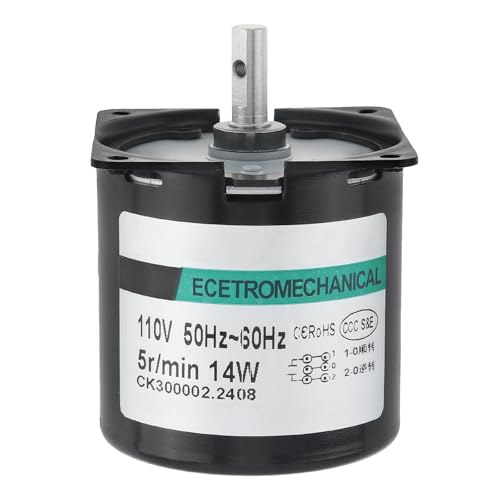
The ZVKV 60 RPM AC motor is a compact synchronous gear motor with a metal shell and pure copper coil. It delivers high torque outputs suitable for applications requiring significant rotational force, including turntables and rotating displays. The motor is reversible (CW/CCW) via wiring adjustments, enabling flexible integration into various mechanical systems and automation tasks. It emphasizes a small footprint with strong torque density, making it a practical choice for tight spaces.
CHANCS TYD-50 50-60RPM Synchronous Motor

CHANCS TYD-50 is a 110V synchronous motor rated for 50-60 RPM with CW/CCW rotation. Its compact form features a mixed metal/plastic gear reduction assembly designed for quiet and continuous operation. The shaft and mounting screw details align with typical hobbyist builds, making it suitable for barbecue rotisseries, rotating displays, and small automation projects. The motor is designed for low power consumption and steady speed control, with a focus on ease of use in DIY setups.
Fielect 60-70RPM Synchronous Motor

The Fielect synchronous motor operates at AC 110V with a speed range of 60-70 RPM and 4W power, offering CW/CCW direction. The motor dimensions (approximately 49.8 mm diameter, 20.5 mm thick) and a 7 mm shaft make it a good match for compact DIY projects; the design emphasizes low noise, steady torque, and straightforward installation. Its compact size helps integrate into miniature turntables, rotating lamps, and small display mechanisms while maintaining reliable performance.
CHANCS 60KTYZ 60-72RPM Gear Motor

This 60KTYZ-based gear motor from CHANCS operates at 60-72 RPM with 110V AC supply. It includes a fixed bracket and a power cord switch plug, simplifying mounting and power connectivity. Shaft diameter is 7 mm with a 19 mm shaft length, and the base offers a 100 x 50 mm footprint for mounting. The torque is suited for light-duty rotational tasks in hobby machines, with CW/CCW rotation and a compact, durable build optimized for long-term use in small appliances and display systems.
Buying Guide: Key Considerations For 60 RPM AC Motors
When selecting a 60 rpm AC motor with gear reduction, consider these factors to ensure the best fit for your project:
- Torque vs. Load: Review the rated torque and ensure it exceeds the required load. Motors with built-in gear reduction increase torque at low speeds, which is essential for heavy or inertia-heavy tasks.
- Voltage and Power: Most options run on 110V AC. Confirm compatibility with your power source and any control electronics. Power figures (watts) indicate energy usage and heat generation.
- Rotation Direction: CW/CCW capability is common and useful for reversing motion. Check how direction is controlled (wiring changes or switches) and whether you need seamless automatic reversal.
- Size and Mounting: Evaluate motor diameter, length, shaft size, and mounting holes. Compatibility with your enclosure or bracket is critical for reliable installation.
- Noise and Vibration: Low-noise designs are valuable in consumer devices and display applications. Look for bearing quality and shaft alignment specifications.
- Durability: Gear materials (metal vs. plastic) influence wear, heat dissipation, and longevity. Metal gear sets generally offer higher durability for continuous use.
- Control and Integration: Consider how you’ll drive the motor (relay, solid-state switch, microcontroller). Synchronous motors often require precise timing for stable speed.
- Environment: If used in BBQ rotisseries or displays, account for heat, dust, and exposure to outdoor or kitchen environments. Secure mounting reduces vibrations and wear.
- Accessories: Some models include brackets, power cords, or mounting hardware. These simplifications can save assembly time and ensure proper alignment.
For selecting the right motor, compare the specific requirements of your project—speed tolerance, torque needs, mounting geometry, and control method—against the motor specifications listed in product pages. This approach helps you balance power, reliability, and installation simplicity while maximizing performance and service life.