Best 6 Volt Electric Fence Battery Options for Reliable Fencing
If you need a dependable 6-volt battery to power an electric fence, these top-rated options deliver steady, maintenance-free performance for fencing, backup power, or solar setups. They’re suited for small to medium fence systems, portable chargers, or backup supplies. This guide compares common 6V SLA/AGM batteries, highlighting best uses, limitations, and who should choose each model.
Summary of selected products:
| Product | Voltage / Capacity | Best For | Key Benefit |
|---|---|---|---|
| Mighty Max ML12-6F2 SLA Replacement | 6V 12Ah | Home gardens and medium fences | High discharge rate with long life |
| Interstate Batteries 6V 7Ah SLA | 6V 7Ah | Compact setups, backup power | Spill-proof, maintenance-free |
| Parmak 901 6-Volt Gel Cell | 6V 14Ah | Solar-powered fences | Gel cell for stable performance |
| Mighty Max ML7-6 6V 7Ah | 6V 7Ah | Small property fences | UL Certified, compact form |
| Miady 6V 5Ah (2 Pack) | 6V 5Ah | Budget setups, portable systems | Maintenance-free, spill-proof |
Mighty Max ML12-6F2 6V 12Ah SLA Battery

The Mighty Max ML12-6F2 is a 6V, 12Ah sealed lead-acid (SLA) battery with F2 terminals. It’s a maintenance-free, spill-proof unit suitable for mid-size fences and back-up power for solar or manual chargers. UL certified and designed for long service life with wide operating temperatures. Best for: homeowners or small farms needing more capacity for longer fence pulses. Limitation: packaging specifies battery only—no harnesses or mounting hardware included.
Why it’s a fit for 6V electric fences
- High discharge rate supports immediate fence pulses.
- 12Ah capacity adds extra run time between charges.
- F2 terminal compatible with common fence wiring.
Interstate Batteries 6V 7Ah SLA (F1)

The Interstate SLA0925 is a general-purpose 6V, 7Ah sealed battery with F1 terminals. It’s maintenance-free and spill-proof thanks to VRLA technology. This makes it a versatile choice for various fence chargers, UPS backups, or solar-powered setups. Best for: users needing a compact, reliable option with a broad compatibility range. Caution: ensure terminal type matches your charger; some older gear may require F2 or different configurations.
Key compatibility notes
- VRLA technology reduces spills and over-pressurization risks.
- Capable of powering multiple small to medium fence systems.
- Warranty details should be checked with the retailer for long-term use.
Parmak 901 6-Volt Gel Cell Battery
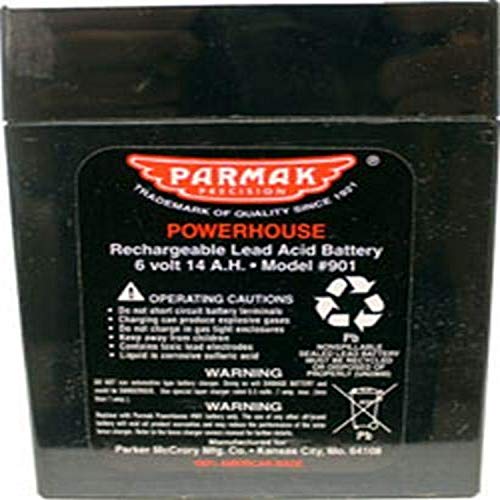
The Parmak 901 is a 6V, 14Ah gel cell battery designed for solar-powered electric fences. Gel cells offer stable voltage under charging and discharging cycles, with low gas emission and enhanced safety in some environments. Best for: longer, steadier fence pulses in sunny, off-grid installations. Limitation: higher upfront cost relative to some AGM options and heavier weight may affect portable setups.
Gel cell advantages
- Stable discharge and low maintenance in sun-powered systems.
- Non-hazardous lead-acid chemistry reduces spill risk in shallow installations.
- Suitable for longer-off-grid fencing where regular checks are difficult.
Mighty Max ML7-6 6V 7Ah SLA Battery

The Mighty Max ML7-6 is a 6V, 7Ah sealed lead-acid battery with F1 terminals. It combines compact size with reliable performance for small fence systems or as a compact backup supply. Best for: quick-fix fence installations in tight spaces or portable charger setups. Caution: lower Ah rating means shorter run times without frequent recharging.
When to choose this model
- Small properties needing a light-duty, easy-to-maneuver battery.
- Environments where space is at a premium and weight matters.
Mighty Max Battery 6V 12Ah F2 SLA Replacement (Zareba ESP10M)
This Mighty Max ML12-6F2 is a 6V, 12Ah SLA battery with F2 terminals, marketed as a replacement for Zareba ESP10M fence chargers. It offers a high discharge rate and wide temperature tolerance in a maintenance-free package. Best for: upgrading or replacing a charging system for moderate fence lengths. Limitation: product listing notes battery only, with no additional mounting hardware.
Choosing the right 6V battery for Zareba ESP10M-compatible systems
- Prefer F2 terminals if your charger uses that connection type.
- Opt for 12Ah for longer fence pulses between charges.
- Confirm compatibility with your specific fence controller model before purchasing.
Buying Guide: 6V Fence Battery Essentials
What capacity do you need?
Capacity, measured in amp-hours (Ah), determines how long a fence can deliver pulses between charges. For small gardens or portable setups, 5–7Ah often suffices. For mid-size fences or longer non-stop operation, 12–14Ah provides more run time between charges.
Which terminal type matters?
Common terminal types include F1, F2, and Fast-on. Check your fence charger or wiring harness to ensure terminal compatibility. Mismatched terminals require adaptors or different battery models.
Maintenance and spill concerns
GEL vs. AGM vs. standard SLA affects spill risk, safety in certain environments, and performance under temperature variations. AGM and VRLA designs are generally spill-proof and low-maintenance, making them popular for outdoor fencing.
Size, weight, and installation
Smaller properties may benefit from compact 4–7Ah batteries, while larger installations may justify 12–14Ah units. If portability is essential, consider lighter, compact batteries with convenient terminal types.
Environment and temperature tolerance
Outdoor fence batteries face wide temperature swings. Look for models rated for a broad operating range and consider enclosures or shade to maximize lifespan in extreme heat or cold.
Maintenance considerations
Maintenance-free SLA/VRLA options reduce the need for regular topping up. However, periodic checks of terminals, connections, and charger settings help maintain performance across seasons.
FAQ
- What is the main difference between AGM and gel cell 6V batteries? AGM batteries are versatile and generally offer higher discharge rates, while gel cells provide stable voltage in variable conditions and are often safer for certain installations.
- Can I use a higher Ah battery than recommended for my fence charger? Yes, in many cases, but ensure the charger is compatible with the battery type and that the system can safely handle the increased capacity.
- How often should I replace a 6V fence battery? Replacement depends on usage, charging cycles, and temperature; typical life ranges from 2–5 years for SLA/VRLA batteries with proper care.
- Is it necessary to use a dedicated fence battery? A purpose-built fence battery is designed for cycling pulses and outdoor conditions, which can improve longevity and reliability compared to generic SLA batteries.
- What should I consider when installing a 6V battery outdoors? Use a weatherproof enclosure, secure mounting, proper ventilation, and protection from direct sunlight and moisture to extend life.
- Do I need different batteries for solar-powered fences? For solar installations, consider gel or AGM options with good low-temperature performance and reliable pulse delivery.