Best 6 Volt Battery Desulfator and Charger Solutions for 6V to 12V Systems
Answering the search for a reliable 6-volt desulfator and charger, this guide highlights five top options designed to maintain, desulfate, and optimize 6V and 12V lead-acid and lithium batteries. These devices are best for car, motorcycle, golf cart, boat, RV, and marine batteries. Each entry explains who it’s best for, how it works, and potential limitations to consider before buying.
Buyer snapshot: Ideal buyers are DIY enthusiasts maintaining seasonal vehicles, fleet managers overseeing multiple batteries, and anyone seeking extended battery life without frequent replacements. The table below compares the five selected products at a glance.
| Product | Best For | Key Benefit | Limitations |
|---|---|---|---|
| NOCO GENIUS1 | Lead-acid and LiFePO4 batteries | Compact all-in-one charger, maintainer, desulfator with thermal compensation | Limited to 1A charging; not a heavy-duty charger |
| NOCO GENIUS2 | Small to mid-size battery packs | Higher power for faster charging with desulfator | May be overkill for tiny 6V systems |
| NOCO GENIUS10 | Mid-to-large batteries and frequent users | High current, robust desulfation; advanced protection | Higher cost; larger footprint |
| Haisito 16-Amp Charger | Heavy-duty vehicles and boats | 10-stage charging, fast 16A, winter storage mode, pulse repair | Requires setup; larger, heavier unit |
| NEXPEAK 1.75-Amp Charger | Everyday 6V/12V batteries | Compact 4-in-1 with LCD display and desulfation | Lower current may be slower for large packs |
NOCO GENIUS1: 1A 6V/12V Smart Battery Charger

Best for compact setups. The GENIUS1 combines a battery charger, maintainer, trickle charger, and desulfator for 6V and 12V lead-acid and LiFePO4 batteries. It uses an integrated thermal sensor to adjust charging with ambient temperature, helping prevent overcharging in hot weather and undercharging in cold. It supports multiple battery chemistries and is suitable for cars, motorcycles, and light power sports use.
Who it’s best for: buyers needing a small, automatic all-in-one solution for occasional maintenance of smaller battery banks. Why selected: its compact size and thermal compensation provide reliable, steady conditioning without user intervention. Caution: It is not designed as a jump-start tool and isn’t ideal for bringing severely discharged or dead batteries back to life quickly.
NOCO GENIUS2: 2A 6V/12V Smart Charger

Best for small to medium battery packs needing a bit more output than GENIUS1. The GENIUS2 charges and maintains 6V/12V lead-acid and LiFePO4 batteries with temperature-compensated precision and a robust desulfator. It also features Force Mode to bypass sensing and recharge low-voltage batteries when necessary. This makes it a good fit for marine or powersport batteries that regularly approach low states of charge.
Who it’s best for: users seeking a reliable, slightly more powerful option for common 6V/12V batteries. Why selected: it offers a balanced blend of compact form, desulfation capability, and flexible charging modes. Caution: Force Mode should be used with caution on fragile or highly aged packs to avoid overstress.
NOCO GENIUS10: 10A 6V/12V Smart Charger
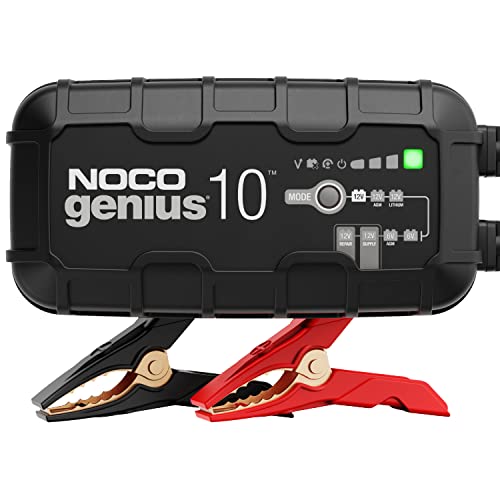
Best for larger or frequently used battery banks. The GENIUS10 delivers substantial charging power in a compact form, combining charging, maintenance, desulfation, and trickle support for 6V and 12V lead-acid and LiFePO4 batteries. Its integrated thermal regulation and higher current capacity help accelerate recovery and keep batteries at peak readiness for marine, automotive, or industrial applications.
Who it’s best for: users with bigger battery packs or regular charging needs. Why selected: higher current and advanced protection provide quicker, consistent conditioning. Caution: Its larger size may require more space on crowded workbenches or in tight compartments.
Haisito 16-Amp Smart Battery Charger

Best for heavy-duty applications and winter storage. The Haisito charger supports 6V, 12V, and 24V batteries, including LiFePO4, AGM, Gel, and Deep Cycle variants. It features a 10-stage charging process, a winter storage trickle mode, and Pulse Repair to address sulfation and acid stratification. It’s well-suited for cars, boats, RVs, and large lawn equipment.
Who it’s best for: users who need fast charging and extensive battery maintenance across larger battery systems. Why selected: its 16A capability and winter mode help keep batteries ready in seasonal storage. Caution: It is not a jump starter and must be used with a battery in acceptable condition for safe charging.
NEXPEAK 1.75-Amp Charger Desulfator 6V/12V
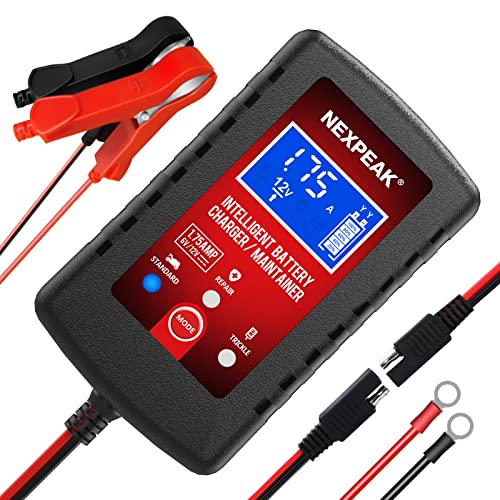
Best for everyday maintenance with a visual LCD readout. The NEXPEAK charger is a compact 4-in-1 device: charger, maintainer, trickle charger, and desulfator for 6V/12V batteries. It offers a 7-stage charging program, including desulfation, and clearly displays charging status, voltage, and current. This makes it a practical choice for personal vehicles, boats, and small equipment where space matters.
Who it’s best for: users wanting a budget-friendly, easy-to-read unit for regular maintenance. Why selected: LCD visibility and a complete 4-in-1 feature set simplify monitoring. Caution: Lower current means slower recovery for older or heavily sulfated packs.
Buying Guide: Key Considerations for 6V Desulfator Chargers
- Battery type compatibility: Ensure the charger supports lead-acid variants (AGM, Gel, SLA, VRLA) and LiFePO4 if you use mixed chemistries.
- Voltage range and current: For small batteries, 1–2A units are sufficient; larger boats or golf carts benefit from 10–16A models. Check 6V vs 12V compatibility.
- Desulfation capability: Look for dedicated desulfator modes or pulse repair features that address sulfation on battery plates.
- Temperature compensation: Thermal sensors adjust charging to ambient temperature, preventing overcharging in heat and undercharging in cold.
- Winter storage readiness: Some models include a trickle or maintenance mode to keep batteries healthy during long storage periods.
- Safety features: Short-circuit, reverse connection, overvoltage, and undervoltage protections reduce risk during charging.
- Ease of use: LCD displays, clear indicators, and automatic shutoff help ensure reliable operation for casual users and pros alike.
- Size and installation: Consider footprint, mounting options, and cable length to fit your vehicle, boat, or garage space.
FAQ
- What is a battery desulfator and why do I need one?
A desulfator helps address lead sulfate buildup on battery plates, which can reduce capacity and performance. It can extend life and improve charging efficiency when used as part of a regular maintenance routine. - Can these chargers revive a completely dead battery?
Some models offer pulse repair or force mode to recover low-voltage batteries, but results vary. Severely damaged or deeply discharged batteries may not recover. - Is temperature compensation important for 6V systems?
Yes. Temperature sensing helps prevent overcharging in heat and undercharging in cold, preserving battery health and longevity. - What’s the difference between 1A and 10A chargers for the same voltage?
Higher amperage charges batteries faster and can handle larger packs more efficiently, but may require more space and power availability. Smaller packs gain from compact, lower-current models. - Should I use a desulfator for LiFePO4 batteries?
Desulfation is typically designed for lead-acid chemistries. Verify compatibility with LiFePO4 for safe operation in your setup. - Can I use these devices on a boat or RV battery bank?
Yes, if the battery bank matches the device’s voltage range and current rating. Check the manufacturer’s guidance for marine or RV use.