Best 5Ghz Smart Light Switches for Modern Homes (With 2.4GHz as Practical Alternative)
Finding a reliable smart light switch often means navigating Wi‑Fi bands. While true 5GHz‑only smart switches are rare, most popular models operate on 2.4GHz and offer broad compatibility with Alexa, Google Home, and other ecosystems. This guide highlights five strong choices that perform well on 2.4GHz networks, while explaining how 5GHz considerations can affect setup and daily use. The included buying guide helps you compare features like neutral wiring, hub requirements, voice control, scheduling, and safety certifications.
| Product | Brand | Wi‑Fi Band | Hub Required | Key Benefit |
|---|---|---|---|---|
| Kasa Smart Light Switch HS200 | Kasa Smart | 2.4GHz | No | Simple app‑guided setup with remote control |
| GHome Smart Switches | GHome Smart | 2.4GHz | No | Strong voice control with Alexa and Google Assistant |
| Kasa HS200P3 | Kasa Smart | 2.4GHz | No | Multi‑pack value with reliable performance |
| Amazon Basics Smart Light Switch | Amazon Basics | 2.4GHz | No | Guided installation and routine scheduling |
| TREATLIFE 4‑Pack | TREATLIFE | 2.4GHz | No | Remote control with group device management |
Kasa Smart Light Switch HS200, Single Pole

The Kasa HS200 is a single‑pole smart switch designed for neutral‑wire installations and 2.4GHz Wi‑Fi networks. It requires the Kasa app (or Tapo app) for guided installation and supports remote control from anywhere via a smartphone. Voice integration is available with Amazon Alexa or Google Assistant, enabling hands‑free lighting control when your hands are occupied or when arriving in a dark room. A key note is the need for neutral wiring, and consulting an electrician is recommended if you are unsure about electrical work.
GHome Smart Switches for Lights

The GHome Smart Switch is a 2.4GHz Wi‑Fi device that requires a neutral wire and supports 120V/60Hz, up to 15A. It offers seamless control without a hub and integrates with both Alexa and Google Assistant. Its scheduling and timer features let you automate routines such as porch lighting tied to sunset or sunrise, helping conserve energy and boost home security. Note that it is designed for standard lighting circuits and is not compatible with smart bulbs in the same circuit.
Kasa Smart Light Switch HS200P3 (3‑Pack)

The HS200P3 offers three single‑pole switches in one pack, each requiring a neutral wire and operating on 2.4GHz Wi‑Fi. It mirrors the HS200’s app‑guided setup, enabling remote control and voice integration with Alexa or Google Assistant. The three‑pack option provides convenient value for larger rooms, hallways, or multi‑location control while maintaining straightforward installation through the Kasa app.
Amazon Basics Smart Light Switch
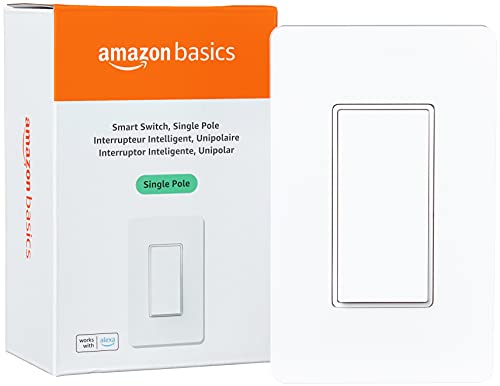
The Amazon Basics Smart Light Switch emphasizes guided installation and Alexa compatibility. It supports routine scheduling and voice commands, offering an approachable upgrade path for households already using Alexa-enabled devices. As with other 2.4GHz models, a neutral wire is typically required, and no hub is necessary for local control and cloud connectivity.
TREATLIFE Smart Switch 4 Pack

The TREATLIFE 4‑pack provides a convenient multi‑switch solution that requires a neutral wire and supports 2.4GHz Wi‑Fi. It includes advanced features like remote control via the app, voice commands with Alexa and Google Assistant, and the ability to create schedules and groups of lights. It is FCC listed for safety and emphasizes a straightforward installation process with standard wall plates.
TP-Link Tapo Matter Smart Light Switch

The TP-Link Tapo Matter switch emphasizes cross‑platform compatibility via Matter, enabling control through Apple Home, Amazon Alexa, Google Home, and Samsung SmartThings. It supports direct device communication on local networks, reducing reliance on cloud services for routine tasks. The neutral wire requirement and single‑pole design are consistent with many 2.4GHz systems, and the Tapo S505 2‑pack provides scalable options for homes expanding their smart lighting network.
Buying Guide: What To Consider When Choosing a 5GHz Smart Light Switch
Key questions to guide your decision include whether you need a hub or if a standalone switch suffices, and whether your home network supports your preferred bands and devices. Although genuine 5GHz‑only switches are uncommon, you can achieve reliable performance on 2.4GHz networks, which are widely supported by smart home ecosystems. Consider these factors:
- Wi‑Fi band compatibility: Most popular smart switches operate on 2.4GHz. If your network is dual‑band, ensure the device can connect to 2.4GHz to avoid compatibility issues.
- Neutral wire requirement: Switches that require neutral wiring generally provide more reliable functioning, especially for dimmers and long‑running devices. If your box lacks a neutral, you may need an upgrade.
- Power rating and load: Check the maximum wattage and amperage (e.g., up to 1800W or 15A) to ensure it covers your lighting needs, especially for multiple fixtures or high‑draw appliances.
- Voice assistant support: Determine which assistants you use (Alexa, Google Assistant, Siri via Matter) and confirm compatibility. Some devices also support Samsung SmartThings or Apple HomeKit via Matter.
- Scheduling, scenes, and automation: Evaluate how easily you can program schedules, sunrise/sunset timers, or routines. Consider whether you want remote control, group control, or integration with other smart devices.
- Security and certifications: Look for UL or FCC listings, as well as firmware update support to address vulnerabilities and improve performance over time.
- Multi‑pack options: If you’re equipping multiple rooms, packs (2‑pack, 3‑pack, or 4‑pack) may reduce cost per unit and streamline installation.
- Installation complexity: Guided app setup is helpful for first‑time installers. If you’re unsure about wiring, consult an electrician to ensure safety and compliance with local codes.
In summary, while 5GHz‑only smart light switches are not common, 2.4GHz devices deliver broad compatibility, robust features, and straightforward installation for most American homes. Use the buying guide to match features with your network setup and ecosystem preferences for consistent, reliable smart lighting control.