Best Gas or Hybrid 50 Gal Water Heaters for American Homes
Choosing a 50-gallon water heater involves balancing fuel type, efficiency, and installation space. This guide highlights reliable gas and gas-friendly options, including traditional gas models and tankless designs, to help homeowners weigh performance, longevity, and maintenance needs. Below are five top picks with standout features and practical considerations for common American households seeking steady hot water across baths, laundry, and kitchens.
| Product | Brand | Type | Capacity |
|---|---|---|---|
| A.O. Smith GPVX-50L ProMax SL | AO Smith | Gas, Power Vent | 50 gal |
| Rheem PROG50-36P RH62 | Rheem | Gas, Atmospheric | 50 gal |
| Rheem PROE50 M2 RH95 | Rheem | Electric | 50 gal |
| GASLAND Gasmart E 199000 BTU | GASLAND | Gas Tankless | On-demand |
| Ranein Natural Gas Tankless (4.3 GPM) | Ranein | Gas Tankless | 4.3 GPM |
A.O. Smith GPVX-50L ProMax SL Gas Water Heater
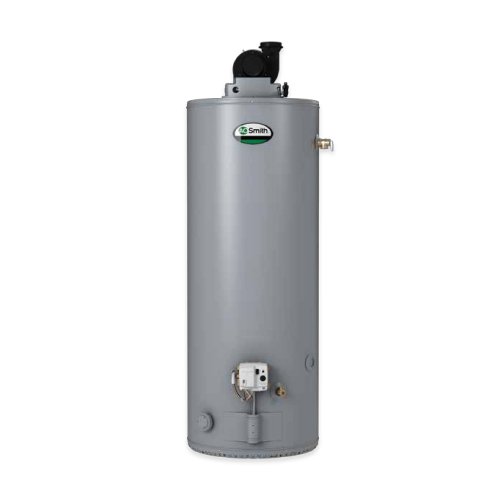
The AO Smith GPVX-50L ProMax SL combines a robust 50-gallon capacity with a Side-M Mounted Recirculating taps and a power-vent system for flexible venting configurations. Its Blue Diamond glass coating enhances corrosion resistance beyond standard linings, contributing to longer tank life in challenging water conditions. A rotatable 3-position blower outlet provides installation flexibility, while venting compatibility supports both horizontal and vertical runs up to 180 feet using 4-inch venting. Ideal for larger households that demand consistent hot water with efficient venting options.
Rheem PROG50-36P RH62 Gas Water Heater
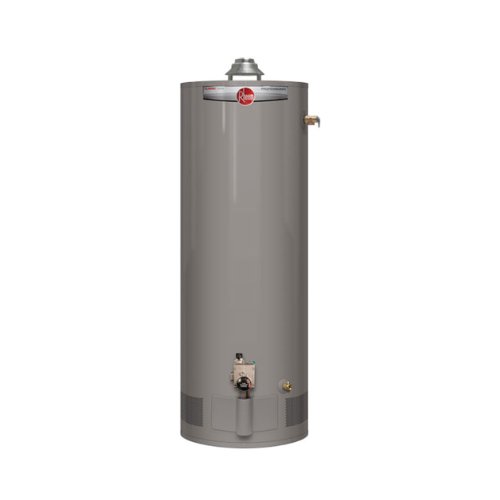
This 50-gallon atmospheric gas model emphasizes emissions-conscious design with a low-emissions burner and Knox-compliant construction. The unit leverages Rheem’s R-Tech anode for extended tank protection and features EverKleen to combat sediment buildup, maintaining efficiency and prolonging service life. It’s a reliable option for homes seeking straightforward installation and steady hot water supply, especially where venting runs are moderate in length.
Rheem PROE50 M2 RH95 Electric Water Heater

Although electric, this 50-gallon unit from Rheem serves as a practical baseline when gas options are constrained by space or venting. It provides ample hot water for households with 3–5 people or multiple bathrooms. Its compact footprint makes it a suitable replacement option in tight spaces, while Rheem’s reputation as a global leader in water heating underpins reliable performance and service support.
GASLAND Gasmart E Tankless Gas Water Heater
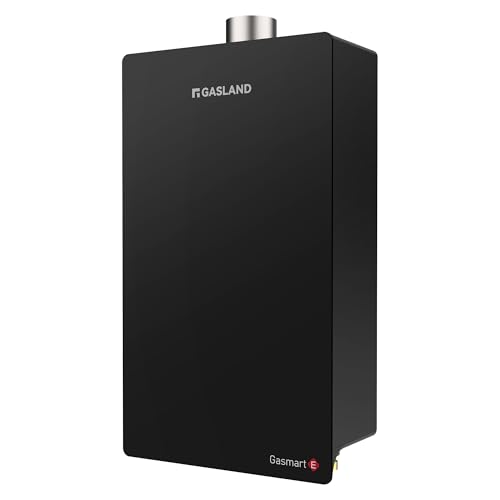
This tankless gas water heater delivers on-demand hot water with an energy-efficient profile. With a very high UEF and reduced NOx emissions, it represents a compact alternative where space is at a premium and continuous hot water is desired. It’s especially suitable for smaller homes or apartments where a traditional 50-gallon tank might not fit.
Ranein Natural Gas Tankless (4.3 GPM)

Offering 4.3 GPM at up to 100,000 BTU, this indoor tankless unit provides continuous hot water for multiple outlets without a storage tank. It supports versatile usage modes like dish, kitchen, and infant settings and prioritizes immediate hot water delivery. Suitable for homes seeking efficient, space-saving performance with customizable temperature outputs.
Buying Guide: Key Purchase Considerations
Fuel type and venting: Gas models require proper venting and clearances. Tankless gas units save space and provide on-demand hot water but may have higher installation complexity. Electric 50-gallon models simplify installation but rely on electrical capacity and hot water demand.
Energy efficiency and emissions: Look for high energy factors (EF/UEF) and low NOx emissions for cost savings and environmental impact. Tankless options typically outperform standard tanks in efficiency, though first-hour rating should match household needs.
Capacity and demand: For households with 3–5 people, a 50-gallon tank is common. Consider peak-hour demand and showering patterns. Tankless units should be matched to simultaneous outflow to avoid cold-water sandwiches.
Space and installation: Proximity to fuel source, venting routes, and maintenance access influence choice. Compact electric models work well in tight spaces; gas units require venting and combustion air considerations.
Maintenance and longevity: Anode rods, sediment control (EverKleen), and corrosion resistance extend life. Tank-based systems benefit from regular flushes; tankless systems require periodic scale management and professional servicing.
Reliability and support: Choose brands with robust warranties, widespread service networks, and readily available replacement parts to minimize downtime and repair costs.