Best 50 Gallon Water Heater Expansion Tank Options for Safe, Efficient Plumbing
Choosing the right thermal expansion tank for a 50 gallon water heater helps protect plumbing, prevent pressure buildup, and reduce wear on components. This guide reviews five strong options, highlighting capacity, compatibility, and installation considerations. Each entry links to an Amazon listing for quick reference and comparison.
| Product | Capacity | Connection | Key Benefit |
|---|---|---|---|
| AMTROL ST-5 Thermal Expansion Tank | 2.0–2.1 gal | 3/4″ MNPT | Relieves thermal expansion, protects relief valves |
| Neo-Pure 4.8 Gal Thermal Expansion Tank | 4.8 gal | 3/4″ MNPT | High-capacity option with butyl diaphragm |
| Water Worker G-5W Thermal Expansion Tank | 2 gal | 3/4″ NPT | Pre-charged, steel shell with inner liner |
| TT FLEX 2.1 Gal Expansion Tank | 2.1 gal | 3/4″ MNPT | Compact, easy to install |
| Solimeta 2.1 Gal Potable Expansion Tank | 2.1 gal | 3/4″ MNPT | Includes mounting bracket for quick setup |
Note: This overview focuses on common residential systems using a 50 gallon water heater, with attention to durability, ease of installation, and compatibility with backflow preventers or check valves.
AMTROL ST-5 Thermal Expansion Tank

The AMTROL ST-5 is designed to absorb expanded water caused by thermal expansion in closed-loop potable water systems. It returns water to the system when hot water is drawn, helping maintain stable system pressure and protecting the relief valve from unnecessary activations. Its 3/4″ MNPT connection aligns with many standard residential installations, making it a straightforward upgrade for 50 gallon setups. Materials and construction emphasize durability in typical home environments, contributing to long-term reliability.
Neo-Pure 4.8 Gal Thermal Expansion Tank

The Neo-Pure 4.8 gallon model offers a higher-capacity option for larger or more demanding systems. It maintains safe pressure by separating system water from the tank with a durable butyl diaphragm, reducing the risk of water hammer and pressure fluctuations. Designed to work with backflow preventers or check valves, this tank is compatible with many residential hot water configurations, including 50 gallon heaters, and supports longer service life with its corrosion-resistant finish.
Water Worker G-5W Thermal Expansion Tank

The Water Worker G-5W pre-charged expansion tank is a robust option featuring a heavy-duty steel shell and a polypropylene inner liner that separates the stored air from system water. This design helps resist corrosion and waterlogging, contributing to consistent performance in residential plumbing. With a 2-gallon capacity and a vertical 3/4″ NPT connection, it is a reliable match for many 50 gallon water heater systems, offering straightforward installation and durable operation over time.
TT FLEX Potable Thermal Expansion Tank

The TT FLEX expansion tank provides effective thermal expansion management for closed-loop heating or cooling systems. Its 2.1 gallon capacity suits smaller or space-constrained installations, and the unit is designed for easy installation by professionals or confident DIY installers. The compact footprint helps in tight utility spaces and ensures compatibility with typical 3/4″ MNPT plumbing, making it a practical pick for 50 gallon water heater setups where space is at a premium.
Solimeta 2.1 Gal Potable Expansion Tank
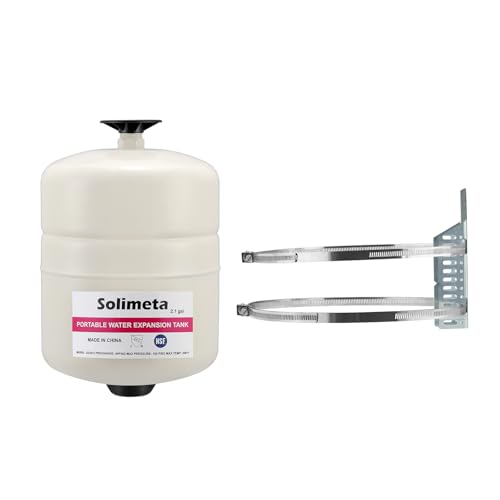
Solimeta’s 2.1 gallon potable expansion tank includes a mounting bracket set, streamlining installation and reducing the need for additional accessories. Its 3/4″ MNPT threading fits standard connections, and the tank’s design emphasizes pressure management, preventing buildup and protecting components from thermal expansion-related stress. The included mounting hardware helps ensure a secure, upright or horizontal installation in typical residential spaces.
Eastman 2-Gallon Mini Thermal Expansion Tank

The Eastman Mini Thermal Expansion Tank provides a stainless steel option with a 1/2 inch thread for flexible installation. While smaller than some 50 gallon-centric choices, it serves as a compact solution for tighter spaces or supplementary expansion needs in hybrid or small- to mid-size systems. The 304 stainless steel construction emphasizes longevity, corrosion resistance, and stable performance over time.
Buying Guide: Key Considerations for Choosing a 50 Gallon System Expansion Tank
- Capacity and system size: For a 50 gallon heater, higher-capacity tanks (3–4.8 gallons) provide more buffer for expansion, especially in homes with high daily hot water usage or long run times.
- Diaphragm material: Butyl diaphragms are common and durable, offering good separation of system water from the tank’s internal components. Consider corrosion resistance and compatibility with potable water.
- Connection size and orientation: Most residential tanks use 3/4″ MNPT or NPT connections. Ensure compatibility with existing piping and consider vertical or horizontal installation based on space constraints.
- Backflow preventer compatibility: Tanks designed to work with backflow preventers or check valves help maintain safe pressures and prevent contamination risks.
- Pre-charging and installation: Pre-charged tanks simplify setup. Look for tanks that include mounting brackets or easy-install features to save time and reduce installation errors.
- Durability and warranty: A steel shell with a protective liner and corrosion-resistant finishes extends life in typical home environments. Check warranty terms for long-term peace of mind.
- Maintenance needs: Some tanks require less maintenance due to robust diaphragms and liners. Consider models with readily accessible parts and straightforward replacement options.
- Certifications: NSF or other certifications indicate compliance with potable water safety standards, which is important for drinking-water related applications.
When selecting an expansion tank for a 50 gallon water heater, balance capacity, durability, and installation practicality. The options reviewed here cover a range of capacities, materials, and mounting styles to suit different spaces and usage patterns while maintaining safe, steady system pressure.