Best 480V Tankless Electric Water Heaters for High-Demand Homes
Answer: For homes needing rapid, continuous hot water, high-wire 240V electric tankless options can deliver reliable flow and steady temperatures. This guide highlights five strong choices, explaining who each is best for, common limitations, and practical buying considerations. The selections target households with multiple bathrooms or simultaneous use, where power capacity and installation requirements matter.
Summary of Selected Products
| Product | Best For | Key Point |
|---|---|---|
| WINTEMP 27kW 240V | Homes with 2–3 bathrooms, high flow | High output (up to 6.5 GPM); self-modulating; WiFi control; requires ample electrical service |
| Rheem RTEX-24 24kW 240V | Whole-home hot water reliability | Adjustable temp, durable elements; significant power needs |
| EcoSmart ECO 11 | Compact spaces, lower-demand scenarios | Self-modulating; very small footprint; energy efficient |
| Rheem 11kW 240V | Smaller homes or point-of-use needs | Compact; simple control; reasonable GPM |
| Orbek 14kW 240V | 2–3 fixtures with strong efficiency | Fast hot water; energy savings; suitable for 240V pane |
WINTEMP 27kW 240V Tankless — Whole House Hot Water

Best for: Medium to larger homes with 2–3 bathrooms and higher simultaneous hot-water demand. This unit offers up to 6.5 GPM, making it suitable for multiple showers or a combination of showers and household tasks. It uses self-modulating technology to adjust power as flow changes, aiming to maximize energy savings and minimize temperature fluctuations. It includes an LED temperature display and WiFi control for convenient monitoring.
Why selected: High maximum output and stability at varying inlet temperatures, which helps prevent temperature drops during peak use. The self-modulating design improves efficiency compared with non-modulating models. Caution: Requires a robust electrical service (recommended 200 Amp, with 3 x 40 Amp double-pole breakers and 8 AWG wiring per line) and professional installation to ensure safe operation.
Rheem RTEX-24 24kW 240V Tankless
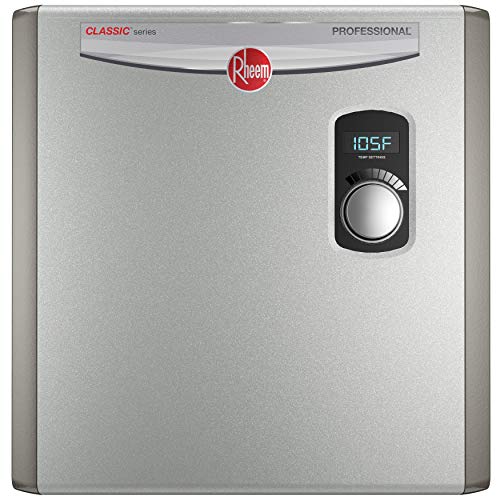
Best for: Homes needing robust, continuous hot water with straightforward control. The RTEX-24 is built for performance under heavy usage, with continuous hot water delivery and a 24 kW rating. It features an external digital thermostatic control with an LED display and self-modulation to meet demand while maintaining temperature consistency.
Why selected: Proven power-to-flow balance and easy on/off control. Caution: Requires a sufficient electrical panel and space for the required breakers and wiring; check local codes for dedicated circuits and professional installation.
EcoSmart ECO 11 Electric Tankless Water Heater

Best for: Small households or point-of-use setups where space is at a premium. The ECO 11 is compact and designed for lower flow needs, delivering efficient, on-demand hot water with modest electrical draw. It is 13 kW at 240V, using patented self-modulating technology to adjust heat output based on demand.
Why selected: Excellent space savings and energy efficiency. Caution: Capacity is lower, so best suited for 1–2 fixtures or low simultaneous demand; may not meet multiple bathroom needs at once in colder climates.
Rheem 11kW 240V Tankless Electric
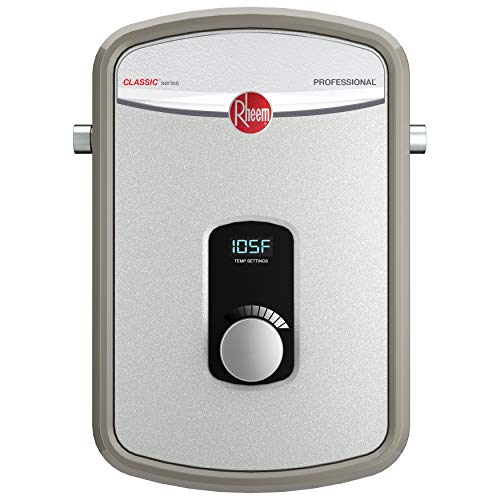
Best for: Smaller homes or locations where moderate hot-water needs are sufficient. The 11kW unit provides up to about 2.68 GPM, with an ON/OFF dial control and self-modulating power to respond to demand. It keeps installation simple and compact.
Why selected: Simple operation and good for limited spaces or as a secondary heater. Caution: Lower GPM means less simultaneous hot water capability; ensure your usage pattern fits the output.
Orbek 14kW 240V Tankless

Best for: Homes needing dependable hot water for 2–3 fixtures with efficiency. The 14 kW model claims strong performance with 3.38 GPM and fast hot water delivery. It emphasizes energy savings and reduced electrical load compared with larger tank systems.
Why selected: Good balance of power and efficiency for mid-size homes. Caution: Also requires a solid electrical service; verify panel capacity and wiring before installation.
Buying Guide
- Power availability: Check your home’s electrical service (amperage, service panel capacity) and the wiring gauge for the heater. Many 24–27 kW units require 200–250 Amp service and multiple dedicated breakers.
- Flow rate vs. demand: Determine the maximum gallons per minute you need at peak usage. Higher GPM units are better for multi-branch homes or simultaneous showers.
- Inlet water temperature: Colder incoming water reduces temperature rise. Units with higher wattage or better modulation cope better in cold climates.
- Space and installation: Consider location, venting (where applicable), and whether the unit fits the space. Compact models save space but may have lower GPM.
- Control features: LED displays, digital thermostats, and WiFi control add convenience but verify compatibility with your smart home setup if desired.
- Reliability and maintenance: Look for units with simple, serviceable components and clear electrical requirements. Access to serviceable elements can simplify future upkeep.
- Code and permit requirements: Electric tankless heaters often require permits and professional installation to meet local electrical codes.
Frequently Asked Questions
- What is the typical GPM for a 27kW unit at 240V?
Expect around 6–7 GPM under favorable inlet conditions, with performance depending on inlet water temperature and climate.
- Do 240V tankless heaters require special wiring?
Yes. Most installations demand dedicated double-pole breakers and heavier gauge wiring (often 8 AWG or similar) and electrical panel assessment.
- Can these heaters supply whole-house hot water?
Yes, models with higher wattage like 24–27 kW are designed for whole-home use in moderate climates, provided the electrical service is sufficient.
- What maintenance is needed?
Typically minimal; periodic checks of connections and flushing to prevent mineral buildup help maintain efficiency and longevity.
- Is self-modulating technology important?
Yes. Self-modulating systems adjust heat output based on demand, improving energy efficiency and stabilizing temperature during flow changes.
- Which unit is best for a small apartment?
EcoSmart ECO 11 or similar compact models are often ideal for limited space and lower simultaneous demand, while still delivering on-demand hot water.