Best 480 to 380 Transformer Options for Industrial and Home Projects
Answer: If you need reliable voltage conversion from 480V or related high-voltage levels to 380V or 220V, these five transformers are solid choices for industrial control, automation, and equipment power. The top picks cater to buyers seeking durable, low-noise operation, easy installation, and clear voltage step-downs. This guide highlights who each product is best for and why.
| Product | Primary / Secondary | Rated Power | Best For |
|---|---|---|---|
| 480V/380V to 220V BK-50VA Series | 380V to 220V | 50 VA | Small control circuits, compact setups |
| Industrial Control Transformer .100 kVA 240×480 | 240V/480V to 120V/240V | 1000 VA | Robust factory installs, higher loads |
| JBK3-63VA Machine Tool Transformer | 380V/220V to 110V | 63 VA | Machine tools, simple control panels |
| SG-10KVA 480 to 380V Three-Phase | 480V to 380V | 10 kVA | Three-phase equipment with 380V needs |
| TR50VA008 480/277/240/208V to 120V | 480/277/240/208V to 120V | 50 VA | Industrial controls with diverse input voltages |
Note: The table above reflects representative products from the provided list. Each item offers specific advantages for different voltage conversion scenarios, from compact control power to larger industrial loads.
480V to 380V Transformer BK-50VA Series

The BK-50VA 380V to 220V transformer uses toroidal coils designed for continuous 7×24 operation and quiet, compact performance. Best for small control circuits or devices needing stable 220V output from a 380V source. It is lightweight for easy transport and offers a silent operation profile. A limitation is lower output power, making it less suitable for higher-load applications.
Hubbell Acme Electric 0.1 kVA Control Transformer

This transformer covers a wide VA range (50–5000 VA) with an epoxy-encapsulated design to resist contaminants. It uses silicon steel laminations to minimize core losses and enhance efficiency. Best for industrial environments needing reliable power isolation and robust performance. Caution: verify compatibility with your exact input/output voltages and mounting constraints.
JBK3-63VA Machine Tool Transformer

With simple installation, long-term stability, and easy maintenance, this 63 VA transformer is designed for machine tools and straightforward control applications. Best for workshops and small shops needing dependable 380V to 110V or related step-downs. Limitation: lower VA means it should be matched to lighter loads.
OLDAJNGK SG-10KVA Three-Phase Transformer
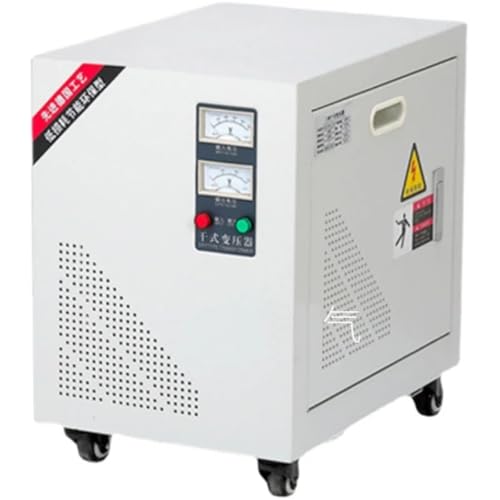
Designed for three-phase systems, this 10 kVA transformer handles a 480V to 380V conversion efficiently in industrial setups. Best for larger installations or equipment requiring robust phase-balanced power. Caution: ensure proper three-phase wiring and cooling for sustained operation.
DUQTMBDT 480V to 380V 10KW Three-Phase Dry-Type Transformer
This dry-type transformer supports high-power three-phase 480V to 380V conversion at 10 kW. Best for heavy-duty industrial equipment requiring stable 380V three-phase output. Limitation: heavier and requires appropriate enclosure and cooling.
Pitco PP10428 80VA 380/440/480V to 24V

Compact transformer for 380/440/480V input to 24V output, useful in smaller control panels and equipment requiring a 24V control circuit. Best for compact, space-constrained installations. Caution: 24V output may limit usage to low-power controls.
Buying Guide
What should you consider when choosing a 480V to 380V transformer?
- Voltage compatibility: Confirm exact input and output voltages (including phase considerations) for your equipment.
- Power rating: Match VA/kVA or kW ratings to the load to avoid overheating or voltage drop.
- Phase type: Choose between single-phase and three-phase transformers based on your system.
- Mounting and enclosure: Ensure proper mounting, clearance, and protection from dust, moisture, and heat.
- Cooling: Dry-type transformers often require ventilation; consider ambient temperature and duty cycle.
When is a compact control transformer preferable?
For small control panels or devices with modest power demands, a compact 50–100 VA transformer offers sufficient capacity with easier installation and lower weight.
When is a larger transformer required?
For industrial equipment or multi-device setups that draw significant current, a 1–10 kVA three-phase transformer provides robust power and better voltage stability under load.
How to avoid common pitfalls?
- Avoid mismatched voltages that could damage equipment.
- Do not exceed the transformer’s VA rating; oversized units may be physically larger but unnecessary.
- Check isolation and safety features such as circuit breakers and protective enclosures.
FAQ
- Q: Are these transformers suitable for continuous operation? A: Many are designed for steady operation, but verify the specific model’s duty cycle and cooling requirements.
- Q: Do these units require professional installation? A: For high voltages and three-phase systems, professional wiring is recommended.
- Q: Can I use a 480V input to power 380V equipment with a single-phase transformer? A: Yes, if the transformer supports 480V to 380V single-phase conversion and the load is within rating.
- Q: Do these transformers include built-in circuit protection? A: Some models feature integrated breakers; others may require external protection.
- Q: How do I determine the right VA rating? A: Add up the wattage of all connected devices and choose a transformer with a little headroom to prevent sag.
- Q: What about noise and heat? A: Toroidal and laminated core designs minimize noise and core losses, but proper ventilation is still important in enclosed spaces.