Best 4 GPM Tankless Water Heaters for Reliable On‑Demand Hot Water
For households needing steady hot water at multiple points of use, a 4 GPM tankless water heater offers a compact, energy‑efficient solution. The following selections are among the top options that deliver about 4 gallons per minute, balancing flow, efficiency, and safety features. The list focuses on gas and electric models suitable for indoor installation, with protections for cold weather, simultaneous fixtures, and practical control interfaces. Use this guide to compare performance, reliability, and installation considerations before choosing the right unit for your home.
| Product | Brand | Max GPM | BTU / Power |
|---|---|---|---|
| RIWORY 102000 BTU Natural Gas Tankless Water Heater | RIWORY | 4.3 | 102,000 BTU |
| Ranein Natural Gas Tankless Water Heater, Indoor | Ranein | 3.6 | 80,000 BTU |
| ThermoMate CZ422NG 4.7 GPM | thermomate | 4.7 | 102,000 BTU |
| APUS Tankless Water Heater Propane | APUS | 4.42 | 95,000 BTU |
| VELPAX Natural Gas Tankless Water Heater | VELPAX | 4.21 | 68,000 BTU |
RIWORY 102000 BTU Natural Gas Tankless Water Heater

RIWORY’s gas tankless model provides up to 4.3 GPM with a 102,000 BTU heating capacity, making it suitable for 3–4 water points in a home. The unit employs intelligent staged combustion, starting as low as 8,500 BTU to minimize energy use while maintaining stable hot water output across seasons. In winter, the system’s four 25W heating modules activate a freeze protection function, protecting the heat exchanger in temperatures below 39°F (4°C). An integrated windproof design helps prevent cold air from entering the unit, reducing pipe freezing risk and enhancing safety and reliability during cold months.
Ideal for homes that demand continuous hot water without long waits, this model emphasizes energy efficiency and weather resilience. Installation requires standard 3/4″ NPT connections. Its compact footprint is suitable for indoor installations where space is at a premium. Prospective buyers should consider venting requirements, gas supply sizing, and local code compliance for natural gas appliances. Overall, RIWORY blends capacity with protective features that support steady performance across seasons.
Ranein Natural Gas Tankless Water Heater, Indoor

Ranein offers an indoor gas tankless heater with up to 3.6 GPM and 80,000 BTU. This unit is positioned for households needing hot water for 2–3 fixtures, such as a bathroom, kitchen, and small living area. A defining feature is the no‑waiting capability inherent to tankless designs, enabling continuous hot water on demand. The model emphasizes simplicity and reliable performance, with multiple modes designed for daily tasks. While the nominal GPM is slightly below some competitors, the compact form factor and efficient combustion can suit smaller homes or remodels where space is limited. Consider gas line capacity and venting when planning installation.
Compared with larger systems, Ranein focuses on providing predictable output with straightforward operation. It’s well suited for moderate hot water needs and can pair with other energy‑saving measures in the home. As with any gas appliance, proper professional installation is essential to ensure safe venting, correct gas pressure, and adherence to local codes.
ThermoMate CZ422NG

The ThermoMate CZ422NG stands out with 4.7 GPM and 102,000 BTU, delivering consistent hot water to 3–4 fixtures simultaneously. A key feature is the flow sensor and a built‑in chip that can adjust heating power up to 20,000 times per second, producing water within about ±1°F of the target temperature. The heater includes comprehensive safety protections: boil‑dry, freeze protection, flameout and overheat protections, and thermal and pipe safety mechanisms. The high efficiency is driven by a copper heat exchanger with excellent thermal conductivity and corrosion resistance, contributing to a favorable energy performance profile.
Application notes include ensuring proper gas supply and venting, and confirming compatibility with household electrical and construction standards. This model is designed for busy households where steady temperature control and reliable delivery of hot water are critical, especially when multiple fixtures operate at once.
APUS Tankless Water Heater Propane Gas
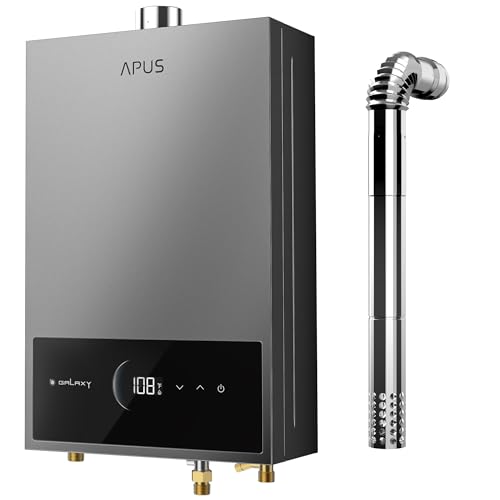
APUS delivers 95,000 BTU and up to 4.42 GPM, making it capable of supplying two showers and a sink with stable temperatures. It features smart digital display and precise temperature control, adjustable from 95°F to 140°F, aiming to minimize temperature shocks. With segmented combustion and oxygen‑free copper heat exchangers, this unit emphasizes efficiency and durability. The design also highlights a 0.66 GPM low‑flow start, allowing reliable operation at lower water pressures. While propane units offer flexibility in locations without natural gas lines, proper venting and propane storage considerations are essential for safe operation.
APUS emphasizes user-friendly control and consistent temperatures in everyday use. Installation should verify gas supply size, venting needs, and compliance with local codes. This model is suitable for households seeking strong performance with modern digital controls and a focus on temperature stability during peak usage.
VELPAX Natural Gas Tankless Water Heater

VELPAX offers a compact natural gas tankless water heater with a 4.21 GPM rating and 68,000 BTU. The unit is designed for 2–3 points of use, with a stainless steel body for corrosion resistance and an oxygen‑free copper heat exchanger to minimize heat loss. The LED smart digital display provides straightforward temperature adjustments, typically between 95°F and 149°F. This model aligns with households preferring a durable, straightforward installation combined with clear user feedback. As with other gas units, ensure proper venting, gas supply, and adherence to local building codes for a safe, long‑term setup.
VELPAX balances practical capacity with reliability and a modern display interface. It appeals to homes needing consistent hot water for multiple fixtures without the complexity or size of larger units. Prospective buyers should plan for venting routes and annual maintenance to maintain peak efficiency and safety standards.
Buying Guide: Key Purchase Considerations
- Flow rate vs. simultaneous usage: A reliable 4 GPM unit should deliver steady hot water for 2–4 fixtures depending on temperature rise. Assess your household’s peak demand (showers, sinks, dishwashing) and choose a model with a higher BTU or GPM rating if multiple points are used at once.
- Fuel type and availability: Gas (natural or propane) models generally provide higher flow at similar sizes compared to electric units, but require venting, gas supply, and proper installation. Electric models may be simpler to install but require substantial electrical service and can have lower flow at higher temperature rises.
- Efficiency and energy use: Look for high energy efficiency, copper heat exchangers, and low standby losses. Features like variable or staged combustion, anti‑freeze protections, and advanced sensors improve efficiency and comfort while reducing operating costs.
- Temperature stability: Precise control and rapid response to changing water flow minimize temperature fluctuations. Digital displays and smart controls help set and maintain consistent temperatures across fixtures.
- Safety protections: Boil‑dry, over‑temperature, flame‑out protection, and freeze protection are important for safety and longevity. Ensure the unit has appropriate protections for your climate and usage patterns.
- Installation considerations: Verify venting requirements, gas line sizing, electrical service (for electric models), and space availability. Professional installation is recommended to meet code and warranty terms.
- Maintenance and warranty: Check service intervals, ease of access for cleaning or flushing, and warranty coverage for heat exchangers and components. Longer warranties can reflect higher build quality and reliability.
When selecting a 4 GPM tankless water heater, balancing capacity, efficiency, and installation practicality is essential. Gas models generally deliver robust performance for busy households, while electric options may suit spaces with limited venting or existing electrical upgrades. Evaluate your hot water habits, climate, and plumbing layout to determine the best fit for durable, on‑demand hot water.