Best 4-20mA Data Logger Solutions for Industrial Applications
Finding the right 4-20 mA data logger involves balancing input types, durability, and data management. The following selections cover handheld displays, thermocouple and lux sensing, RS485 interfaces, and rugged industrial transmitters. Each option supports reliable data capture across harsh environments, with different communication and logging capabilities to fit a wide range of needs.
Summary of selected products:
| Product | Brand | Key Feature | Connection | Notes |
|---|---|---|---|---|
| Supco DVT4 Data View | Supco | Real-time display, graphs, alarms | Standalone | 4-channel temperature logger with internal probe |
| Onset HOBO UX120-014M | Onset HOBO | 4-channel thermocouple logging, timestamped | USB | Flexible sampling 1s to 18h per channel |
| Taidacent RS485 0-5V 4-20mA (DC0-5V) | Taidacent | Illumination sensing, multiple interfaces | RS485, I2C/Voltage | BH1750 light sensor integration |
| Taidacent RS485 0-5V 4-20mA (I2C) | Taidacent | Lux measurement with RS485/I2C | RS485, I2C | BH1750FVI sensor compatible |
| Ace Instruments Heavy Duty | Ace Instruments | Industrial pressure transmitter | 4-20mA/0-5V/1-5V/1-6V/0-10V | Stainless steel enclosure, wide range options |
Below is a deeper look at each product, with practical considerations to help compare performance and fit for your 4-20 mA data logging needs.
Supco DVT4 Data View 4-Channel Logger

The Supco DVT4 provides a compact display that shows real-time temperature readings, a logging summary, sampling rate, and memory status. It features a graphical trend display with a scrolling capability and clear visual indicators for over- and under-temperature alarms. The internal probe temperature range covers 15 to 150 degrees Fahrenheit (−10 to 65 degrees Celsius). Its built-in screen makes it suitable for local verification and quick checks in field service or lab setups where a separate data reader isn’t available.
Onset HOBO UX120-014M 4-Channel Logger

The Onset HOBO UX120-014M offers 4-channel input compatibility for multiple thermocouple types (J, K, T, E, R, S, B, N). It supports a wide user-selectable sampling rate from 1 second to 18 hours and can store up to 1.9 million readings with a date and time stamp. This model is ideal where PC-based data collection is acceptable, as data transfer is performed via USB to a computer or Mac. Its flexible channel support and large memory make it suitable for long-term environmental monitoring and process control experiments.
Taidacent RS485 0-5V 4-20mA (RS485)
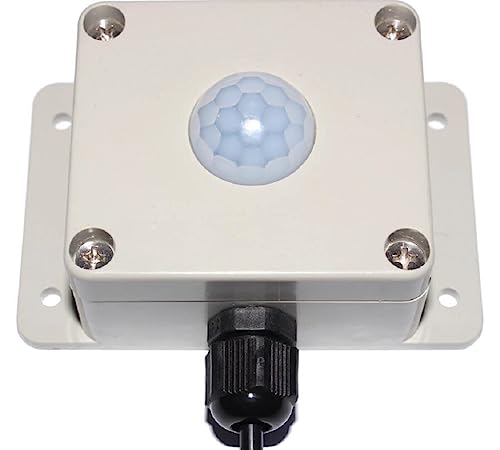
This Taidacent model integrates RS485 communication with 0–5 V and 4–20 mA analog outputs, and it includes a 65535 LUX illumination sensing capability via BH1750 technology. It operates over a wide DC power range (6–24 V) and supports a broad operating temperature of −40 to 85°C with modest humidity tolerance. The device is designed for agricultural or industrial monitoring where luminance data must be logged alongside electrical signals, enabling combined environmental and process visibility in remote locations.
Taidacent RS485 0-5V 4-20mA (I2C)

This Taidacent variant emphasizes I2C compatibility alongside RS485 and 0–5 V or 4–20 mA outputs. It is designed for light sensing applications with the BH1750FVI sensor family. Operating conditions align with industrial environments, and the device supports flexible voltage options within DC 6–24 V. The combination of RS485 and I2C interfaces makes it versatile for distributed monitoring networks where both serial fieldbus and local sensor connections are needed.
Ace Instruments Heavy Duty Pressure Transmitter

This heavy-duty pressure transmitter provides 4-20 mA output along with 0–5 V, 1–5 V, 1–6 V, and 0–10 V options. It is constructed for severe industrial environments with an acid-resistant stainless steel enclosure (AISI 316L) and a wide range of pressure connections. Its high accuracy (typical ±0.5% FS) and fast response time (<4 ms) support reliable monitoring for pumps, compressors, and pneumatics. Temperature compensation and laser calibration enhance long-term stability in harsh facilities.
Buying Guide
When selecting a 4-20 mA data logger, consider the following factors to tailor a solution to your needs:
- Interface and connectivity: Choose between standalone devices, USB loggers, or RS485/I2C-enabled units based on how you will collect and centralize data.
- Channel count and sensor compatibility: Ensure the logger supports the number of monitored channels and the sensor types (thermocouples, Lux sensors, or pressure transducers) you plan to deploy.
- Sampling rate and data history: Decide whether you need rapid sampling for transient events or longer intervals for ambient monitoring, along with sufficient memory for your data set.
- Display and alarms: A built-in display and audible/visual alarms can aid in immediate diagnostics without a PC, while graphical trends help identify patterns quickly.
- Environmental ruggedness: For industrial settings, look for wide operating temperature ranges, corrosion resistance, and robust enclosures.
- Power and installation: Check power requirements (DC 6–24 V vs. battery-powered) and ease of mounting, wiring, and calibration.
- Data export and compatibility: Ensure easy data export to common formats (CSV, Excel) and compatibility with your data analysis workflow.
- Calibration and accuracy: Review specified accuracy (typical and max) and any temperature compensation features to maintain data integrity.
- Future expansion: Consider whether the chosen model can be upgraded or integrated into larger multi-sensor networks as needs grow.
- Support and documentation: Favor products with clear manuals, reliable firmware updates, and accessible customer support.
These considerations help align product capabilities with your monitoring objectives—whether you prioritize local readouts, networked data collection, or rugged field reliability. For applications combining electrical signals with environmental sensing, select devices that offer compatible interfaces (RS485 or I2C) and robust enclosure options.