Best 4/0-4/0-4/0-2/0 Direct Burial Cables for Outdoor Power
Direct burial cables are designed to run power safely from transformers to meters or panels in outdoor and underground installations. This guide highlights five top 4/0-4/0-4/0-2/0 direct burial cables, explaining who each product is best for and why. Ideal buyers include homeowners planning outdoor lighting or feeders, small commercial projects needing underground distribution, and mobile home installers seeking durable, code-friendly wiring. The table below compares key options at a glance.
| Product | Best For | Length | Conductor |
|---|---|---|---|
| BreezeHug 150Ft 4/0-4/0-2/0 Aluminum URD Direct Burial Cable | Residential/Commercial outdoor power runs | 150 ft | 3-conductor, 19-strand aluminum URD |
| Nassau Wake Forest 150′ Quadruplex URD Cable | Underground feeders for mid-size installs | 150 ft | 4/0-4/0-4/0-2/0 aluminum |
| Copkim 100′ 4/0-4/0-2/0-4 Aluminum Mobile Home Feeder Cable | Mobile home service and feeders | 100 ft | 4/0-4/0-2/0-4 aluminum |
| BreezeHug 100Ft 4/0-4/0-2/0 Aluminum URD Direct Burial Cable | Smaller outdoor power runs | 100 ft | 3-conductor, 19-strand aluminum URD |
| Nassau Wake Forest 40′ 4/0-4/0-4/0-2/0 URD Cable | Shorter underground feeders | 40 ft | 4/0-4/0-4/0-2/0 aluminum |
BreezeHug 150Ft 4/0-4/0-2/0 Aluminum URD Direct Burial Cable

Best for: larger outdoor power runs where flexibility and high current capacity matter. This 150-foot roll uses 19-strand aluminum conductors in a 4/0-4/0-2/0 configuration, designed for direct burial or conduit use. It supports standard ratings up to 235 Amps at 90°C in direct burial and offers robust flexibility compared to simpler strand counts, aiding easier installation in trenches and around obstacles.
Why selected: It combines long length with a thick conductor set, suitable for mid-to-large residential or light commercial installations that require durable underground wiring and reliable current capacity.
Caution: Direct burial requires proper trench depth and moisture protection; inspect for moisture ingress and ensure proper seals at terminations. The product relies on XLPE insulation, which must be protected from physical damage.
Nassau Wake Forest 150′ Quadruplex Aluminum URD Cable
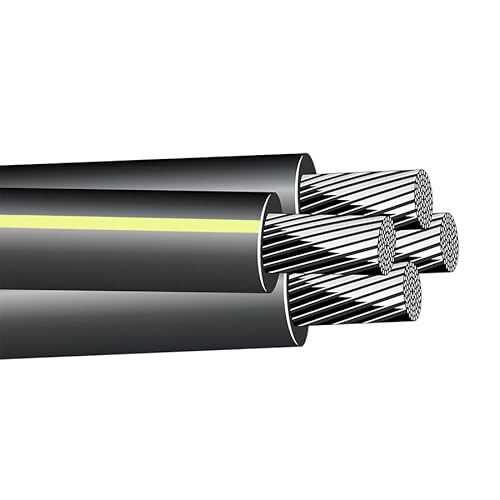
Best for: outdoor feeders that require a consolidated four-conductor setup with a prominent neutral. This Wake Forest model uses 4/0-4/0-4/0-2/0 aluminum conductors, tailored for direct burial and conduit runs. It is well-suited for installations where durability and consistent power distribution are critical from transformers to meters or panels.
Why selected: The quadruplex arrangement provides a balanced approach to underground distribution, delivering reliable performance in a compact package. The listed specifications emphasize conductor sizing for robust service feeds.
Caution: Product details are focused on conductor sizes; verify compatibility with local code requirements and enclosure ratings before installation.
Copkim 100′ 4/0-4/0-2/0-4 Mobile Home Feeder Cable

Best for: manufactured home feeders needing a dedicated 4/0-4/0-2/0-4 configuration. This cable provides two live 4/0 conductors, a single 2/0 neutral, and a bare 4 AWG ground. It emphasizes lightweight handling and cost efficiency relative to copper wires.
Why selected: It is tailored for mobile home service applications, offering a robust aluminum alternative that supports typical 200 Amp service capabilities. Its clear conductor layout helps ensure isolation and safety in installation.
Caution: Ensure the ground conductor grounding requirements and local electrical codes are met; verify compatibility with the main panel and service disconnects in your install scenario.
Nassau Wake Forest 40′ 4/0-4/0-4/0-2/0 URD Cable
Best for: short underground feeder runs where space is limited and a compact footprint is beneficial. This model uses a 4/0-4/0-4/0-2/0 configuration suitable for direct burial or conduit installations in tight spaces.
Why selected: Short-length URD options are useful for transitions between a transformer and a meter or panel in constrained sites, while maintaining the same conductor sizing for dependable performance.
Caution: Shorter lengths may require splicing or multiple runs for larger projects; plan for future expansion if needed.
Nassau Electrical Supply 300′ 4/0 Aluminium RHH/RHW-2 XLP USE-2 Direct Burial Cable

Best for: longer underground feeds requiring 4/0-4/0-4/0-2/0 with USE-2 insulation for varied environments. This option emphasizes durable lumen paths and a jacket designed for outdoor use and burial.
Why selected: Its longer length is advantageous for substantial outdoor projects, reducing the need for frequent splices while delivering consistent conductor sizing across the run.
Caution: Confirm that the insulation and jacket meet your local underground wiring standards before installation; ensure trenching depth complies with code.
Nassau Electrical Supply 200′ Monmouth 4/0-4/0-4/0 Aluminum URD Triplex Cable
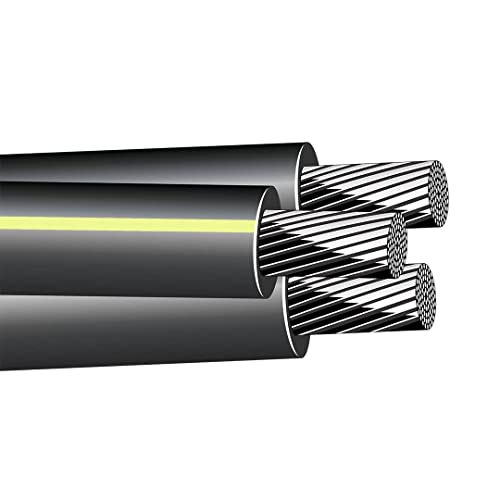
Best for: larger, outdoor triplex distribution needs with heavier current requirements across longer runs. This 200-foot cable uses a 4/0-4/0-4/0-2/0 configuration suitable for direct burial and conduit use.
Why selected: The triplex construction can simplify complex routes and provide two live conductors plus a neutral and grounding path in a single assembly, which is useful for certain feeder configurations.
Caution: Triplex cables can be less flexible than small-core URD; plan routing to minimize bending radius and avoid sharp turns that stress conductors.
Buying Guide
Key purchase considerations help align your project with the right product:
- Conductor configuration: Choose 4/0-4/0-2/0-4 or 4/0-4/0-4/0-2/0 based on the required number of live, neutral, and ground paths.
- Direct burial vs. conduit: If outdoor trenching is feasible, direct burial cables simplify installation; if conduits are used, ensure the product supports conduit use and protection.
- Current capacity: Look for insulation and conductor ratings (e.g., 205 Amps at 75°C or up to 235 Amps at 90°C) to match load requirements.
- Length needs: Plan for the total run length and consider future expansion; longer rolls reduce splices but may require careful handling.
- Material and weight: Aluminum URD offers cost savings and lighter weight compared to copper, but verify mechanical flexibility and installation ease for your site.
Frequently Asked Questions
- What does URD stand for in direct burial cables? – URD stands for Underground Residential Distribution, a class of cables designed for underground power distribution to homes and buildings.
- Can direct burial cables be buried without conduit? – Some URD cables are rated for direct burial, but local codes may require protective burial methods or conduit in certain soils or environments.
- What is the typical conductor material for these cables? – The products listed use aluminum conductors, which offer cost and weight advantages over copper for many outdoor installations.
- Which length should I choose for a future-proof installation? – Choose a length that minimizes splices while leaving space for planned expansion; longer runs can reduce joint points but require careful trench planning.
- Are there safety precautions for underground wiring? – Yes. Follow all local electrical codes, trench depth requirements, moisture protection, and proper terminations to prevent current leakage and ensure long-term reliability.
- How do I verify suitability for my project? – Compare conductor sizes, insulation type (XLPE or USE-2), and maximum operating temperatures to your load calculations and environmental conditions.