Best 35 Amp Power Converter for RVs: Top 5 Choices for Reliable 12V Power
When RV living or extended camping depends on a steady 12V supply, a reliable 35 amp power converter is essential. These units transform 110V-120V AC shore power into a stable 12V DC output, while charging the coach battery. The right model supports smart charging, battery compatibility (AGM, Gel, Lead-Acid, Lithium), and quiet operation for comfortable camping. The following selections highlight dependable 35A RV converters that balance performance, efficiency, and ease of installation.
Summary of chosen products
| Product | Brand | Key Feature | Typical Use |
|---|---|---|---|
| RecPro RV Power Converter 35 Amp | RecPro | 4-stage smart charging; 120VAC to 12VDC | RVs, trailers, campsites with shore power |
| PowerMax PM4-35A Power Converter | PowerMax | 4-stage smart charger; lithium compatible | RV, travel trailers, mobile homes |
| WF-8935-MBA RV Power Converter | JUNPENG | Three-stage charging; auto-detect | RV, camper, caravan setups |
| PowerMax PM3-35 Power Supply | PowerMax | Three-stage charger; built-in cooling | 12V systems in RVs and boats |
| WF8735-AD RV Converter Charger | MAOYUMAO | 35A DC output; auto-detect charging | RV, camper, travel trailers |
RecPro RV Power Converter 35 Amp

RecPro’s 35 Amp model converts 120VAC shore power into usable 12VDC, enabling battery charging while running low-voltage lights and appliances. It operates within a 13V to 16.5V range, suitable for most RV battery systems. The unit is designed to support multiple capacities, making it a flexible choice for RV owners who may upgrade power needs over time.
PowerMax PM4-35A 35 Amp RV Converter

This 35A converter delivers a stable 12V DC output from 110V AC shore power and features a built-in 4-stage charging system. It is designed for AGM, Gel, Lead-Acid, and Lithium batteries and includes automatic voltage regulation to protect sensitive RV electronics. The PM4-35A is a robust upgrade over older PD9135 models and emphasizes efficiency and battery longevity for off-grid and mobile living.
WF-8935-MBA RV Power Converter (JUNPENG)

JUNPENG’s WF-8935-MBA provides a three-stage charging approach with auto-detect technology. It adjusts charging to a 13.2V float, 13.6V absorption, or 14.4V bulk depending on battery needs, while maintaining efficient operation. The unit is aimed at a wide range of RVs and travel trailers, offering a balance of speed and battery preservation.
PowerMax PM3-35 Power Supply
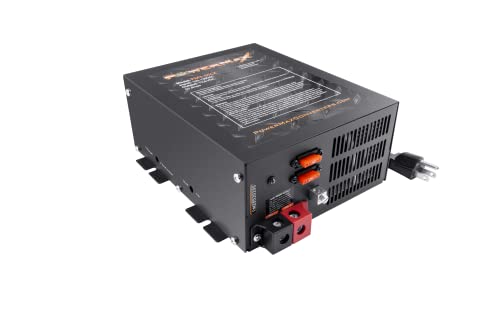
The PM3-35 offers 35A DC output from 110-120V AC with 3-stage smart charging and a built-in cooling fan. It’s compact for RV installations and supports safe overload protection, voltage regulation, and multiple protection features to safeguard both the converter and the RV electrical system. It’s suitable for owners upgrading from older PD-style units seeking better efficiency and safety.
WF-8735-AD RV Converter Charger (MAOYUMAO)

MAOYUMAO’s WF-8735-AD provides 35A DC output with auto-detect charging technology. It’s designed to be compatible with RV shore power and generators, offering efficient charging cycles to shorten downtime and support 12V systems across diverse RV configurations. The unit emphasizes streamlined installation and reliable performance.
Buying Guide: Key Considerations For 35 Amp RV Converters
When choosing a 35A RV power converter, consider compatibility with battery types (lead-acid, AGM, Gel, lithium), charging stages, voltage regulation, efficiency, cooling, and installation constraints. A smart charger with multiple stages (bulk, absorption, float) extends battery life and reduces maintenance. If you plan on lithium batteries, verify lithium compatibility and any special settings or limitations. Noise level matters for interior comfort; look for units with adequately sized cooling fans or passive cooling. Compatibility with your existing panel, wiring, and fusing is essential to avoid overloads and ensure safe operation.
Battery type and chemistry: Lithium-compatible units unlock full 12V battery potential, but may require appropriate battery management systems. For lead-acid or AGM, standard charging profiles are typically sufficient, but ensure the charger supports the specific chemistry. Automatic detection helps adapt to different battery types, minimizing risk of under- or over-charging.
Installation and form factor: Check mounting options, dimensions, and the availability of mounting flanges or a DIN rail. Ensure the DC output connections and fuse arrangements align with your RV’s wiring diagram. A compact footprint can simplify installation in tight compartments or control panels.
Protection features: Overload, short-circuit, reverse polarity, and high-temperature protection are critical for safeguarding the RV electrical system. Models with automatic cooling fans should monitor load levels to avoid overheating during peak demand. LED indicators should clearly communicate charging status and fault conditions.
Reliability and support: Reputable brands with widely available replacement parts, documentation, and customer support make long-term ownership easier. Consider user reviews regarding real-world performance, particularly in boondocking or high-usage scenarios where charging profiles and efficiency matter most.
Compatibility with existing RV electronics: If your setup includes solar charging, inverters, or a battery management system, ensure the converter’s output is compatible and does not create conflicting charging cycles.