Best 300-Gallon Air Tank Solutions for Large Aquariums and Hydroponics
Answering the need for reliable air agitation on 300-gallon systems, this guide highlights five top Amazon choices. These pumps and tanks are suited for large fish tanks, hydroponics, and multi-tank setups. Each selection is evaluated for best-use scenarios, noise, and efficiency. The buyer types most likely to benefit include hobbyists managing large aquariums, hydroponic growers needing steady aeration, and DIY enthusiasts running multiple aquaria or small ponds.
Summary table of selected products:
| Product | ||
|---|---|---|
| HITOP 6W Silent Aquarium Air Pump | Large tanks up to 300 gallons; multi-tank setups | 160 GPH, double-layer quiet design |
| Pawfly 254 GPH Aquarium Air Pump | Quiet aeration for 300-gallon systems | 254 GPH, adjustable flow |
| FEDOUR 4W/5W/8W Aquarium Pump | Up to 300 gallons, multi-outlet setups | 256 GPH, four outlets, adjustable |
| AQUANEAT 300GPH Aquarium Pump | Multiple aeration points for large tanks | 300 GPH, four outlets, adjustable |
| SYSENCIAGA 5W Aquarium Air Pump | Whisper-quiet two-outlet setup | Dual outlets, adjustable flow |
HITOP 6W Silent Aquarium Air Pump
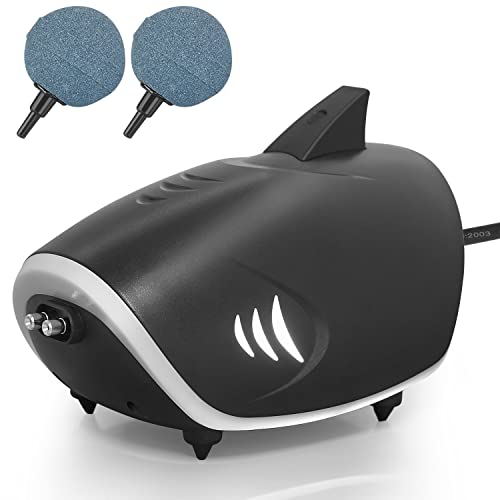
Best for large tanks and multi-tank use, the HITOP 6W offers 160 GPH with a double-layer housing that minimizes noise. This makes it suitable for quiet basins or rooms where sound should be unobtrusive. It’s compatible with sponge filters, hydroponics, and small ponds. The design includes a long power cord and multiple accessories for flexible deployment.
Who it’s best for: aquarists managing a 300-gallon system or several tanks where low noise is essential. Why selected: high air volume combined with vibration-damping construction and included accessories supports versatile aeration layouts.
Caution: performance may vary with very deep water or significant backpressure; ensure appropriate tubing and outlets are configured for your setup.
Pawfly 254 GPH Aquarium Air Pump

Best for steady aeration in 300-gallon systems needing adjustable flow. The Pawfly pump delivers 254 GPH with a compact footprint and a bottom-on/off switch that makes on/off control simple. It’s suitable for large tanks, ponds, DWC setups, and hydroponics where consistent oxygen delivery matters.
Who it’s best for: hobbyists running 300-gallon tanks or multiple aquaria that require adjustable air output. Why selected: strong output with low power consumption and an accessible flow control lever.
Caution: ensure the unit is not placed in a catch basin or damp environment to avoid moisture exposure to electrical components.
FEDOUR 4W/5W/8W Aquarium Pump

Best for robust multi-outlet setups in large tanks. The FEDOUR model provides up to 256 GPH with four outlets, allowing several air stones or devices to run in parallel. It also advertises low vibration with sealed shells and soft feet to minimize noise. Ideal for powerful aeration across large aquariums or hydroponics installations.
Who it’s best for: users needing multiple outlets to aerate several zones in a 300-gallon system. Why selected: strong air volume, four independent outlets, and adjustable flow contribute to flexible zoning.
Caution: higher outlet count can introduce backpressure; verify that all lines and fittings are appropriately sized to avoid leaks.
AQUANEAT Aquarium Air Pump 300GPH

Best for four-outlet configurations in large tanks. The AQUANEAT pump delivers a total of 300 GPH and includes multiple outlets to run sponge filters, stones, or decorative bubblers. It emphasizes quiet operation with stabilizing feet to reduce vibration. Suitable for large aquariums, hydroponics, and multi-point aeration.
Who it’s best for: users who want a single pump to service several aeration points in a big tank. Why selected: exact 300 GPH rating offers predictable oxygen delivery and a straightforward setup.
Caution: be mindful of depth and backpressure; ensure outlet tubing is correctly matched to avoid restricted flow.
SYSENCIAGA 5W Aquarium Air Pump

Best for library-quiet operation with two outlets. The SYSENCIAGA pump features upgraded dual-layer dampening and four silicone feet that reduce vibration. It’s designed for small to medium tanks or hydroponic systems up to 300 gallons, offering adjustable flow to tailor oxygen levels to each zone.
Who it’s best for: quiet operation lovers and multi-zone aeration in a 300-gallon setup. Why selected: strong noise reduction and flexible dual-outlet configuration.
Caution: the total air volume may be lower on one outlet if both are heavily used; plan tube routing accordingly.
VIVOSUN 160 GPH Dual-Outlet Kit

Best for compact, quiet aeration of 300-gallon systems with two outlets. The VIVOSUN kit features a durable ABS shell, four rubber feet for reduced vibration, and two regulators for independent tube control. It’s efficient with a modest power draw and can be expanded with splittings.
Who it’s best for: aquarists seeking a quieter, simpler two-outlet option for large tanks or hydroponics when space is at a premium. Why selected: strong emphasis on noise reduction and adjustable airflow per outlet.
Caution: with multiple outlets, ensure each line has appropriate check valves to prevent backflow between lines.
Buying Guide
What should I consider for a 300-gallon setup?
Air volume needs depend on tank depth, stocking, and planned hydroponic use. Look for pumps that provide consistent GPH (gallons per hour) across multiple outlets for even distribution.
How important is noise?
Quiet operation matters in living spaces or home offices. Dual-layer dampening, soft feet, and sealed housings help reduce sound and vibration—especially for room-scale installations.
Outlets and accessories matter
Multiple outlets offer flexibility to run several air stones, sponge filters, or tubing. Check included accessories like air stones, tubing, valves, and check valves to minimize additional purchases.
How to size for multi-tank setups?
For several tanks, choose pumps rated for higher total volume or pair a larger main pump with a secondary smaller pump for zoning. Ensure your tubing and fittings support the combined flow without excessive backpressure.
Installation tips
Place pumps on stable surfaces, away from potential water splashes. Use vibration-damping feet, secure tubing, and position outlets to avoid dead zones where bubbles cannot circulate efficiently.
Maintenance considerations
Regularly inspect hoses, check valves, and fittings for wear or leaks. Clean out any mineral buildup from outlets to maintain steady airflow and prevent blockages.
FAQ
- Can I run multiple pumps on a single 300-gallon system? Yes, but ensure electrical safety and avoid backflow by using check valves and proper tubing routing.
- What is a good noise level for a home aquarium pump? Typically under 35 dB (A) is considered quiet, with some models designed to be near library-level quiet.
- Is 300 GPH necessary for a 300-gallon tank? Not always; factor depth, stocking, and aeration needs. Some setups perform well below 300 GPH if properly distributed.
- Do four-outlet pumps provide better aeration? They offer more distribution points, which can improve oxygenation across larger systems if outlets are positioned well.
- What maintenance helps prolong pump life? Regular cleaning, checking seals and valves, and replacing worn tubing or stones can maintain performance.
- Which pump is best for a quiet, space-efficient setup? Pumps with thick housings, silicone feet, and low-profile designs tend to be quieter and more space-efficient.