Best 30 Mile Electric Fence Chargers for Livestock and Farms
Answer: For buyers seeking a reliable 30-mile electric fence charger, these five models deliver 30-mile range under ideal conditions and offer practical features such as solar power, dual power options, and low impedance design. This guide highlights who each charger is best for, why it was selected, and practical considerations. Ideal buyers include small-to-midscale ranchers, poultry and goat keepers expanding fencing, and those in remote locations needing solar or battery power.
| Product | Best For | Why It Stands Out |
|---|---|---|
| ANDMON MINI400 30 Miles Solar Electric Fence Charger | Solar-powered fencing in off-grid areas | 0.4 Joule, day/night mode, easy DIY installation |
| Parmak MAG12-UO 12-Volt Magnum | Battery-backed, mobile deployments | Built-in performance meter, up to 3 months between charges |
| FarmNix 30 Miles Solar Electric Fence Charger | Rural farms needing adjustable output | 6-12KV adjustable, 0.3–1.5J, 24/7 protection |
| Parmak Magnum Solar-Pak 12 Low Impedance | Day/night solar plus battery backup | Sealed 12V battery included, high impedance for long life |
| LEOMAUNYX 30 Miles Solar Electric Fence Kit | Large properties with solar flexibility | 6KV–12KV four-output levels, LCD battery monitoring |
Buyer notes: This selection emphasizes 30-mile capability, low impedance design for reliable fencing, and practical power options (solar, AC, or battery). Each product is suitable for different livestock types and environmental conditions. Use the buying guide below to compare features like output voltage, joules, and power sources to match your fencing plan.
ANDMON MINI400 30 Miles Solar Electric Fence Charger
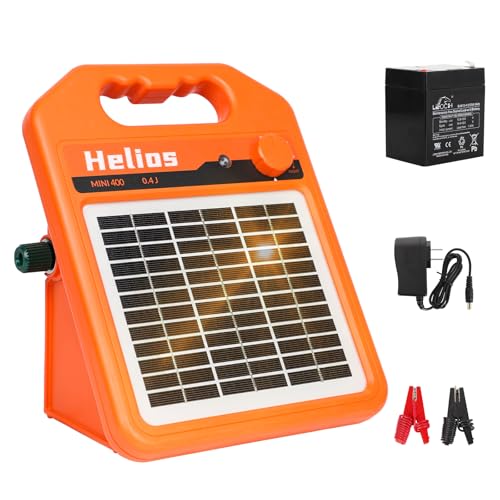
The ANDMON MINI400 delivers up to 0.4 stored joules with a low-impedance design, powering up to 30 miles of fence depending on wire type and strand count. Its NIGHT mode reduces pulses during the night, conserving energy, and supports dual power: solar and DC charging. Best for off-grid farms or remote locations requiring flexible power. Caution: performance can vary with dense vegetation and long fence runs.
Best for: Off-grid ranchers and horse or cattle areas where solar charging is essential. Why selected: Compact, versatile, and energy-efficient night operation makes it reliable for day and night fence control.
Parmak MAG12-UO 12-Volt Magnum Low Impedance Battery Operated 30-Mile Range
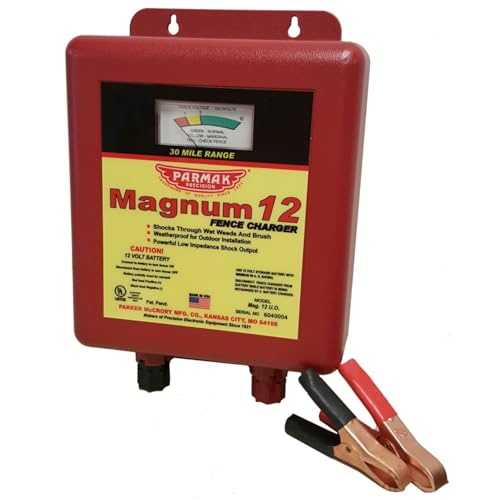
The Par mak MAG12-UO is a 12-volt Magnum low-impedance charger with a 30-mile range. Its built-in performance meter indicates fence status, helping avoid guesswork. It can run for up to three months between battery charges, making it suitable for mobile or remote setups. Caution: depends on battery condition and weed-free conditions for maximum range.
Best for: Operators needing a visible performance readout and long-running battery operation. Why selected: The meter and reliable battery-driven design help manage maintenance and timing for grazing rotations.
FarmNix 30 Miles Solar Electric Fence Charger
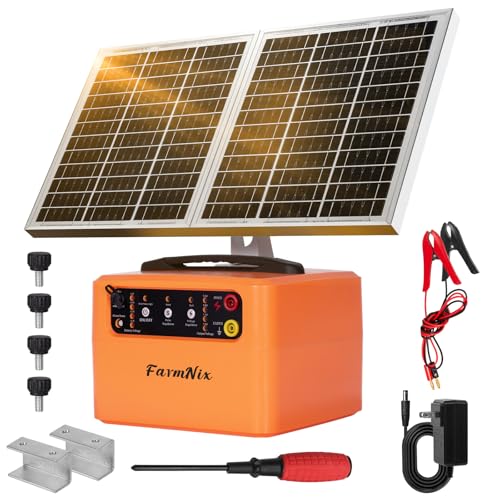
The FarmNix system offers 6KV/8KV/10KV/12KV adjustable output with 0.3/0.8/1.1/1.5 joules, supporting up to 30 miles of fence. It includes a 15W solar panel and a 12V 7Ah sealed lead-acid battery, offering day and night protection for continuous fencing. Best for: Farms needing precise voltage control to deter varied predators and livestock. Caution: 18-day battery life at the lowest setting; performance depends on sun exposure.
Parmak Magnum Solar-Pak 12 Low Impedance 12V Battery Operated 30 Mile Range MAG12-SP

The MAG12-SP uses solar energy by day and a sealed 12-volt battery at night. It is a low-impedance unit designed for longer fence life and higher effectiveness. It claims up to 30 miles of fence with a robust energy output of 3.1+ joules. Best for: Farms needing dependable day/night operation with battery backup. Caution: ensure battery condition and sun exposure for consistent performance.
LEOMAUNYX 30 Miles Solar Electric Fence Kit

The LEOMAUNYX kit provides 6KV–12KV output with four adjustable levels and a 15W solar panel plus LCD battery monitoring. Aimed at large properties, this unit promises up to 30 miles of coverage and continuous operation, with live voltage and battery percentage display. Best for: Large farms and perimeter protection with visibility into energy status. Caution: LCD readings may require calibration in extreme temperatures.
Buying Guide
What power source fits your site?
- Solar-powered units are ideal for remote areas without reliable electricity. Look for built-in solar panels, battery capacity, and day/night modes that optimize energy use.
- AC-powered units perform consistently where power is available but may need weatherproof installation.
- Battery-backed models provide mobility but require battery maintenance and charge management.
How to choose voltage and joules?
- Higher kilovolt (KV) settings are typically used for larger fences or tougher predators. Choose 6KV–12KV based on animal size and fence design.
- Joules measure stored energy; higher joules mean stronger pulses. Match joules to your livestock type and wire setup. Low-impedance designs preserve punch over longer runs.
Fence type and layout considerations
- Fence length and number of strands affect voltage loss and effectiveness. Multi-wire or high-tensile fences may require stronger outputs.
- Vegetation and weeds can dramatically reduce performance. Off-grid solar units with robust energy can mitigate this.
Maintenance and monitoring
- Look for built-in meters or LCDs to monitor battery health and output voltage.
- Regularly inspect connections, posts, and ground conditions to maintain efficiency and safety.
FAQ
Q: Do these units truly sustain 30 miles?
A: Rated ranges are under ideal conditions; actual performance depends on fence type, vegetation, weather, and proper maintenance.
Q: Can I mix solar and battery backups?
A: Yes. Many models offer dual power options for flexibility and reliability in varying environments.
Q: Is low impedance better?
A: Yes. Low-impedance designs deliver more consistent pulses over longer fence runs, improving deterrence.
Q: How do I know if my fence needs more joules?
A: If animals continually breach the fence or the pulse is weak, you may need higher joules or fewer parallel strands for efficiency.
Q: What maintenance should I perform annually?
A: Check batteries, test the output with a fence tester, inspect wiring connections, and clean debris from components.