Best 30 Amp Gas Generators for Home Backup and RV Power
Looking for a reliable 30-amp gas generator to power an RV, essential appliances, or during outages? This guide highlights five top options designed around a 30A output, with clear notes on who they’re best for and why. Each entry covers key specs, fuel considerations, and practical limits to help you choose confidently.
The following table provides a quick snapshot of the selected models, focusing on output, runtime, and RV/shore power compatibility. Use this as a quick reference when comparing options at a glance.
| Product | Running Watts | Peak Watts | Fuel Capacity | RV/30A Availability | Best For |
|---|---|---|---|---|---|
| Oxseryn 4400-Watts Inverter Generator | 3400 | 4400 | 2 gal | Yes (30A RV outlet) | Home backup and RV use |
| Westinghouse 4650 Peak Watt Portable | 3600 | 4650 | 4 gal | Yes (30A TT-30R) | Mid-size power and RV trips |
| Oxseryn Power Equipment 4400 Watts | 3400 | 4400 | 2 gal | Yes (RV port) | Quiet camping and backup |
| PowerSmart 3600-Watt Portable | 3200 | 3600 | 1.3 gal | Yes (30A outlet) | Light-duty camping and small loads |
| Westinghouse 6500 Watt Dual Fuel | 5300 (gas) | 6500 | 4.7 gal (gas); propane option | Yes (30A TT-30R) | Higher power needs and versatile fuel |
Oxseryn 4400-Watts Inverter Generator
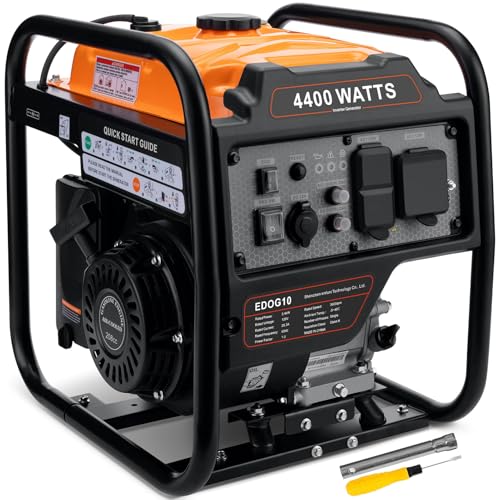
Best for compact RVs and apartment-grade backup needs. This inverter generator provides 4400 peak watts and 3400 running watts, with a 2-gallon tank for lighter fuel consumption and lower noise. It includes two 120V outlets, one 30A RV port, and a 12V DC port. ECO mode helps maintain fuel efficiency while delivering clean power suitable for sensitive electronics.
Who it’s for: RV renters, small households, and trailer owners who want a portable, quiet option with an isolated 30A outlet. Why selected: strong inverter efficiency, RV-ready outlet, and compact design. Caution: runtime may be shorter at higher loads due to the smaller tank.
Westinghouse 4650 Peak Watt Portable Generator
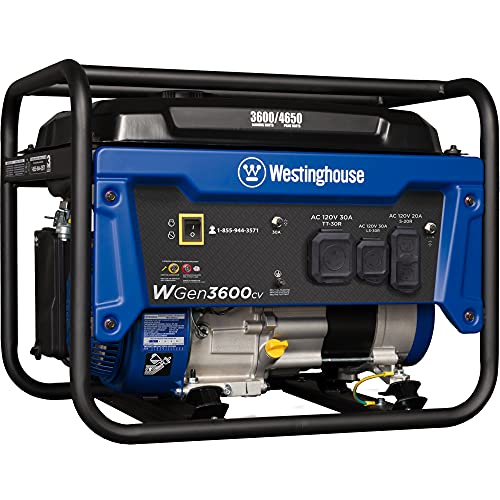
Better for a mid-size off-grid setup or home backup where you need more running watts. It delivers 4650 peak watts and 3600 running watts with a 4-gallon fuel tank and run time up to around 14 hours per tank. It includes an RV-ready 30A TT-30R outlet and an L5-30R 30A outlet, plus basic safety features like rubber outlet covers.
Who it’s for: homeowners and campers requiring solid power with flexible receptacles. Why selected: larger tank and dual 30A outlets in a transportable frame. Caution: recoil start may be less convenient for users preferring electric start options.
Oxseryn Power Equipment 4400 Watts Inverter

Designed for quiet operation with ECO mode and a 14-hour runtime at light load. It mirrors the 4400-watt class with 2x120V ports, a 12V DC port, and a dedicated RV outlet. The built-in low oil shutdown and overload protection support safer operation for weekend travelers and emergency home backup.
Who it’s for: users who want a balance of quiet performance and practical RV connectivity. Why selected: clear inverter benefits and fuel gauge visibility. Caution: data shows a compact fuel tank; plan refueling for longer outages.
Westinghouse 6500 Watt Dual Fuel
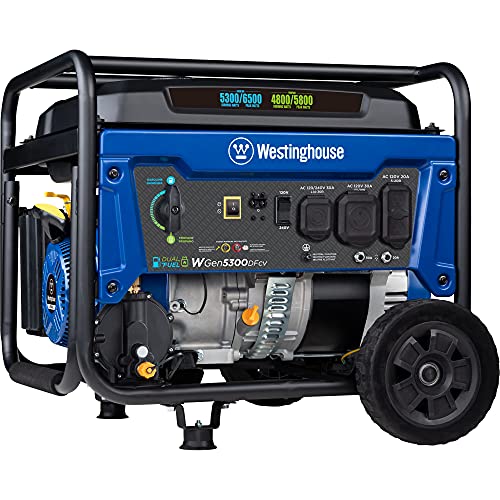
Best for users needing robust versatility and longer run times, especially when utility power is scarce. This dual-fuel model supports gasoline and propane, delivering 5300 running watts (gas) and 6500 peak watts, or 3240 running watts (propane) with a 4.7-gallon tank at up to 14.5 hours on gas. It includes a 30A TT-30R outlet plus other 120V outlets, and a transfer-switch-ready configuration.
Who it’s for: homeowners with substantial power demands, those using propane as a fuel option, or property with limited fuel availability. Why selected: high power ceiling and multi-fuel flexibility. Caution: heavier unit may require more storage space and effort to move.
PowerSmart 3600-Watt Portable Inverter

Choose this when you need a lighter, quieter option with clean power for electronics. It offers 3600 starting watts and 3200 running watts, with a 1.3-gallon tank for about 8 hours at 25% load. It uses advanced inverter technology to keep THD low, making it suitable for laptops, phones, and other sensitive devices. It includes a dedicated 30A RV outlet and two 20A outlets.
Who it’s for: campers and mini-offices that require compact power and portability. Why selected: best balance of light weight, cost, and inverter stability. Caution: shorter runtime at higher loads means plan for refueling during longer activities.
Buying Guide: Key Factors To Consider
- Power needs: Identify essential appliances and total running watts to ensure the generator can handle them simultaneously.
- Fuel type and availability: Gasoline is common, but dual-fuel options provide flexibility if propane is easier to source.
- Outlets and RV connections: Confirm a 30A TT-30R receptacle is present for RV use and check for additional 120V outlets for household devices.
- Runtime and fuel tank size: Larger tanks extend operation between refuels, but may increase size and weight.
- Noise level: Inverter models typically run quieter and deliver cleaner power ideal for electronics.
- Portability: Weight and built-in wheels/stools affect maneuverability in storage bays or campsites.
- Safety features: Look for low-oil shutdown, overload protection, and rubber outlet covers.
FAQ
- What does 30A RV outlet mean on a generator?
It indicates the generator has a TT-30R receptacle rated for up to 30 amps of current at 120V, suitable for RV power needs. - Are dual-fuel generators better than single-fuel?
Dual-fuel options offer flexibility if gasoline is scarce or more expensive, but can be heavier and more complex. - Can I run sensitive electronics on these generators?
Yes, most listed models use inverter technology with low THD, which is suitable for laptops and other electronics. - How long can these generators run on a full tank?
Runtime varies by tank size and load; select models provide up to about 14 hours at lighter loads. - What should I consider for RV compatibility?
Ensure the generator includes a 30A RV outlet and has a reliable start method and sufficient power for the RV appliances you plan to run. - Is a larger wattage always better for backup power?
Higher wattage expands capability but adds weight and cost; match wattage to your actual needs.