Best 30 Amp Battery Backup for Reliable Power Anywhere
When you need dependable 30-amp battery backup power, these top options deliver reliable AC output, scalable capacity, and practical features for homes, RVs, and off-grid adventures. This guide highlights five solid choices, told in practical terms for buyers seeking robust backup power with a 30A capability. The top picks are best for home outages, RV living, camping, and emergency readiness. Below, you’ll find a quick comparison table, followed by detailed product sections and a practical buying guide.
| Product | Capacity | Best For | ||
|---|---|---|---|---|
| BLUETTI AC200L | Up to 8192Wh | Home backup and RV use | Yes (multiple batteries) | High output with fast recharge |
| BLUETTI Elite 300 | 3014Wh | Compact home backup & RV | No (integrates TT-30) | Smallest 3kWh option with TT-30 |
| EF ECOFLOW DELTA Pro | 3600Wh (expandable to 25kWh) | Heavy-duty home and outdoor power | Yes (with modules) | Flexible output with many ports |
| AFERIY P210 | 2048Wh | UPS-style backup & camping | No (LiFePO4) | Long-life LiFePO4 with strong surge |
| ABOK Ark3600 | 3840Wh (expandable to 11520Wh) | Home backup & RVs | Yes (expansion) | High capacity with many outlets |
The top five choices are selected for 30A-ready power delivery, reliability, and expandability. For each product, you’ll see who it’s best for and why it stands out, plus a potential limitation to consider. This format helps you compare at a glance and choose the unit that matches your power needs and travel plans.
BLUETTI AC200L Portable Power Station

Best for: Home backup with high capacity needs and RV use. The AC200L offers 2400W continuous output and expandable capacity up to 8192Wh when paired with compatible batteries. It supports fast charging—AC input up to 2400W and solar input up to 1200W—so it can be ready quickly after outages. This model is ideal for households that want a strong primary backup with potential for significant expansion.
Why selected: It combines high output with expandability and relatively quick recharge, enabling ongoing operation of essential devices during outages or while on extended trips.
Caution: The full 8192Wh setup relies on additional modules; plan for space and installation when expanding beyond base capacity.
BLUETTI Elite 300 Portable Power Station
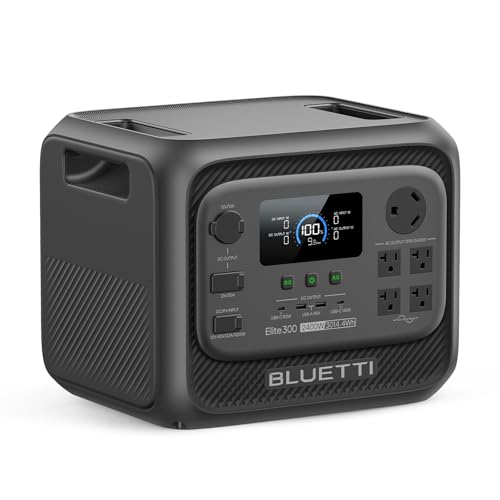
Best for: Compact home backup and RV travel. The Elite 300 packs 3014Wh in a small footprint with a 2400W output and a 4800W surge. Its TT-30 RV port and 12V/30A DC output make it practical for RV systems, fridges, water pumps, and other typical mobile loads.
Why selected: Frost & Sullivan recognizes it as a compact high-capacity option, making it easier to store and transport than larger units.
Caution: Lower expansion options than larger modular systems; plan for capacity needs if you anticipate long outages without recharging opportunities.
EF ECOFLOW DELTA Pro Portable Power Station

Best for: Powering homes and camps with high energy needs and extensive port options. The DELTA Pro starts with 3600Wh and scales to about 25kWh when expanded, with an output up to 4500W via X-Boost and multiple output methods. It includes a robust mix of ports and a flexible charging profile.
Why selected: It offers the broadest expandability and high output for demanding devices, making it suitable for serious backup or off-grid living.
Caution: The large expandable setup adds complexity and requires space for expansion modules and batteries.
AFERIY 2048Wh Portable Power Station

Best for: UPS-style backup with dependable LiFePO4 chemistry. The P210 provides a 2400W inverter with a 4800W surge, 2048Wh capacity, and a 7-year extended warranty. The LiFePO4 chemistry supports long cycle life, better stability, and safer charging.
Why selected: The pure sine wave AC input/output ensures compatibility with sensitive electronics, making it strong for home backup and camping.
Caution: Data notes a warranty and support structure; verify service terms in your area before purchase.
ABOK Ark3600 Portable Power Station

Best for: Home backup with very high capacity and multiple outlets. The Ark3600 houses 3840Wh LiFePO4 chemistry and expands up to 11520Wh. It features 3600W continuous output, 4500W peak, and 15 outlets for versatile charging. It supports fast charging via AC and PV, and car charging for flexible recharging.
Why selected: Its high base capacity plus generous expansion options make it suitable for long outages or larger off-grid needs.
Caution: The expansion path requires additional space and planning for battery modules and wiring compatibility with existing systems.
Buying Guide: Practical Considerations For Your 30 Amp Battery Backup
- What will you power? List essential devices and their total wattage to choose a unit with enough continuous and surge power.
- How important is expandability? If you anticipate longer outages or future growth, pick models that support multiple battery packs or modular expansions.
- What charging mix do you prefer? Consider AC fast charging vs. solar input. Some models reach full charge quickly, while others rely on solar panels for extended runtimes.
- Do you need RV compatibility? For RV travel, features like TT-30 or dedicated RV ports are valuable; ensure the unit supports your vehicle’s electrical system.
- How portable should it be? If you’ll move the unit frequently, weight and footprint matter. Some models emphasize compact design with significant capacity.
- Battery chemistry matters. LiFePO4 batteries tend to offer longer life and better safety characteristics than some other chemistries, at the cost of slightly higher upfront weight.
- Portability vs. capacity trade-offs. A larger battery often means heavier equipment. Balance storage space, carry weight, and your actual energy needs.
FAQ
- What does 30A output mean in these devices?
– It indicates compatibility with 30-amp electrical circuits, common in RVs and some home setups, providing higher current delivery for demanding loads. - Can these units power a whole house?
– They can support essential circuits and appliances, but full-house power depends on total load and the unit’s continuous output plus expansion. - Are LiFePO4 batteries safer for long-term use?
– Yes, LiFePO4 chemistry generally offers longer cycle life and stability, with safer thermal characteristics than some other lithium chemistries. - Do these units require professional installation for expansion?
– Some expansions are straightforward, while others may require planning for wiring and safety; consult the manufacturer guidelines for each model. - What is the typical recharge time?
– Recharge time varies by model and charging source; fast AC charging can reach significant capacity in under an hour for some units, while solar-assisted charging extends runtime.