Best 3 Pin Fan Controller Options for PC Cooling and Power Management
Keeping PC temperatures in check is essential for performance and longevity. A reliable 3-pin fan controller helps you tailor airflow, reduce noise, and manage power efficiently. Below are five well-regarded options that cover a range of needs—from simple on/off control to multi-fan synchronization and PWM compatibility. Each entry includes a quick overview and key features to help you compare at a glance.
| Product | Type | Key Benefit | Watts / Output |
|---|---|---|---|
| Tokatuker 12V PC Fan Speed Controller | AC to DC Controller | Global voltage input, 4-way fan splitter | 36W / 3A max |
| Cable Matters 2-Pack 3-Way PWM Splitter | PWM Splitter Cable | Synchronizes up to 3 fans | 4-pin master |
| Coolerguys 3-Pin Manual Controller | Manual Speed Controller | Compact with On/Off convenience | Depends on fan |
| Coolerguys Programmable Thermostat Kit | Thermostat Fan Controller | Independent control of up to four fans | Standard 3-pin |
| MEIRIYFA 8-Way Hub & PWM Controller | Hub with PWM | 8 fans, adjustable speed | Up to 17A total |
The following sections highlight five specific products, with emphasis on compatibility, ease of use, and cooling effectiveness. All prices are omitted by design to focus on value, performance, and suitability for different setups.
Tokatuker 12V PC Fan Speed Controller

The Tokatuker device is a versatile power supply that converts 100-240V AC input to a 12V DC output with adjustable voltage from 3 to 12V. It supports up to 36W and provides stable DC output up to 3A. A four-way fan splitter is included, enabling synchronized control of multiple fans. This makes it a practical choice for mid-sized PC builds or silent home theater setups where precise fan ramping is beneficial.
Key features include: wide input voltage range, adjustable DC output, 4x 3-pin or 4-pin compatibility, and a bundled splitter for multiple fans. This setup is ideal for users who want a simple, single-point control solution without relying on motherboard headers.
Cable Matters 3-Way 4-Pin PWM Fan Splitter Cable (2-Pack)

This product offers a straightforward solution to expand one motherboard PWM header to three fans. The splitter ensures synchronized speed control across all connected fans, leveraging the PWM signal from the master header. It is especially useful for users upgrading from a single fan to a triad without sacrificing control software integration.
Highlights include: three-fan expansion, unified PWM control, and signal distribution to ensure coordinated cooling across multiple fans. This is a practical upgrade for enhancing airflow in compact or mid-range builds where airflow balance matters.
Coolerguys 3-Pin Manual Fan Controller

This option offers a compact, manually adjustable speed control with an accessible on/off feature. It is sized to be easy to mount in small PC cases or DIY projects where a tactile, simple adjustment is preferred. It provides a straightforward interface for users who want direct control over fan speed without software dependencies.
Key points include: manual speed adjustment, On/Off convenience, and a small footprint. It is best suited for users who want a basic, reliable controller without advanced automation features.
Coolerguys Programmable Thermostat Fan Controller Kit
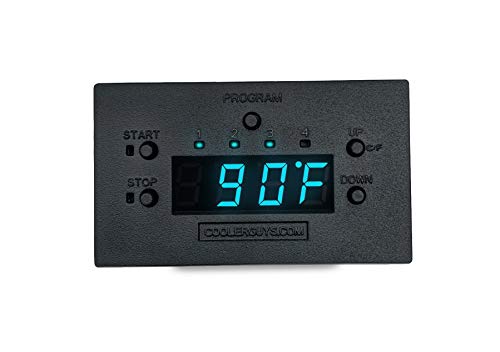
This kit provides pinpoint control of up to four fans with programmable intervals. It is designed for universal fan output and plugs directly into standard 3-pin fans. The plug-and-play design makes it accessible for enthusiasts who want to implement staged cooling or pre-set thermal responses without complex software setups.
Considerations include: independent fan timing, compatibility with 3-pin fans (or adapters for 3-pin ports), and plug-and-play usability. It suits builds requiring segmented cooling strategies across multiple zones or thermally sensitive components.
MEIRIYFA 8-Way PWM Fan Hub

This hub expands PWM fan control to as many as eight fans, with a single power port and a speed governor that can adjust all connected PWM fans simultaneously. Compatible with both 4-pin and 3-pin fans, it accommodates most mid-to-large builds requiring aggressive airflow management. It’s especially useful for users who want centralized control of multiple fans via a single interface.
Important information includes: 8-way expansion, 6-pin power port, and a 17A total current limit. This solution works best when PWM control and consolidated speed management are priorities, and where power supply capacity is sufficient to support multiple fans operating at once.
Buying Guide: Key Considerations For 3-Pin Fan Controllers
- Compatibility: Determine whether you need simple 3-pin control, PWM support, or a hybrid hub that accepts both 3-pin and 4-pin fans. Check whether your motherboard headers, PSU, or adapter are compatible with the chosen controller.
- Control Type: Manual knobs offering quick tweaks are common for casual setups, while programmable thermostats or PWM splitters enable automation and synchronized speeds across several fans. Consider your noise tolerance and cooling requirements.
- Power Handling: Look at total wattage and current limits. Ensure the controller can safely power all connected fans without overheating or voltage drop, especially in multi-fan configurations.
- Expansion Capacity: If you plan to add more fans later, prioritize hubs or splitters that support multiple connections and provide stable PWM signaling across all ports.
- Noise Versus Cooling: Balanced cooling often requires staged or staggered fan operation. Controllers with programmable timing or multi-zone outputs can optimize for both quiet operation and effective cooling.
- Ease Of Installation: Plug-and-play solutions with standard 3-pin or 4-pin connectors simplify setup for DIY enthusiasts. Consider mounting space and whether the device fits in your case’s layout.
- Durability And Build Quality: Look for robust housings, secure connectors, and clear labeling to reduce wear over time. This matters for systems that run continuously or in high-usage environments.
- Future-Proofing: If you anticipate future upgrades (more fans, new chassis layouts), choose a controller or hub that offers ample ports and compatibility with modern PWM standards and power options.
Choosing the right 3-pin fan controller involves weighing simplicity against control depth. For compact builds, a manual or small 3-pin controller can suffice, while gaming rigs or workstations with multiple fans may benefit from PWM splitters, programmable thermostats, or multi-fan hubs. Assess your current fan configuration, potential growth, and noise goals to select a solution that aligns with your cooling strategy.