Best 3 Phase Water Heaters for Quick, Dependable Hot Water
Choosing a 3-phase (or high-power) water heater can dramatically improve hot water availability in larger homes or busy households. This guide reviews select electric and gas options that support higher power demands, faster hot water recovery, and reliable performance in American homes. Each product highlighted here emphasizes efficiency, installation practicality, and durable construction so you can compare features side by side and pick the best fit for a multi-point, high-demand setup.
Summary of chosen products:
| Product | Brand | Type | Approx. Flow/Capacity | Key Benefit |
|---|---|---|---|---|
| BOSCH Tronic 3000 T ES2.5 | Bosch | Electric Mini-Tank | 2.5 gal | Compact POU solution for instant hot water |
| Rheem Tankless Electric 18kW | Rheem | Electric Tankless | Up to 4.4 GPM | Self-modulating, adjustable power for efficient on-demand hot water |
| Rheem RTG-95DVLN-3 | Rheem | Gas Tankless | 9.5 GPM | High capacity for multiple bathrooms |
| Orbek 14kW Tankless Electric | Orbek | Electric Tankless | Up to 3.38 GPM | High efficiency, quick delivery of hot water |
| FOGATTI 24kW Tankless Electric | FOGATTI | Electric Tankless | Up to 6 GPM | Strong performance for 3–4 points of use |
Bosch 2.5-Gallon Mini-Tank POU Water Heater
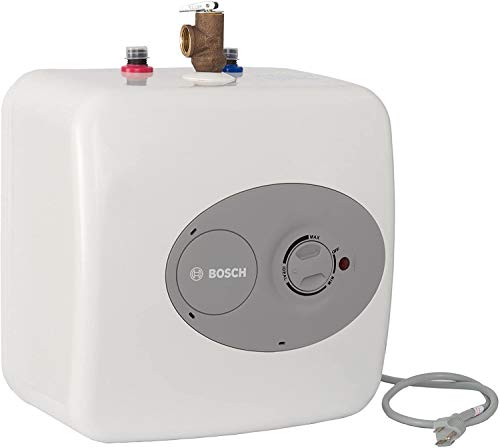
The Bosch Tronic 3000 T ES2.5 is a compact point-of-use electric mini-tank designed to sit under a sink or cabinet. With a 98% thermal efficiency and a 120V, 12A electrical draw, it provides hot water exactly where you need it, reducing wait time for sinks and basins. Its glass-lined interior supports longevity, and its 13.75″ by 13.75″ by 10.75″ footprint makes it suitable for tight spaces. The unit plugs into a standard outlet, enabling flexible installation independent of a home’s main hot water system. This model is ideal for small apartments or added hot water to a dedicated sink.
Key features include quick delivery of hot water at the point of use, durable construction, and simple installation. While it is not a whole-house solution, pairing a point-of-use heater with a larger system can reduce overall hot-water wait times in high-demand situations.
Rheem 18kW 240V Tankless Electric Water Heater
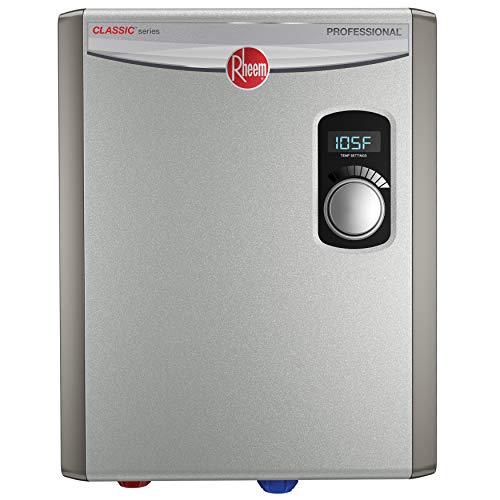
Rheem’s 18kW tankless electric water heater uses external digital control with an LED display and self-modulation to adjust power output in response to hot water demand. Its copper immersion elements support durability and efficient heat transfer, with field-serviceable design for easier maintenance. Control is precise, offering reliable hot water at selectable flow rates, commonly up to 4.4 GPM depending on inlet water temperature. This model is suited to households that require generous hot water without a storage tank and prefer on-demand operation.
Considerations for installation include ensuring an adequate 240V service and space within a compatible breaker panel. The unit’s compact design makes it possible to mount in closets or utility rooms, while its advanced modulation helps optimize energy use during peak demand.
Rheem RTG-95DVLN-3 High-Efficiency Indoor Gas Tankless

This high-efficiency natural gas tankless heater provides up to 9.5 GPM, making it well-suited for homes with multiple hot-water needs like showers and laundry. It’s designed for indoor installation and features a durable metal cabinet with a compact footprint, allowing wall mounting by a qualified installer. With a robust 199,900 BTU input, the unit quickly heats incoming water to meet peak demand. Homeowners should ensure proper venting and gas supply capacity, as well as professional installation for gas appliances.
Key benefits include strong flow, fast recovery, and reliable performance under high simultaneous usage. The unit’s efficiency and size make it a viable option for larger households seeking to avoid cold-water interruptions during peak times.
Rheem RTEX-24 Electric Tankless Water Heater
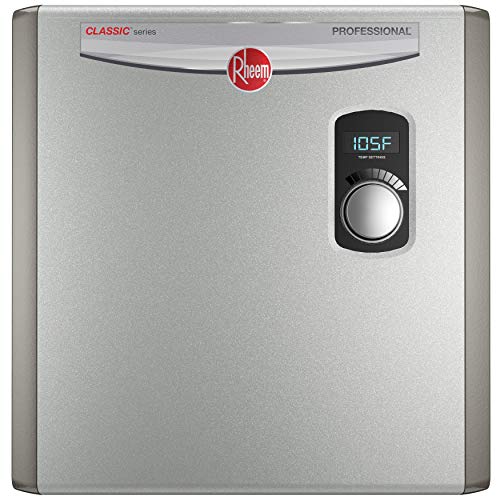
Rheem’s RTEX-24 is a high-power electric tankless heater designed for whole-home performance. It requires three 40-amp double-pole breakers and a 200-amp electrical service, with enough space in the panel to support the unit. Features include a simple ON/OFF control and a digital temperature display that allows adjustments in 1-degree increments from 80°F to 140°F. The unit’s performance guidance helps predict whether it can meet your geographic hot-water needs. It’s ideal for households that want on-demand hot water with precise temperature control, though it demands a robust electrical infrastructure.
Pros include scalable heating capacity and precise temperature management. Challenges involve ensuring electrical readiness and potential professional wiring to meet safety standards.
Orbek 14kW Tankless Electric On-Demand

Orbek’s 14kW electric tankless heater provides up to 3.38 GPM of on-demand hot water for 2–3 outlets. A notable requirement is a 240V/60A two-pole breaker and suitable wiring (6 AWG) with a 1/2″ NPT water connection. The unit emphasizes energy efficiency by separating water and electricity to reduce scale and corrosion. It provides hot water within seconds, which can help reduce energy costs when replacing older storage tanks. This model is suitable for smaller homes or apartments that require rapid hot water at multiple points without storage.
Potential drawbacks include the need for correct electrical capacity and professional wiring to ensure safe operation. When correctly installed, it offers dependable performance with modern digital controls.
Fogatti 24kW Tankless Electric With 6 GPM
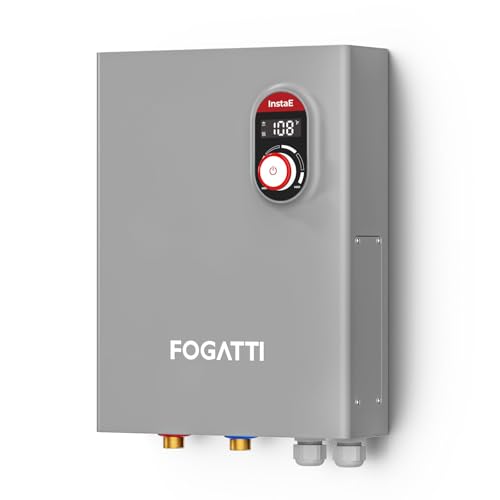
Fogatti’s 24kW tankless heater offers up to 6 GPM, suitable for 3–4 simultaneous hot-water uses. It requires a 3 x 40 AMP circuit and 8 AWG/2 conductors, as well as 3/4″ NPT water connections. An LED display and knob controls enable precise temperature adjustments from 86°F to 140°F in 1°F increments. The unit’s high heating efficiency (up to 98%) ensures rapid hot-water delivery and stable temperatures, making it a strong option for whole-house use where electricity supply is robust.
Considerations include electrical load, wiring quality, and proper venting for gas models if you expand beyond electric systems. This model competes well with other 24kW units in terms of flow and user-friendly controls.
Buying Guide: Key Purchase Considerations For 3 Phase Water Heaters
- Power supply and compatibility: Confirm your home electrical service (volts, phase, and available amp capacity) to match the heater’s requirements. Tankless electric models often demand 240V and high amperage, sometimes three separate circuits.
- Flow rate and hot-water demand: Estimate simultaneous usage (showers, sinks, laundry) to determine needed GPM or gallons per hour. Gas models can often supply higher GPM without relying on electrical capacity.
- Installation location: Point-of-use units save water wait time but are not a full-house solution. Whole-house heaters must be sized for peak demand and may require venting (gas) or dedicated electrical circuits (electric).
- Efficiency and operating costs: Look for energy-efficient features such as self-modulation, gas modulation, and advanced digital controls. High-efficiency models reduce standby losses and adjust output based on real-time demand.
- Maintenance and serviceability: Copper heating elements, glass-lined tanks, and field-serviceable components influence longevity and maintenance costs. Consider brands with readily available replacement parts and service networks.
- Safety and code compliance: Ensure proper installation clearances, venting (for gas units), leak testing, and electrical grounding. Professional installation is often recommended for high-power units.
- Warranty and support: Compare warranty terms and access to customer support. Longer warranties can be a sign of durable construction and manufacturer confidence.
- Space and aesthetics: Factor enclosure dimensions and mounting options, especially for compact or multi-unit setups in apartments or utility closets.
In selecting a 3-phase capable or high-demand water heater, balance capacity with electrical readiness and installation constraints. For homes with multiple bathrooms or high daily hot-water usage, tankless electric and gas models offer scalable solutions, while point-of-use options provide targeted improvements to hot-water wait times at specific fixtures.