Best 3 Phase Power Meter Solutions for Homes and Businesses
Three‑phase power meters are essential for accurately tracking electrical load in multi‑phase systems. This article reviews practical options for American users, covering installation style, data access, and real‑time monitoring. From compact meters for residential panels to commercial systems with remote communication, these picks help optimize energy use and support solar or net‑metering setups.
| Product | Brand | Key Strength |
|---|---|---|
| Intelligent Power Meter Multi-Function Three Phase | Generic | RS485 Modbus-RTU, real-time alarms |
| UNI-T 3-Phase Rotation Meter Sequence Tester | UNI-T | Phase sequence detection, multi‑function |
| Emporia Vue 3 Home Energy Monitor | EMPORIA | UL certified, 3‑phase support, solar/net metering |
| ATOPLEE 3 Phase Sequence Presence Tester | ATOPLEE | Phase presence/voltage range, compact tester |
| Shelly Pro 3EM 3CT63 | Shelly | 3‑phase DIN rail meter, quad/quadrant data |
Each option below targets different needs—from installation in residential panels to commercial measurement and remote data access. The selections emphasize reliability, safety certifications, and compatibility with common American electrical standards.
Intelligent Power Meter Multi-Function Three Phase

The Intelligent Power Meter Multi-Function Three Phase is a digital three‑phase energy meter with a backlit LCD display showing three‑phase voltage, current, power, frequency, and energy measurements. It includes a RS485 interface for Modbus‑RTU data exchange and real‑time alarm capabilities for events such as over‑current, undervoltage, and phase issues. This meter is suitable for panel installations where remote monitoring and alarm reporting are required.
UNI-T 3-Phase Rotation Meter Sequence Tester

UNI‑T UT261A is a compact phase sequence tester designed to verify 3‑phase rotation and detect missing phases. It also supports resistance, capacitance, and frequency measurements. The device features a 45 mm jaw opening for ease of use, along with auto range, backlight, data hold, and one‑button power‑off for quick testing in field conditions.
Emporia Vue 3 Home Energy Monitor

Emporia Vue 3 is a UL‑listed home energy monitor designed for panel installation with clamp‑on sensors. It supports single‑phase, 3‑wire, and 3‑phase 4‑wire Wye configurations (with optional 200 A sensor). The system provides 24/7 energy management, can monitor solar generation, and integrates with home automation ecosystems. The package emphasizes safety and long‑term monitoring for residential and small commercial use, backed by a 1‑year warranty.
ATOPLEE 3 Phase Sequence Presence Detector
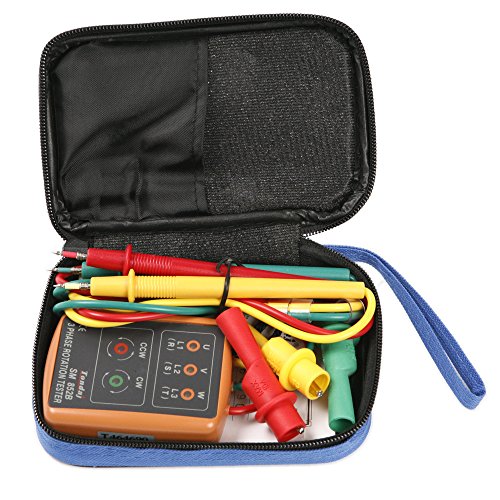
ATOPLEE’s 3 Phase Sequence Presence Rotation Tester is a compact indicator for confirming phase sequence and presence in 3‑phase systems. It operates within a wide voltage range (60V to 600V) and a broad frequency window (20 Hz–400 Hz), making it suitable for field verification before wiring or equipment installation. Test leads extend about 1 meter for practical use in panels or utility boxes.
Shelly Pro 3EM 3CT63 3-Phase Professional Meter

The Shelly Pro 3EM 3CT63 is a DIN rail‑mounted energy meter for 3‑phase installations, featuring a 63 A current transformer for non‑contact measurements. It supports four‑quadrant measurement, real‑time phase‑by‑phase data, and can indicate energy use via an optical pulse output. It is photovoltaic ready and stores up to 60 days of data at one‑minute intervals. Note that it relies on a Shelly Pro Addon for relay functionality, making it a flexible option for professional energy monitoring in commercial settings.
Buying Guide
Key considerations when selecting a 3‑phase power meter include installation context, data access needs, and safety certifications. Below are perspectives to help compare options.
- Measurement scope: For basic monitoring, a meter with voltage, current, and energy readouts is sufficient. For advanced analytics, look for real‑time power, power factor, and phase‑by‑phase data, plus export via Modbus or other protocols.
- Communication and integration: RS485 Modbus‑RTU is common in automation setups. Some meters offer Wi‑Fi or cloud integration, while others rely on local display and panel wiring. Consider whether you need remote monitoring, alarms, or solar/net metering compatibility.
- Safety and certification: UL or equivalent certifications ensure electrical safety in North America. This reduces risk in home and business environments.
- Installation environment: In residential panels, compact meters with clamp‑on sensors or DIN rail mounts fit most spaces. For commercial sites, multi‑phase meters with 3‑phase sensors simplify wiring and maintenance.
- Cost vs. functionality: Simpler indicators and phase testers are inexpensive and good for verification. Full 3‑phase energy monitors with data storage and alarm features are more costly but deliver deeper insights and efficiency benefits.
- Future readiness: If you plan to add solar, net metering, or energy management automations, choose devices that clearly advertise compatibility with solar metering, data logging, and integration with home or business automation ecosystems.
When evaluating options, align the meter’s capabilities with your electrical system (single‑phase vs. 3‑phase, 4‑wire vs. 3‑wire) and ensure the device can be installed safely in your panel. For businesses, prioritize real‑time data access and long‑term logging to support energy audits and cost allocations. For homes, a UL‑certified, user‑friendly monitor that integrates with solar or smart home setups can yield clear energy savings over time.