Best 3 Phase Lightning Arrester Solutions for Safe Electrical Systems
Whether you’re protecting industrial equipment, data centers, or commercial facilities, a reliable 3 phase lightning arrester is essential. This article highlights five top products that address 3-phase protection needs, plus practical buying guidance. The selections favor units suited for three-phase setups, while noting limitations where applicable.
| Product | Best For | Key Consideration |
|---|---|---|
| DELTA LA303R 3-Phase Arrestor | Three-phase electrical systems needing compact protection | Rated 0-250 VAC; built for 3-phase use |
| DELTA LA302R 3-Phase Compatible (Single Phase Note) | 3-wire, 3-phase environments with single-phase sections | 18″ leads; suitable for mixed setups |
| Ditek DTKJ-208-3CM 3-Phase | 3-phase 120/208 VAC protection | New-in-packaging; strong surge handling |
| Flylin 2P 40KA Lightning/Surge Device | Low-voltage DC/AC protection with wider use | 2-pole configuration; DC compatibility |
| Cunyuer 2P 40KA Lightning Protector | 3-phase environments needing modular 2P protection | Easy to install with standard rails |
DELTA LA303R Delta Lightning Arrestor 208-250 VAC 3 Phase

The LA303R is designed for 3-phase systems with a 0-250 VAC range. It’s best for facilities that operate on 208-250 VAC three-phase lines and require compact, centralized surge protection. Choose this if your setup is a dedicated 3-phase service with limited space and you need reliable, straightforward protection for all three phases.
Best for: Industrial panels, data centers, or commercial equipment rooms with 3-phase feeds seeking integrated protection.
Limitation: Specification mentions 0-250 VAC, so confirm compatibility with your exact phase configuration and duty cycle before installation.
DELTA LA302R 3-Phase Compatible

The LA302R is described as 125/208/250 volts with 18-inch leads and a 3-wire configuration. This unit is suitable for mixed installations where a 3-phase system includes a single-phase leg or where wiring clarity is essential. It’s better for environments requiring longer connections to reach protection points.
Best for: Facilities with three-phase service and a need for longer lead connections to protect multiple lines.
Limitation: It is labeled as single-phase in some specs; verify your exact wiring scheme to ensure it matches a three-wire, three-phase protection plan.
Ditek DTKJ-208-3CM 3-Phase Surge Suppressor

The DTKJ-208-3CM is a 120/208 VAC three-phase surge arrestor. It is positioned as a new-in-packaged solution, suitable for protection in 3-phase electrical systems where compact packaging and reliable surge absorption are priorities. This unit is recommended for facilities needing a straightforward 3-phase protector with standard installation expectations.
Best for: 3-phase electrical panels or distribution systems requiring a ready-to-install phase protector with clear three-phase compatibility.
Limitation: Check that your service voltage is 120/208 VAC and ensure proper mounting and grounding practices during installation.
Voltage Surge Arrester Device, 2P 40KA (Tyenaza)
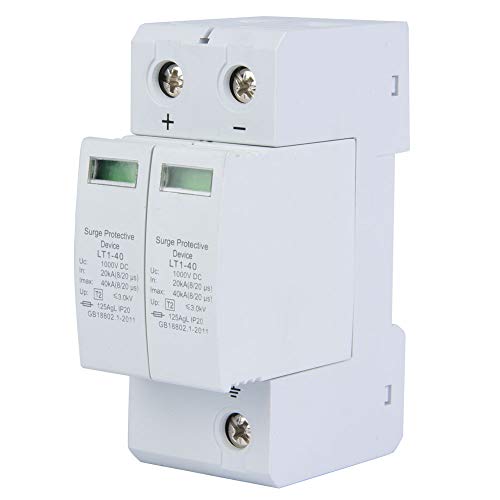
The Tyenaza unit is a 2P surge protector designed for low-voltage applications, including photovoltaic and general electrical protection. It features flame-retardant materials and simple 2P guide rail installation. This product is best for environments needing a robust 2-pole protector in a two-wire configuration, including DC or mixed setups within a three-phase environment.
Best for: Small commercial installations or solar-related setups requiring a compact, easy-to-install 2P surge protector as part of a multi-point protection strategy.
Limitation: Not explicitly a 3-phase unit; suitability depends on how it integrates with a three-phase system and whether a separate three-phase protector is used for remaining lines.
Riotaxy Lightning Arrestor F M to F FDC 3GHz

This unit features an F-type male to female connector design with 75 ohm impedance, intended for broad bandwidth applications including cellular, CATV, and satellite signals. While it offers high surge protection capability via a replaceable gas discharge element, it requires a separate grounding cable and is primarily targeted at communication and signal protection rather than heavy industrial 3-phase power protection.
Best for: Fiber or RF installations where signal integrity and protection from lightning are essential, alongside a separate power protection strategy.
Limitation: Not a primary power protector for heavy-duty three-phase electrical systems; use in conjunction with a dedicated 3-phase arrester where needed.
Cunyuer 2P 40KA Lightning Protector

The Cunyuer unit is a 2P 40KA lightning protector designed for low-voltage protection, with a modular design and easy 2P guide rail installation. It is described as stable and safe due to copper fittings and flame-retardant materials. This choice is solid for scenarios where quick installation and modular 2P protection meet the needs of a broader three-phase protection strategy.
Best for: Panels or enclosures where modular 2P protection is sufficient for part of a three-phase system, offering straightforward mounting and reliable performance.
Limitation: Like other 2P devices, it does not provide full three-phase coverage by itself; plan integration with additional 3-phase protection as needed.
Buying Guide: Key Considerations For 3 Phase Lightning Arrester Purchases
What voltages does your system use? Verify whether the arrester is rated for 3-phase operation at your service voltage (common three-phase ranges include 208Y/120V or 480V in industrial settings).
How many phases and wires require protection? For true 3-phase protection, ensure the device covers all three phases plus neutral as required by your installation.
Is installation straightforward in your panel? Look for units that support standard rail mounting and provide clear lead lengths suitable for your panel layout.
What is the surge handling capacity? Check the maximum surge rating (in kiloamperes or similar) and the expected duty cycle for your environment, especially in areas with frequent lightning exposure.
Dimensions and wiring lead lengths matter. If space is tight or you have long runs to protection points, prefer units with shorter or longer leads that fit your panel design.
Grounding requirements and safety. Ensure proper grounding and adherence to local electrical codes. Some units require a dedicated grounding path or additional ground cables as part of compliant installation.
FAQ
- What does 3-phase protection mean for lightning arresters?
It means the device is designed to protect three separate energized conductors (three phases) plus any required neutral or ground paths in a three-phase system.
- Can a 2P sensor be used in a three-phase system?
Yes, as part of a broader protection plan. A 2P unit protects two lines and may supplement a dedicated 3-phase arrester for full coverage.
- Are there installation prerequisites I should know?
Installers should follow standard electrical codes, ensure proper grounding, and confirm that the panel can accommodate the device with adequate lead lengths and mounting space.
- What should I check before buying?
Confirm system voltage, phase configuration, surge rating, installation method, and compatibility with your panel or enclosure.
- Do all units protect data centers equally?
Protection quality depends on proper matching to system voltage, phase layout, and protective ratings. Always align product specs with your specific application needs.
- Is there a recommended number of arresters for a 3-phase system?
It depends on the system’s layout and exposure. In many cases, a dedicated 3-phase arrester component is used for full coverage, complemented by selective 2P devices as needed.