Best 28 Kw Tankless Water Heater Options for Fast, Endless Hot Water
When selecting a 28 kW tankless electric water heater, households want high output, reliability, and efficient energy use. The following five models represent popular 27–28 kW units suitable for whole-home or multi-point use, offering fast hot water, smart controls, and space-saving design. This guide compares key specs, installation needs, and performance notes to help you choose the right system for your home.
| Product | Brand | Max Flow (GPM) | Key Benefit |
|---|---|---|---|
| Electric Tankless Water Heater WINTEMP 27kW 240V | WINTEMP | Up to 6.5 | WiFi control and stable temperature |
| EcoSmart ECO 27 Tankless Water Heater | EcoSmart | Up to ~3 (varies with climate) | Digital temperature control, compact design |
| 27kW Tankless Water Heater Electric, APUS 240V | APUS | Up to 6.5 | Memory function and smart self-modulating tech |
| Wintemp 27kW Tankless Water Heater WM27V Plus | WINTEMP | Up to 6.5 | Endless hot water with self-modulating control |
| ECOTOUCH 27kW 240V Tankless Water Heater ECO270S | ECOTOUCH | Up to 6.5 | ETL certified, self-modulating, space-saving |
Notes: All models listed are designed for 240V installation and 27–28 kW heating, with flow rates that support multiple simultaneous uses. Installation requires appropriate electrical service, space for mounting, and compliant piping connections. Always consult a licensed electrician to verify breaker and wire requirements for your home.
Product 1: WINTEMP 27kW Tankless Water Heater 240V

This unit is rated at 27kW (240V) with a maximum current around 113A. It requires three 40A double-pole breakers and 8 AWG wiring per circuit, and it uses 3/4″ NPT water connections. Features include automatic temperature stability and energy-saving self-regulation, delivering up to 6.5 GPM. The LED temperature display supports precise adjustment, and WiFi control offers remote monitoring and control. It’s positioned for 2–4 points of use in most homes and emphasizes space efficiency with a compact 11.1″ x 19.1″ footprint.
Product 2: EcoSmart ECO 27 Tankless Water Heater
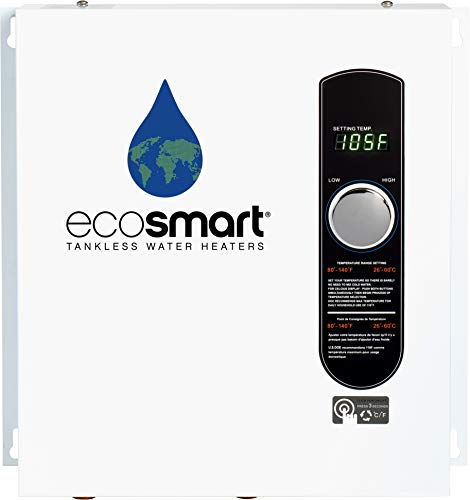
The EcoSmart ECO 27 is configured for cooler incoming water and climate where water starts as low as 37°F. It’s capable of heating roughly 3 GPM and features digital temperature control with 1-degree increments. Its modular design supports flexible installation, and the unit is optimized for energy efficiency via self-modulating technology. This model is well-suited for homes seeking a cost-conscious option with a compact footprint and straightforward setup.
Product 3: APUS 27kW Tankless Water Heater 240V
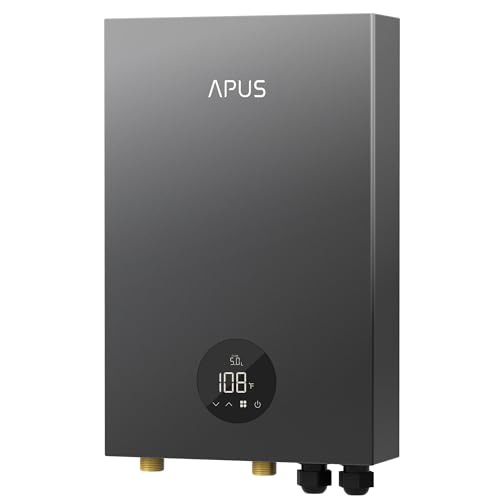
APUS offers 27kW of on-demand heating with memory functionality and an LED display for precise temperature control (86°F–140°F). Self-modulating technology adjusts energy use automatically for efficiency, and the unit supports up to 6.5 GPM, making it suitable for 3–4 simultaneous uses. The compact design (roughly 17.72″ x 11.42″ x 3.54″) helps it fit in tight spaces, with 3/4″ NPT water connections and 240V compatibility. Installation typically requires three 40A breakers and corresponding wiring.
Product 4: WINTEMP WM27V Plus 27kW Tankless Water Heater

The WM27V Plus is a 27kW electric tankless heater designed to maintain water temperature through advanced flow control. It delivers up to 6.5 GPM while keeping temperatures steady and minimizing cold water bursts. The unit requires three 40A double-pole breakers and three 8 AWG conductors, with 3/4″ NPT water connections. It emphasizes energy efficiency through self-modulating power and an emphasis on safety with robust electrical design and practical installation must-haves for 2–4 usage points in the home.
Product 5: ECOTOUCH ECO270S 27kW Tankless Water Heater

ECOTOUCH ECO270S provides 27kW of heating with self-modulating capability, delivering up to 6.5 GPM for 2–4 points of use. The unit is ETL certified and emphasizes safety with protective features against overheating and leakage. It requires a 200A service, three 40A double-pole breakers, and 8 AWG wires with grounding, along with 3/4″ NPT water connections. The compact form factor is designed for space-saving installations in apartments or small homes, with a focus on reliable, continuous hot water.
Buying Guide
Key purchase considerations and how to compare models:
- Heating capacity and flow rate: Look for units rated around 27–28 kW with at least 6.0–6.5 GPM in typical climates. Flow depends on incoming water temperature; colder climates reduce GPM. Don’t rely on a single fixture as your water needs may vary.
- Electrical requirements: Most 27–28 kW models require three 40A double-pole breakers and 8 AWG wiring per circuit. Confirm your home’s electrical panel has adequate capacity (often 200–250A service is recommended) and consult a licensed electrician for safe installation.
- Temperature control: Digital or LED displays with fine adjustments (1°F or 1°C increments) help maintain comfortable outlets. Self-modulating technology reduces energy use when demand drops, improving efficiency.
- Space and installation: Wall-mountable, compact units save space. Check water connections (3/4″ NPT) and ensure suitable clearance for venting (if applicable) and service access.
- Smart features and reliability: WiFi/app control, memory to preserve settings after power cycles, and robust safety protections (overheat, dry-fire, leakage) contribute to long-term convenience and safety.
- Climate considerations: Units configured for colder inlet water help maximize usable GPM in northern regions. If your climate is warmer, you may achieve higher flow with the same unit.
- Warranty and certification: Look for ETL/UL certification and warranty terms. Certifications indicate compliance with safety standards and quality controls.
When evaluating options, balance the desired flow rate against installation costs and electrical upgrades. A higher upfront electrical load may necessitate panel upgrades, but it enables consistent hot water at higher flow. For homes with multiple simultaneous uses, prioritize models with robust self-modulating technology and stable temperature control to minimize temperature fluctuations and energy waste.